

Aluminum Honeycomb Ceiling Panels for Commercial Interiors
Want a clean, seamless ceiling across a large span? Traditional gypsum boards crack and sag over time. Solid aluminum panels are strong but heavy, driving up structural reinforcement and installation costs. Many interior projects end up stuck between “too heavy,” “not flat enough,” and “hard to balance acoustics and fire performance.”
Aluminum honeycomb ceiling panels are becoming the default choice for more commercial and high-end interior projects. This isn’t just switching to a trendier material—it’s a solution that addresses weight, flatness, performance, and construction efficiency at the same time.
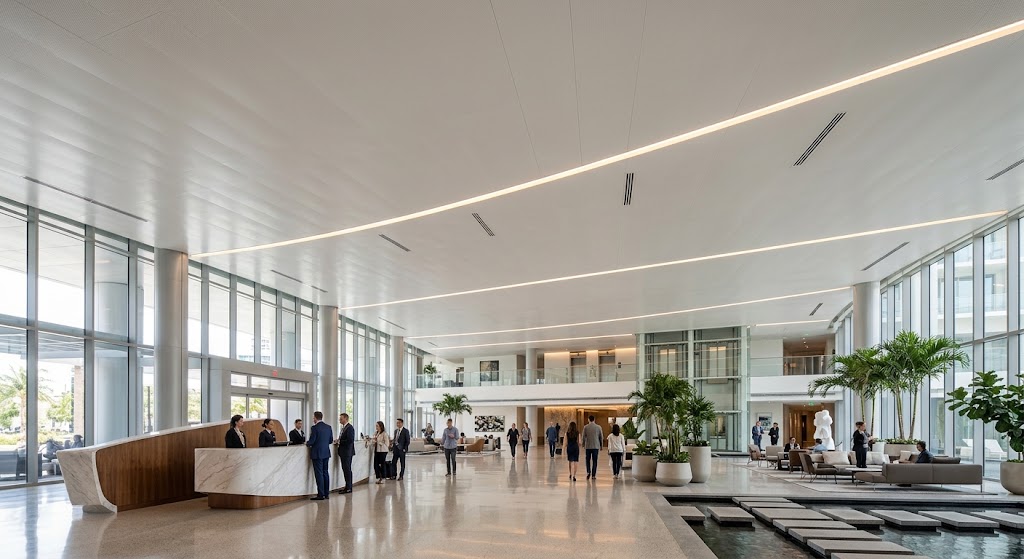
Why Traditional Ceilings Keep Causing Headaches
Gypsum is light, but it absorbs moisture, cracks easily, and has limited fire ratings. Flatness suffers over time. Solid aluminum has the strength, yet the weight makes large panels more prone to deformation and demands heavier framing. Ordinary composite panels sit in the middle but often fall short on strength, long-term stability, or both.
These issues become especially clear in open-plan offices, hotel lobbies, commercial atriums, airports, and metro stations—spaces with large spans, high visual standards, tight schedules, and the need for acoustic comfort plus fire safety. Traditional options force compromises.
What Aluminum Honeycomb Ceiling Panels Actually Solve
The real value isn’t novelty—it’s the result of the structure. Two aluminum face sheets bonded to a hexagonal aluminum honeycomb core act like countless miniature I-beams, distributing stress evenly. The outcome: light yet strong, large panels that stay flat.
In practice, this delivers clear benefits:
- Lower weight, less structural load. Typical weight is around 4–6 kg per square meter—significantly lighter than solid aluminum of the same thickness. Large-span spaces need less reinforcement, and installation becomes easier.
- Better long-term flatness. Large panels resist warping and sagging, making clean, continuous ceiling surfaces far more achievable.
- Acoustics and fire performance in one package. The air pockets in the honeycomb provide natural sound and thermal insulation. For higher absorption, perforated versions with backing deliver noticeable improvement. Aluminum itself is non-combustible, and many products meet high fire ratings suitable for public and commercial buildings.
- Moisture resistance and low maintenance. It doesn’t absorb moisture or easily develop mold. With proper surface treatment, cleaning and upkeep stay simple.
For designers and clients, this means fewer trade-offs: large seamless looks without sacrificing strength, lightweight construction without losing flatness, and acoustic or fire needs without stacking extra materials.
Best Applications for Aluminum Honeycomb Ceiling Panels in Interiors
Not every project needs it, but in these settings the advantages stand out.
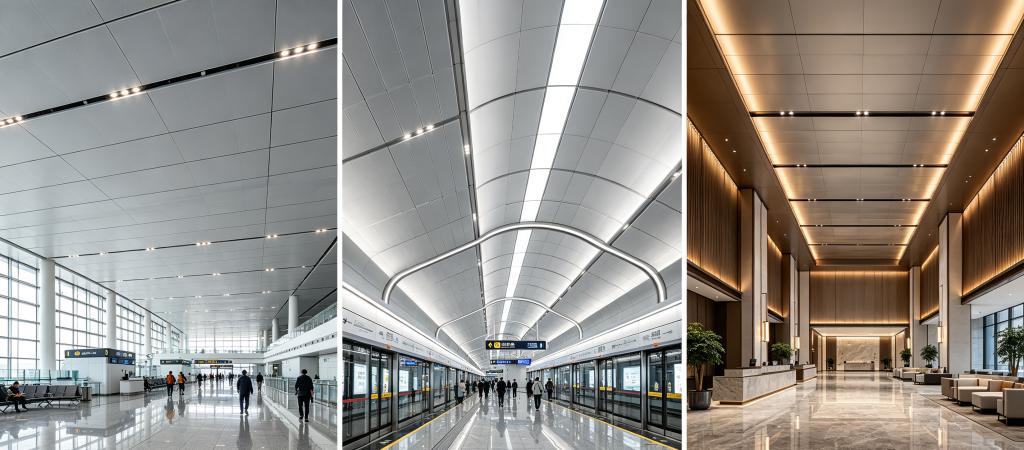
Open-plan offices and hotel lobbies.
Large volumes and high traffic demand both visual calm and noise control. Aluminum honeycomb ceilings deliver expansive flat surfaces while helping manage acoustics, creating a more unified atmosphere.
Airports, metro stations, and commercial atriums.
These environments prioritize fire safety, durability, and fast installation. The low weight reduces structural demand, modular dry installation speeds up the schedule, and individual panels can be replaced later with minimal disruption.
High-end residences and private clubs.
When the goal is a minimalist, continuous ceiling plane that stays stable for years, honeycomb panels outperform traditional materials that risk cracking or sagging.
Meeting rooms, theaters, or exhibition halls that need acoustic control also benefit from perforated versions.
How to Choose the Right Aluminum Honeycomb Ceiling Panels
Ask a few practical questions:
Is the span large and the demand for flatness high? If yes, the advantages become clearer.
Do you need to address acoustics or fire performance at the same time? It often simplifies the solution.
Is the schedule tight and do you want to minimize wet trades and dust on site? Factory-prefabricated panels with dry-hang or clip systems install faster.
When selecting, focus on three points: thickness matched to span and load requirements, surface coating and fire certification that meet the project brief, and an installation system that supports easy future maintenance. A supplier with proven projects and solid technical support matters more than the lowest price.
Conclusion
Aluminum honeycomb ceiling panels are not a material you must use—they are a practical choice that solves weight, flatness, performance, and installation efficiency together. For interior projects that value clean visuals and long-term stability, they frequently turn out to be the more reliable answer.
A good ceiling shouldn’t force you to choose between “light enough” and “flat enough.” When you start selecting materials based on the results you actually need, the value of aluminum honeycomb ceilings becomes obvious.