

China WPC Wall Panel Factory vs Local Suppliers: Which Offers Better Value?
For contractors, importers, and interior designers who are looking to source wall cladding, the option usually boils down to two choices: buying from local suppliers or choosing a WPC wall paneling manufacturer. Both routes can work; however, they differ significantly in terms of price, range of products, quality control, product range, and duration of lead time. Following, we break down each aspect to help you match the sourcing method to the project’s size, budget and timeline instead of making assumptions.
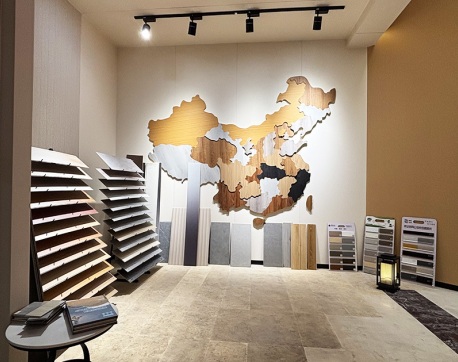
Why This Comparison Matters for Buyers
Demand for wood plastic composite materials has grown a lot lately. The global WPC market was valued at roughly $8.89 billion in 2025 and is expected to reach $21.51 billion by 2033. That would be a compound annual growth rate of 11.7% , based on Grand View Research. In other words, building and construction uses make up over 71% of the whole market, while Asia-Pacific alone brings in more than half of the worldwide WPC revenue.
And as adoption keeps rising, naturally the list of suppliers saying they deliver “factory-direct” pricing keeps getting longer. So, figuring out what the real sourcing differences are between channels becomes more important, not less.
Cost Comparison: Factory-Direct Pricing vs Local Markup
How Local Suppliers Price Their Products
Most local wall panel suppliers are more like distributors than true manufacturers, they buy in bulk from factories, sometimes overseas, then they re-sell through one or more layers of markup to pay for storage, local staff, and of course their own profit.For small orders, this convenience has value. But as order volume grows, that layered pricing structure becomes the single biggest cost inefficiency in the supply chain.
What Factory-Direct Pricing Looks Like
Buying directly from a manufacturer removes the middleman markup entirely. This is especially significant for bulk orders — a full hotel renovation, a multi-unit residential project, or a retail chain rollout — where even a 15–20% price difference per panel translates into substantial project savings. Factories also have more room to negotiate on price for repeat or high-volume buyers, something local resellers typically cannot offer since they’re bound by their own supplier’s terms.
Hidden Costs to Watch For
Factory-direct sourcing isn’t automatically cheaper once freight, duties, and minimum order quantities are factored in. Ocean freight and customs clearance take planning, and small trial orders may not qualify for the best per-unit pricing. A responsible comparison should always weigh landed cost — product price plus shipping and duties — against what a local supplier charges for the same specification, not just the sticker price.
Product Range, Customization & Quality Control
Surface Finishes and Design Flexibility
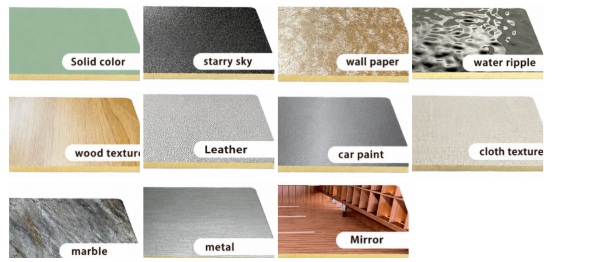
This is usually the area where the gaps are widest. Local suppliers usually have an inventory of pre-selected, limited items, typically a couple of dozen options at least. A dedicated manufacturing facility, by contrast, has more than 1000 surface patterns that include wood grain, marble fabric, metal, and 3D-based textures, with OEM/ODM solutions for customized colors, sizing as well as private label packaging. When it comes to design-driven projects such as hotel lobbies or branded retail spaces, the flexibility of this option could be a major factor.
Technical Specifications & Certifications
Buyers who are serious should request evidence, not merely selling. The most reliable WPC factories offer ISO 9001 certification, CE and SGS test reports E0-grade formaldehyde emission rating and B1 fire-retardant classifications. Local vendors who sell third-party stock typically don’t provide an accurate, verified test report for every batch. This is a major risk on commercial projects that have fire code or environmental standards.
Quality Control Process
Factories that control the full production chain — from raw material mixing through extrusion and finishing — can maintain consistent quality across every shipment, typically backed by multi-stage testing for flexural strength, UV resistance, and moisture resistance. Local suppliers, working from purchased stock, have far less visibility into how consistently that stock was produced batch to batch.
Lead Time and Logistics: What to Expect
Local Supplier Delivery Speed
For small, urgent orders — patching an existing installation or a single-room renovation — local suppliers usually win on speed, since product is already in-country and ready to ship.
Factory Production & Shipping Timelines
Factory orders require production lead time (commonly around 15 days for standard specifications) plus international shipping via sea freight or express courier. For projects planned weeks or months in advance, this timeline is entirely manageable and allows for better cost planning. For last-minute needs, it’s a genuine drawback worth weighing honestly.
After-Sales Support & Long-Term Partnership
Local Supplier Support
Local suppliers can often respond quickly to basic questions, but technical depth and dispute resolution vary widely depending on how closely tied they are to the original manufacturer.
What a Professional Factory Offers
Established factories tend to treat buyers as long-term partners rather than one-time transactions. That typically includes installation manuals, video tutorials, direct technical consultation, and defined response commitments — for example, 24-hour quote turnaround and issue resolution within a set number of business days. For buyers managing multiple projects or building an ongoing supply relationship, this structured support matters more over time than a single fast delivery.
Which Option Makes Sense for Your Project?
| Factor | Local Supplier | China Factory-Direct |
| Best for | Small, urgent orders | Bulk, planned, or custom projects |
| Pricing | Higher per-unit (markup) | Lower per-unit at volume |
| Design options | Limited inventory | 1,000+ finishes, OEM/ODM |
| Certifications | Often incomplete | Full documentation (ISO, CE, SGS) |
| Lead time | Fast (in-stock) | 15+ days production + shipping |
| Long-term support | Variable | Structured, ongoing |
Neither option is some universal “better”, it really depends on order size, how much your timeline can move, and also if you need custom finishes or those certified documents.
If your thing is small, urgent, basically a one-off , then a local supplier may still be the practical call, you know. But if it is bulk ordering, custom finishes, or you have to show verified certifications, getting it straight from a China WPC wall panel factory usually feels like the more value way to go— cheaper, more design flexibility, and steadier quality consistency.