
Comprehensive Analysis of PVC UV Board: Core Advantages of UV Processing and Factors Affecting Service Life
During the decoration process, we were all looking for a material that had “high appearance quality, durability, easy maintenance, and a reasonable price”. If you are choosing materials for cabinet doors, background walls or display cases, then you must have heard of PVC UV board. With its high gloss, high hardness and high cost-effectiveness, it has become a very popular interior decoration material in recent years.
However, many people still have doubts about it:
How scratch-resistant is it? How long can it last? Compared with acrylic and PET board, where does it fall short?
Today, we will explain PVC UV board from aspects such as principle, performance, lifespan, advantages and disadvantages.
Table of Contents
What is a PVC UV Board?
PVC UV board, also known as PVC substrate + UV-cured coating decorative board, consists of two parts:
- UV-cured coating: A UV varnish is applied to the substrate surface, and then ultraviolet light is used to cure the varnish layer instantly within seconds, forming a hard, smooth protective film.
- PVC substrate: This is usually PVC foam board (also called PVC foam board or Andy board). It is inherently moisture-proof, flame-retardant, lightweight, and resistant to deformation, making it a very common basic material in interior decoration.
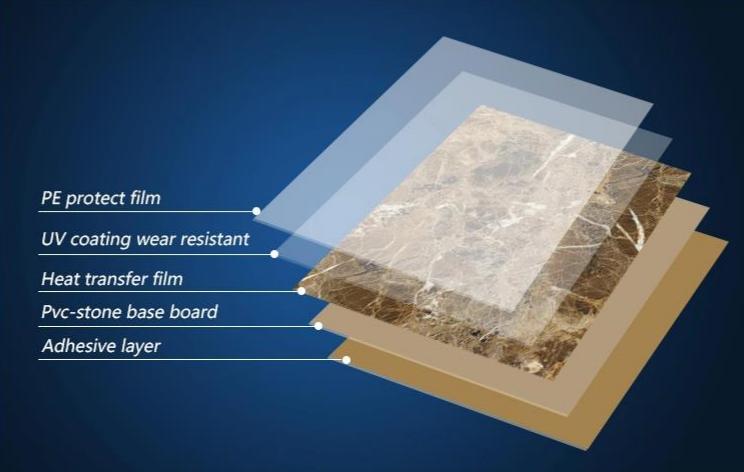
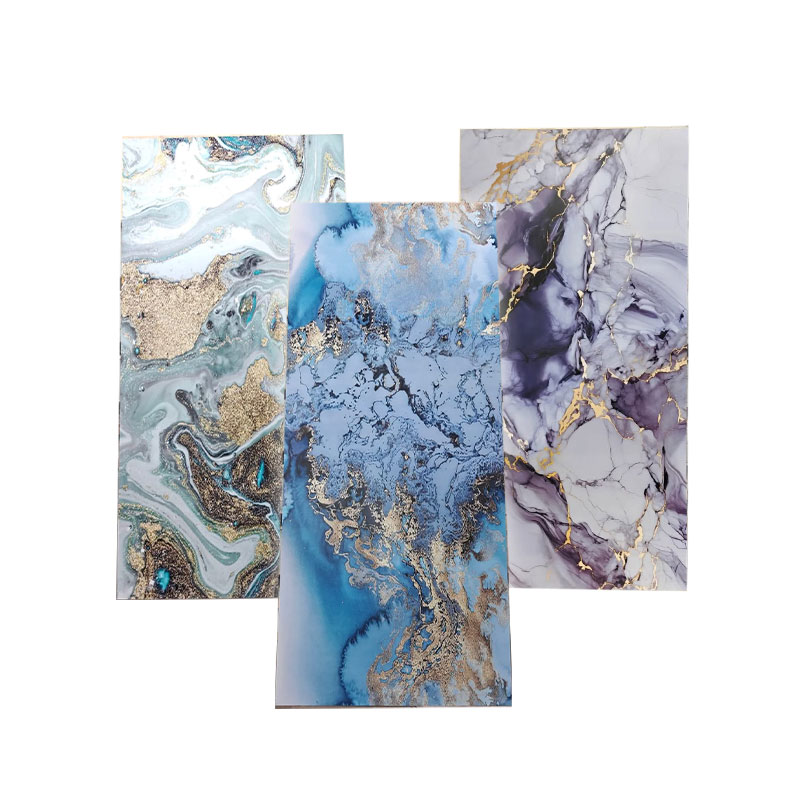
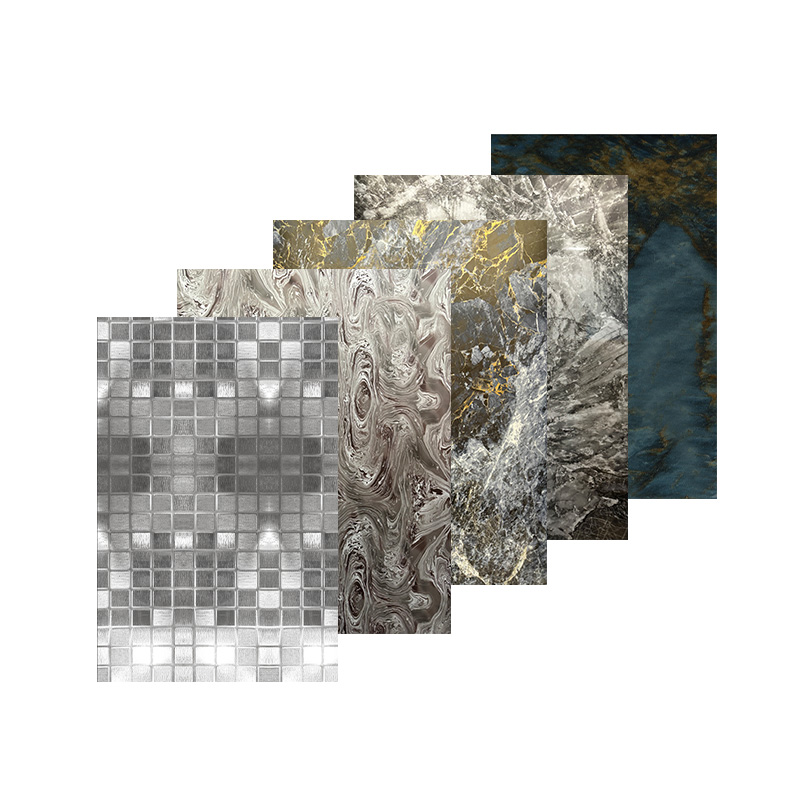
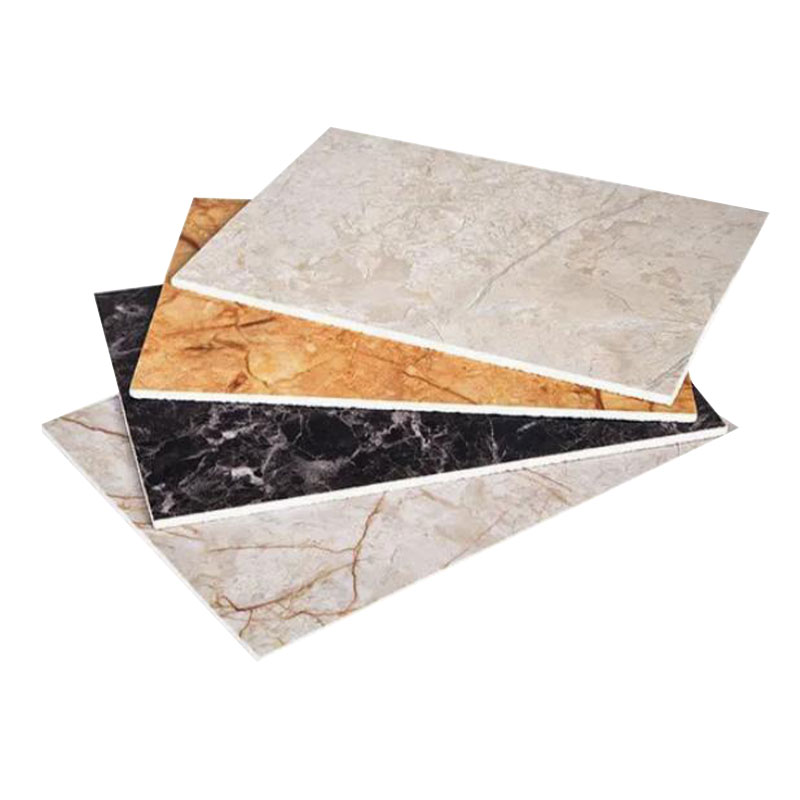
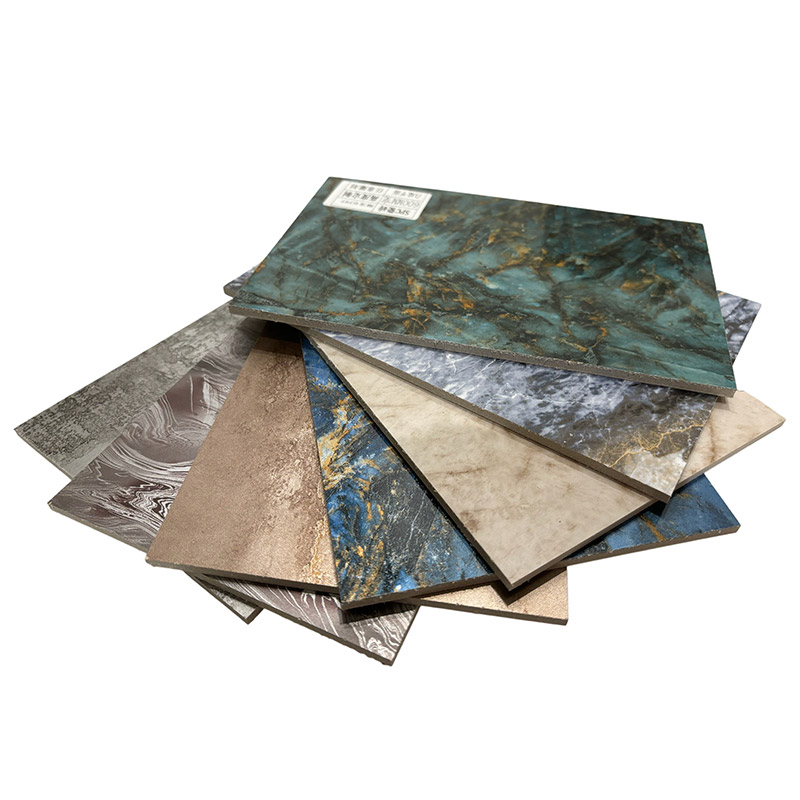
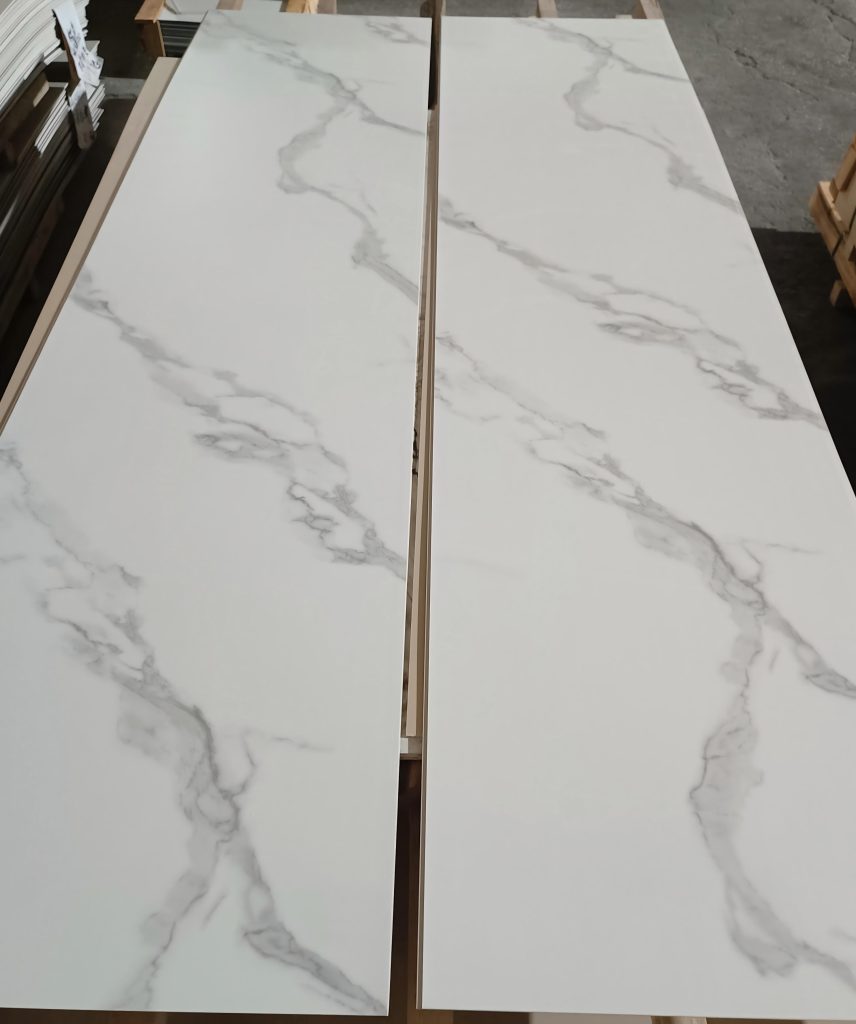
The final finished surface can be high-gloss, matte, or have a skin-like finish, and can also be finished with various effects such as wood grain, stone grain, or solid colors.
How Scratch Resistant is PVC UV Board?
The scratch resistance is the aspect that everyone is most concerned about.
1. Hardness level: 2H – 3H
The surface hardness of high-quality PVC UV board usually reaches 2H to 3H.
To help you understand it more intuitively:
- Ordinary paper: approximately 2B
- Coins: approximately 1H
- Car paint: approximately 2H – 4H
- PVC UV board: approximately 2H – 3H
That is to say, its hardness is close to car paint, and it is more wear-resistant than ordinary painted boards.
2. Performance in actual use
In daily life:
- Keys and coins gently scratching, generally will not leave marks
- Dry cloth and sponge wiping are completely fine
- Minor bumps will not chip the paint
But it is not “invincible”:
- Steel wool, rough surfaces of scouring pads will leave scratches
- Utility knives, sharp metals being forcefully scratched, will directly damage the paint layer
- Heavy objects with sharp corners impacting may chip the edge
So it is suitable for daily use, but not for extreme physical friction or impacts.
3. Factors affecting scratch resistance
- UV paint quality
- Coating thickness
- Base material density (high-density laminated boards can better support the paint layer)
How Long is The Service Life of PVC UV Board?
The service life depends on the usage environment.
1. Indoor use: 8–15 years
In a normal indoor environment (home, office, shopping mall), high-quality PVC UV panels generally can be used for 8 to 15 years.
The first 5–8 years:
- The gloss remains good
- Color stability
- It will not deform significantly
Possible subsequent issues include:
- Slight fading (more noticeable on dark boards)
- Decreased glossiness
- Minor wear on edges and corners
2. Outdoor Use: 3–5 Years (Not Recommended)
The PVC base material itself will undergo the following changes under long-term direct sunlight:
- yellowing
- brittleness
- fading
Therefore, the typical outdoor lifespan is usually only 3–5 years.
3. Key factors affecting lifespan
- Whether the base material is brand new (reused materials have shorter lifespan)
- Whether the edge sealing process is properly carried out (poor edge sealing can cause water absorption and expansion)
- Whether it is close to a heat source (PVC is afraid of high temperatures, and it may deform if the temperature exceeds 60℃)
- Whether it is exposed to direct sunlight for a long time
What are the Advantages of UV Technology?
The UV process is popular because it solves many problems of traditional paints.
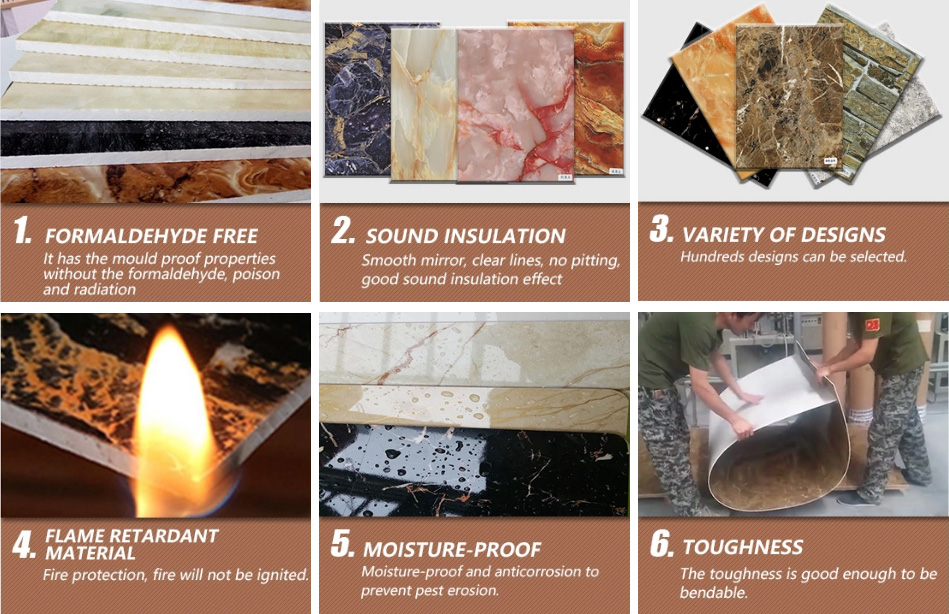
1. Environmentally friendly and free of formaldehyde
The curing of UV paint is a photochemical reaction, without harmful gases such as formaldehyde and benzene. The produced boards can be used directly and are very suitable for home, school, hospital and other environments.
2. High surface hardness
The cured paint film has a tight structure, high hardness, wear resistance and scratch resistance.
3. Easy to clean and non-staining
The UV film is very dense. Stains can be wiped off immediately and will not penetrate the interior of the board.
4. Stable color and not prone to fading
High-quality UV paint contains anti-yellowing agents, and remains bright even after being used indoors for many years.
5. High production efficiency and controllable cost
UV paint dries “instantly”, the production cycle is short, so the price is more affordable than baking paint and acrylic.
PVC UV board VS Acrylic VS PET
To help you make a decision on whether to buy it or not, we will compare it with common materials.
| Comparison | PVC UV board | Acrylic | PET board Best |
| Scratch resistance | Medium (2H – 3H) | Poor (easily has minor scratches) Excellent | best |
| Weather resistance | Poor (for indoor use only) | excellent | excellent |
| High-temperature resistance | Poor (easily deforms) | medium | Good |
| Impact resistance | Medium | Poor | Excellent |
| Environmental friendliness | OK | Good | Excellent |
| Price | Low | High | Medium-high |
| Main application scenarios | Cabinet door panels, wardrobes, interior background walls, advertising panels, decorative lines. | Light box signs, crystal letters, display stands, fish tanks, high-end artworks, outdoor signs. | Appliance panels (refrigerators / washing machines), mobile phone protective films, food packaging. |
How to Identify High-quality PVC UV Board?
When making a purchase, you can make the following judgments:
- Look at the cross-section
High-quality board: The cross-section is white, fine, and free of air holes
Low-quality board: Yellowish, rough, with honeycomb-like air holes - Listen to the sound
High-quality board: The sound is clear when struck
Low-quality board: The sound is dull - Perform a scratch test
Use a key to make a light scratch in a hidden area
High-quality board: The black mark can be wiped off
Low-quality board: Leaves a white scratch - Ask about the edge treatment
Poor edge treatment will absorb water and expand, directly affecting the lifespan.
Conclusion
If you pursue:
- High cost performance
- Indoor use
- Easy to maintain
- High level of appearance
Therefore, PVC UV boards are definitely worth considering.
Its scratch resistance is sufficient for daily use, and its lifespan can reach about 10 years. It is one of the most cost-effective interior decoration materials available at present.
If you are doing renovations and unsure which material would be more suitable for your project, please feel free to leave a message telling me about your usage scenario. I can then provide you with more specific recommendations.