

Interior Wall Finishes for High-Traffic Areas: Strategies for Maintenance and Longevity
A hotel corridor wall that looks pristine at opening and needs repainting within 18 months. A hospital waiting area where the third coat of latex paint is going on before the second year is finished. A retail chain spending more on unplanned wall repairs than on the original installation. These are not unusual situations — they are the predictable outcome of specifying interior wall finishes without accounting for what high-traffic environments actually do to materials. The right finish, matched to the right environment, changes the entire maintenance equation.
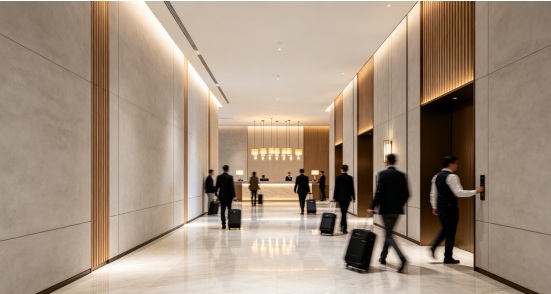
What Damages Interior Wall Finishes in High-Traffic Areas
Before evaluating materials, it is worth being precise about the forces working against them. High-traffic interior environments expose wall finishes to four distinct types of stress — and most specification mistakes happen because only one or two are considered.
Physical impact and abrasion is the most visible.
Luggage trolleys, medical carts, wheelchairs, and delivery equipment make continuous contact with corridor walls throughout the day. In a typical hospital corridor, wheeled equipment impacts wall surfaces hundreds of times per day. Standard latex paint has a pencil hardness rating of around HB — far below the 3H minimum that engineered wall panels deliver. At that impact frequency, paint failure is not a risk. It is a schedule.
Dryness and humidity can cause less but more significant harm.
ASHRAE research suggests that interior areas where the relative humidity is greater than 60% will show visible surface or wall degradation in materials for walls that are not treated in three or five years. Laundry facilities, commercial kitchens and pools are often operating over this level. Gypsum boards as well as MDF — which are the material behind the majority of painted wallsabsorb water, expand and delaminate. Once the process has begun and the surface is damaged, refinishing it alone will not repair it.
Cleaning chemicals are the cause of damage that is most often overlooked.
The products used for cleaning at home are diluted and are applied only occasionally. Commercial-grade disinfectants for healthcare facilities have concentrations of chlorine that are 500 ppm or greater and are used several times per day. Over time, these chemicals alter the quality of the standard paint film, dissolving adhesives which can result in PVC surfaces to turn yellow and break. The choice of a wall finish without testing its chemical resistance against actual cleaning products that are used at the location is among the most frequent and costly specifications errors that can be made in commercial installation.
High-touch surface dirt close to entrance areas, elevator lobby and reception areas can cause distinct issue. Porous surfaces collect particulates and oils that regular cleaning is unable to completely eliminate. The more dense and less porous the wall will be, the less the maintenance burden during the lifetime of the structure.
6 Interior Wall Finish Options: How They Actually Perform
SPC Wall Panels — The Engineering Default for High-Traffic Commercial Spaces
Stone plastic composite wall panels have a rigid calcium carbonate and PVC core that is genuinely 100% waterproof — not moisture-resistant, but fully impervious. The surface hardness exceeds 3H on the pencil hardness scale, and the panels carry zero formaldehyde emissions at E0 grade, which matters in occupied spaces with limited ventilation.
In practical terms, SPC panels handle the combination of impact, moisture, and chemical cleaning that defeats most other finish categories. The click-lock installation system allows individual damaged panels to be replaced without disrupting the surrounding installation — a maintenance advantage that compounds significantly over a 10-year facility lifecycle.
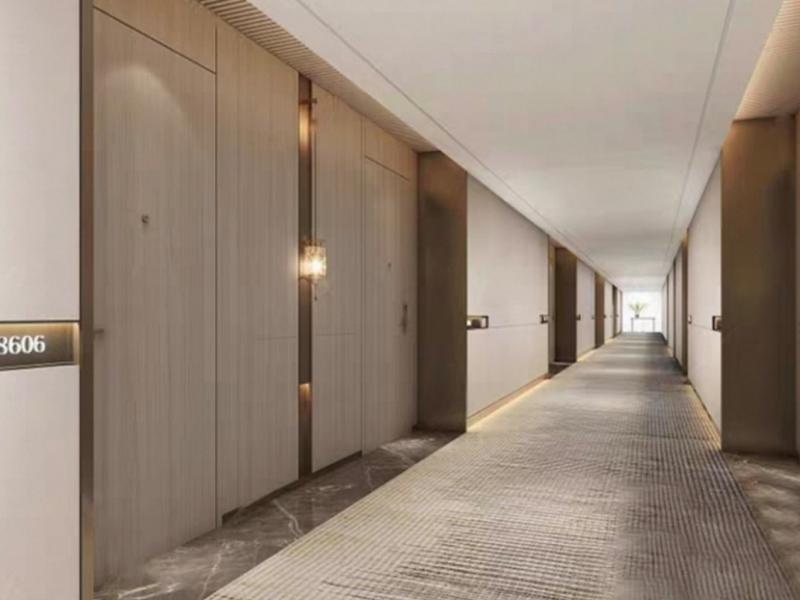
Best suited for: hotel corridors, hospital public areas, food service back-of-house, and shopping center common zones.
WPC Anti-Collision Wall Panels — Purpose-Built for Healthcare and Institutional Use
The anti-collision series within the WPC category is specifically engineered for environments where wheeled equipment contact is continuous and predictable. The reinforced composite core absorbs impact energy without surface cracking or delamination, and the wipe-clean surface is formulated to withstand hospital-grade disinfectants at concentrations up to 500 ppm available chlorine.
This is a finish that was designed for a specific problem: the 900–1,200mm height zone in institutional corridors where cart and wheelchair impact is concentrated. B1 fire retardancy rating meets commercial building code requirements across most international markets.
Most suitable in: hospital corridors, care home hallways, school common areas, and hotel service passages.
Bamboo Charcoal Fiber Wall Panels — Air Quality and Wellness-Focused Environments
Bamboo fibers are in the top spot in performance. The main difference is active formaldehyde absorption that is provided by the charcoal fibers -an ongoing process that enhances indoor air quality throughout the duration of the installation, rather than simply not contributing to the issue.
The resistance to moisture and anti-mold characteristics allow them to be used in areas that have moderate levels of humidity. The hidden fastener system for installation allows for each panel’s replacement, making maintenance costs low. For companies that are seeking LEED or WELL certification for building Bamboo charcoal fibre panels may aid in the achievement of indoor material quality credits.
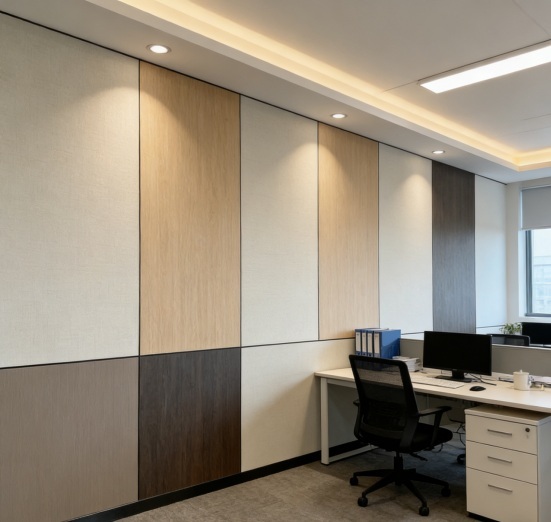
Most suitable in:corporate offices, premium hotel guest rooms, kids’ facilities, and healthy retail settings.
UV Board — Visual Impact with Practical Cleanability
UV Boards satisfy a certain combination of needs such as a high-gloss aesthetic finish solid stain resistance and complete waterproofing, all at a cost which makes them suitable for large-scale commercial deployments. The UV coating’s surface withstands grease, oils and food-based staining – wipe-cleaning capabilities that make the panels ideal to food service settings in which hygiene and appearance be maintained.
The main thing to consider is the hardness of the surface. High-gloss coatings are more susceptible to visible scratches due to contact with metal as compared to SPC or WPC that is anti-collision. In areas where heavy equipment is in direct contact with the wall UV panels should be placed in customer-facing and display zones, not in service corridors.
Ideal best for: restaurant chains and quick service food outlets, salons and feature walls for retail.
Aluminum Honeycomb Panels — Large-Scale Public Spaces
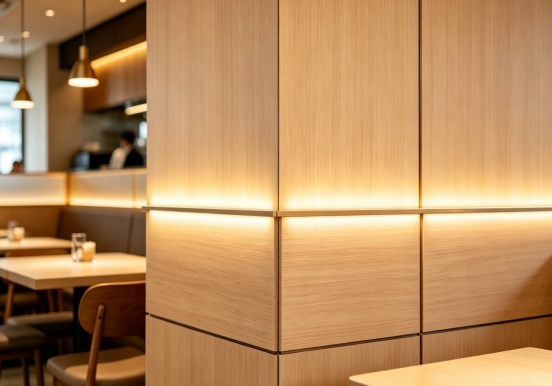
Aluminum honeycomb composite panels deliver a structural-to-weight ratio that no other wall finish category matches. The rigid aluminum face bonded to a honeycomb aluminum core provides high dent resistance at very low panel weight — relevant in large-format installations where conventional panel weight would impose structural loading constraints.
Surface treatments including anodizing and fluorocarbon coating provide long-term corrosion resistance and color stability. Modular installation supports localized panel replacement in facilities where any section of wall might need maintenance access.
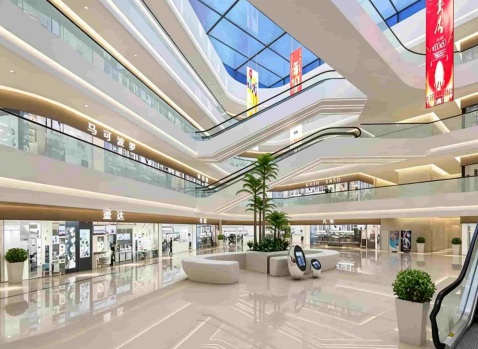
Best suited for: airports, large shopping centers, exhibition venues, and high-end hotel lobbies.
Grade A Fireproof Board (MgO Board) — Compliance-Driven Applications
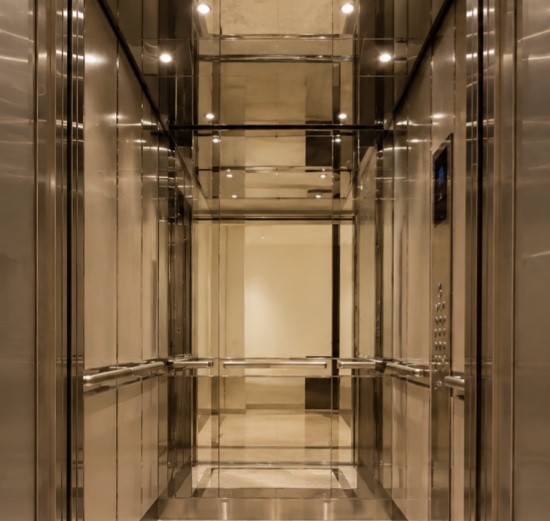
Magnesium oxide board is non-combustible at Grade A classification — the highest fire resistance rating available for interior construction materials. In stairwells, fire compartment walls, evacuation corridors, and basement spaces where building codes mandate non-combustible finishes, MgO board is frequently the only compliant option.
Zero formaldehyde emissions, true waterproofing, and a time that’s far longer than the majority of other materials makes it a solid long-term investment for compliance-sensitive areas. It can be used with paint, laminate film and tile finishes, working best as a fire-resistant substrate in an layered wall system, instead of as a separate decorative finishing.
Ideal in:stairwells, evacuation corridors and fire compartment walls or underground parking facilities.
Matching Material to Environment: A Scene-by-Scene Guide
| Environment | Primary Requirements | Recommended Wall Panel Solutions |
| Hotel | Impact resistance, aesthetics, cleanability | SPC Panels (Corridors), WPC Wood Veneer (Room Entries) |
| Healthcare | Anti-collision, chemical/fire resistance, hygiene | WPC Anti-collision Panels (Lower walls), MgO Board (Fire walls) |
| Office/Co-working | IAQ standards, ESG compliance, acoustics | Bamboo Charcoal Panels (Open areas), WPC Fluted Panels (Meeting rooms) |
| Retail/Food Service | Visual branding, durability, moisture resistance | UV Board (Customer-facing), SPC Panels (Back-of-house/Kitchen) |
Interior wall finishes for high-traffic areas are not a cosmetic decision — they are an infrastructure decision with measurable financial consequences. The four forces that damage walls in commercial environments (impact, moisture, chemical cleaning, and surface soiling) operate simultaneously and continuously. No single material handles all four identically well, which is why matching finish to environment — rather than defaulting to the lowest upfront cost option — is where the meaningful decisions get made.
The materials that perform best over a full facility lifecycle in commercial and institutional environments are the ones engineered specifically for those conditions: impact-reinforced composites, genuinely waterproof substrates, chemically resistant surfaces, and modular systems that make maintenance an operation rather than a renovation.