

Is Vinyl Flooring Better Than Laminate? Pros, Cons & Key Differences
If you are renovating a new house or refurbishing the floor, you might come across such a question: Which is better, Vinyl Flooring (PVC flooring) or Laminate Flooring?
In fact, both of these kinds of flooring are pretty popular choices in the current market. They both come with advantages like easy installation, a wide variety of looks, and also fairly affordable pricing. However, due to differences in material structure and performance, they are more suitable for different usage scenarios.
In simple terms, if you value waterproofing, durability, and ease of maintenance more, Vinyl Flooring is usually a better choice; if you prefer the feel and appearance similar to that of real wood while having a limited budget, then Laminate Flooring is also worth considering.
Next, we will conduct a comprehensive comparison in terms of material, durability, waterproofing performance, comfort, installation, maintenance and applicable space, to assist you in making a choice that suits your needs better.
What is Vinyl Flooring?
Vinyl Flooring is an elastic floor made mainly from PVC (polyvinyl chloride). It usually consists of a wear-resistant layer, a decorative layer, a core layer and a base layer. In recent years, with the continuous improvement of manufacturing techniques, Vinyl Flooring can highly replicate the texture of natural materials such as wood grain and stone texture. At the same time, it has better wear resistance, moisture resistance and easy maintenance properties.
The greatest advantage lies in its waterproof property. Even when exposed to a humid environment for a long time, it will not expand or deform like wooden materials. Therefore, it is widely used in kitchens, bathrooms, basements, and commercial spaces.
What is Laminate Flooring?
Laminate Flooring is usually known as reinforced composite flooring. The core layer mostly is made from high-density fiberboard (HDF), while the top surface is wrapped with a wood grain decorative paper and then protected by a wear resistant layer.
The most prominent feature of laminate flooring is that it can reproduce realistic wood textures and has excellent scratch resistance. Therefore, it has always been popular among home decoration users.
However, since the core layer is made of wood, when a large amount of water seeps in, it is prone to swelling, warping and even deformation. Therefore, it is more suitable for dry environments such as living rooms and bedrooms.
Vinyl Flooring vs Laminate Flooring:Differences
Below is a comparison of the main performance characteristics of the two types of flooring.
| Comparing items | Vinyl Flooring | Laminate Flooring |
| Water resistance | ★★★★★ Fully waterproof | ★★☆☆☆ Fear of water accumulation |
| Wear resistance | ★★★★☆ | ★★★★☆ |
| Waterproof performance | Excellent | Generally |
| Comfort of foot feel | Relatively soft | Warmer |
| Installation method | Click Lock/Adhesive | Click Lock |
| Daily maintenance | Very simple | simple |
| Service life | 15-25 Years | 10-20 Years |
| Applicable area | Damp and commercial spaces | Dry interior spaces |
Overall, both products have their own advantages. However, if long-term use is required and the environment is relatively humid, Vinyl Flooring usually has the edge.
Which Type of Floor Is More Durable?
Durability is mainly reflected in three aspects: wear resistance, moisture resistance and impact resistance.
In terms of wear resistance, both have high wear resistance and can meet the daily usage needs of households. If a commercial-grade product is chosen, it can also be applied in offices, hotels or retail spaces.
What truly makes the difference is the moisture-proofing ability.
Since Vinyl Flooring is made of PVC material, it will not absorb water and expand even when there is water stains or high air humidity. However, for Laminate Flooring, if the wooden core comes into prolonged contact with moisture, it may cause the edges to lift, bulge, or even require an overall replacement. Therefore, for areas prone to moisture such as kitchens, bathrooms, laundry rooms and basements, Vinyl Flooring is more durable.
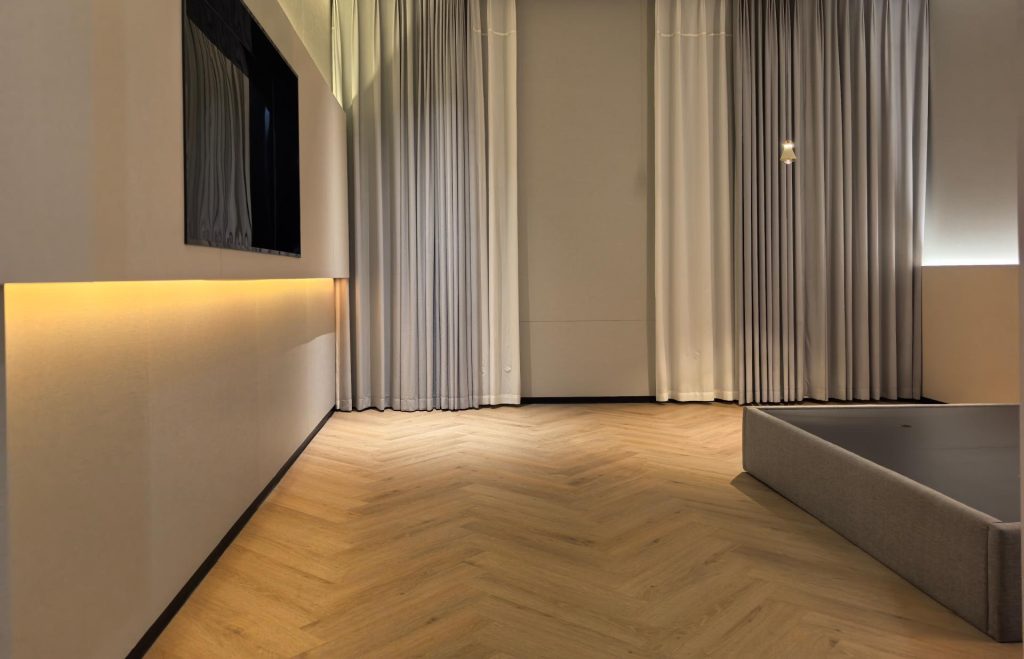
If your project needs higher pressure resistance and better dimensional stability, like in hotels offices shopping malls or busy residential areas, you might want to consider SPC Flooring. It has a rigid core layer in vinyl flooring so it not only keeps the usual benefits, that it is waterproof and pretty easy to maintain, but also keeps a more steadfast performance over a long period of everyday use.
Which type of floor is easier to clean and maintain?
If you want to make the maintenance later on easier, Vinyl Flooring is usually more convenient to handle.
For daily cleaning, you only need to use a broom, vacuum cleaner or a slightly damp mop. Most stains can be easily removed without the need for special care.
In contrast, Laminate Flooring is, in many ways, also kinda easy to keep up with, but you really need to avoid too much water pooling, and the wet stuff should be wiped off dry soon enough so it does not seep into the joints. As a whole, Vinyl Flooring has a pretty big benefit when it comes to maintenance expenses and the day to day practicality of it.
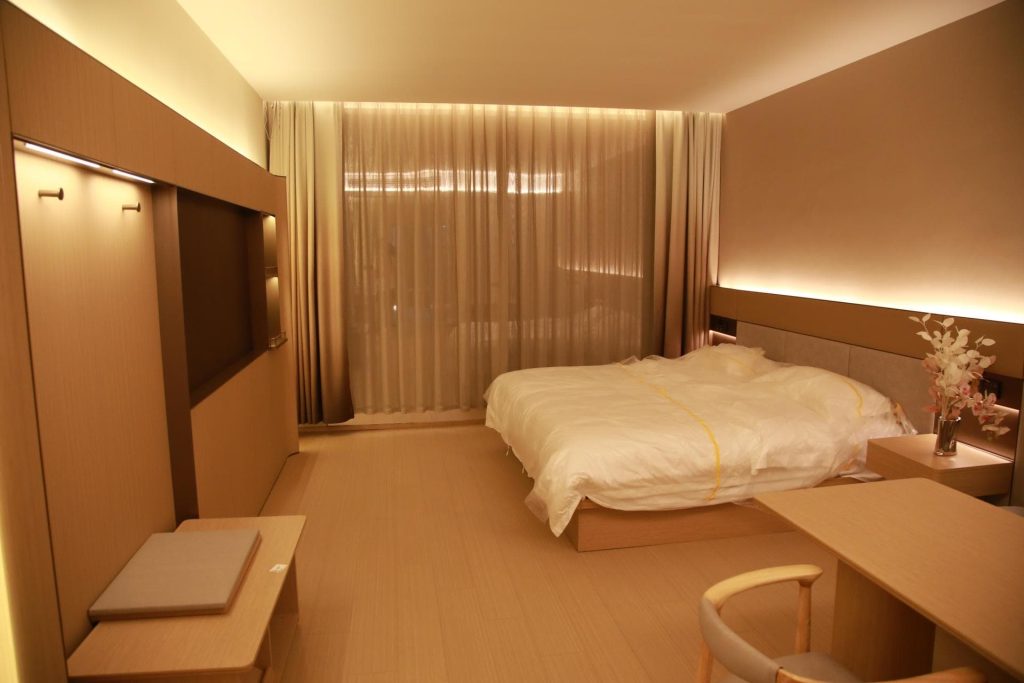
Which kind of floor has a more attractive appearance?
In the past, it was widely believed that engineered flooring was closer to natural wood flooring.
But nowadays, high-quality Vinyl Flooring has been able to adopt processes such as synchronous wood grain embossing and high-definition printing, making its appearance very similar to real wood, while also being able to simulate different styles such as natural stone, cement, and tiles.
Therefore, in terms of visual effect, the gap between the two is getting smaller and smaller.
If one desires a wider range of color and texture options, Vinyl Flooring usually has more design schemes; if one prefers the texture of traditional wood flooring, Laminate Flooring still has certain advantages.
Which kind of floor is more comfortable?
Comfort mainly lies in the foot sensation, sound insulation and heat retention performance.
Laminate Flooring, due to its wooden core, usually feels warmer when stepped on and is closer to the touch of natural wood flooring.
Vinyl Flooring has a certain elasticity and some products come with noise-reducing pads, which can effectively reduce walking noise and enhance living comfort.
If there are elderly people, children or pets in the house, Vinyl Flooring with a cushion layer often provides a more comfortable usage experience.
How should one make a choice?
If you still don’t know how to make a choice, you can make a judgment based on your actual usage requirements:
Choose Vinyl Flooring, if you:
- Hope to have true waterproofing performance
- Installed in the kitchen, bathroom or basement
- With pets or children at home
- Hope for simpler maintenance in the future
- Suitable for commercial spaces or areas with high foot traffic
Choose Laminate Flooring, if you:
- Prefers the visual effect of natural wood flooring
- Installed in dry areas such as bedrooms or living rooms
- Budget is relatively limited
- Places greater emphasis on the warm feeling of the feet
Summary
So, is Vinyl Flooring better than Laminate Flooring?
The answer is not absolute; it depends on your actual needs.
If we take into account factors such as water resistance, durability, maintenance costs, and application scope, Vinyl Flooring offers a more comprehensive performance. It is particularly suitable for modern households and commercial spaces. However, if the installation environment is relatively dry and one desires an appearance and feel similar to that of solid wood flooring, Laminate Flooring remains an economical and practical option.
When choosing flooring, instead of simply comparing which product is better, it is more advisable to consider comprehensively based on the budget, installation environment, usage frequency, and long-term maintenance costs. Only by selecting the product that best meets your actual needs can you achieve a better usage experience and higher long-term value.