

Magnesium Oxide Board for Ceilings: Fireproof, Moisture-Resistant Solution
Ceiling materials not only need to have excellent decorative effects, but also need to meet requirements such as fire resistance, moisture resistance, dimensional stability, durability, and compatibility with different surface systems. For construction projects that prioritize these properties, Magnesium Oxide Board, abbreviated as MgO Board, can be used as a practical choice for ceiling materials.
Magnesium oxide board is a rigid panel commonly used in indoor construction. With its fire resistance, moisture resistance, strength, and good surface adaptability, magnesium oxide board is suitable for residential, commercial buildings, and some ceiling applications with high performance requirements.This guide will provide a detailed explanation of why magnesium oxide board is particularly suitable for ceiling applications, its comparison with traditional materials, the best usage scenarios, and the key matters that need to be understood before specifying or installing.
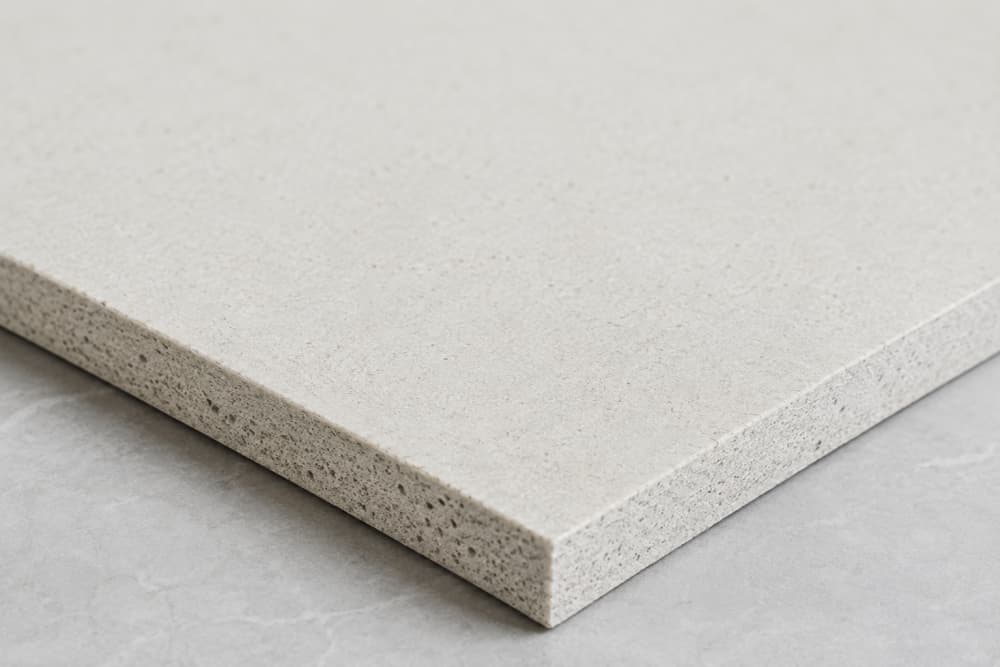
What is Magnesium Oxide Board?
Magnesium oxide board is a mineral-based construction panel made mainly from magnesium cement. It is usually reinforced with glass fiber mesh and filled with mineral fillers. It is non-flammable and has stable dimensions, avoiding many common weaknesses of gypsum board or wood-based panels.
The common thickness for ceiling use ranges from 6mm to 12mm, with 8–10mm being the most frequently used for standard ceilings or fixed ceilings. The panels are typically supplied in a 4ft × 8ft (1220×2440mm) size, with a smooth or slightly textured surface, and can be directly painted or further decorated.
Why Choose Magnesium Oxide Panels For The Ceiling?
The ceiling faces unique challenges: it needs to support lamps, resist rising moisture from below, meet fire safety regulations, and remain stable for decades. Magnesium oxide panels are more capable of addressing these requirements than many traditional materials.
Outstanding fire resistance performance
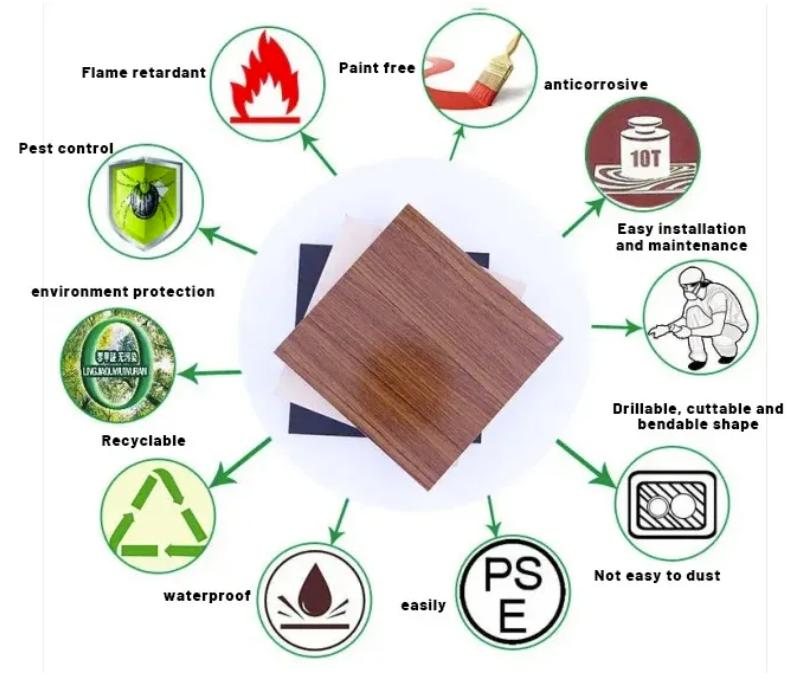
Magnesium oxide panels have been rated as non-combustible materials (in most international standards, they are classified as A1 grade). They do not facilitate the spread of flames or produce excessive smoke. In a properly constructed system, they can help achieve a fire resistance limit of 1 to 3 hours. This makes them particularly valuable in multi-family residences, commercial buildings, schools, and hospitals.
Outstanding moisture and mold resistance
While gypsum boards tend to get softened and become weak on contact with water, the best magnesium oxide boards will be able to preserve their structural properties in moist environments. In addition, they will not promote the development of mold and will not swell or peel off even on temporary contact with water.
Lightweight yet high-strength
While magnesium oxide panels have lower weight compared to cement panels, their mechanical properties are much higher than those of conventional gypsum wallboards. This means that sagging and damage from lamps, speakers, or other installation processes is highly unlikely due to higher bending and nail holding strength.
Health and environmental benefits
Almost all magnesium oxide boards are free from any asbestos, formaldehyde, crystalline silica or any other VOCs. These boards are entirely non-toxic and fully recyclable. This improves indoor air quality and promotes green buildings.
Easy for surface treatment
The surface can well accept sealant, paint, texture coating and veneer. In many installations, fewer decorative layers are required compared to gypsum systems.
Magnesium Oxide Board vs Traditional Ceiling Materials
| Property | MgO Board | Gypsum Board | Fiber Cement Board | OSB / Plywood |
| Fire Resistance | Excellent (A1) | Moderate | Good | Poor |
| Moisture Resistance | High | Low | Moderate | Low |
| Mold Resistance | Excellent | Poor | Good | Poor |
| Strength / Impact | High | Low | High | Moderate |
| Weight | Medium-Light | Light | Heavy | Medium |
| Ease of Installation | Good | Excellent | Moderate | Good |
| Typical Cost | Higher upfront | Lowest | Moderate–High | Low–Moderate |
MgO board kind of lands in this performance sweet spot, it is stronger more durable than gypsum, and it feels lighter plus kinda easier to handle than cement board, plus it is far safer than wood based panels when it comes to fire, or moisture prone areas.
Best Applications for MgO Ceiling Boards
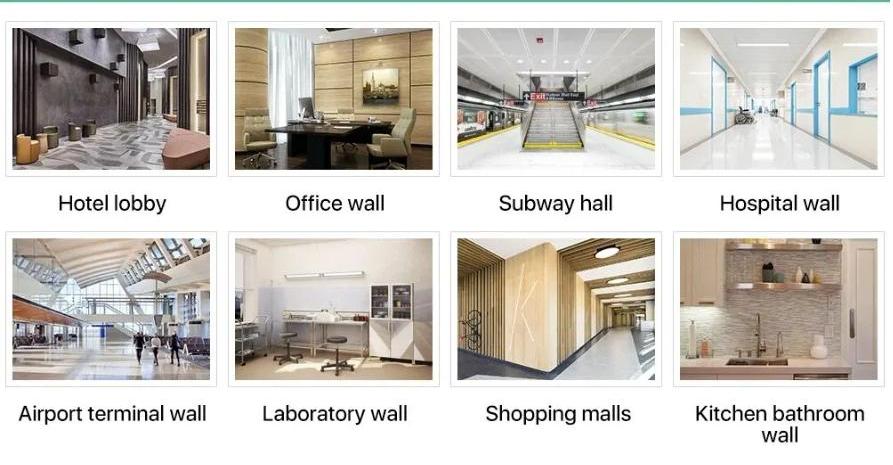
The specific application depends on the product specifications and local building codes. Common applications include:
- Residential flat roofs and ceilings
- Ceilings in bathrooms, kitchens and damp areas
- Commercial offices, retail spaces and hotels
- Multi-family residences and high-rise buildings
- Schools, medical facilities and public buildings with strict fire safety requirements
- Basements and areas in coastal or high-humidity regions
- Fireproof corridors and vertical shaft ceilings
It is also suitable as a panel for insulation or soundproof ceiling systems.
How to Choose the Right Magnesium Oxide Board for the Ceiling
Not all magnesium oxide boards are of the same quality. The key selection criteria include:
- Type of setting material: Opt for magnesium sulfate-based or low-chlorine formulations to reduce the risk of “re-oxidation” or metal corrosion in humid environments.
- Thickness: Most ceilings use 8–10mm; thicker boards can be selected for higher impact or longer spans.
- Density and strength: Pay attention to consistency in density (typically 0.9–1.2 g/cm³) and strength with documented support.
- Certification: Ensure compliance with relevant fire, structural, and building code standards (such as ASTM, ICC-ES, or local equivalents).
- Surface quality: A smooth surface can reduce the time required for painting the ceiling’s finish.
How to Install Magnesium Oxide Board on a Ceiling
1. Prepare the ceiling structure
Before installing the panels, check whether the ceiling joists or support system has been correctly leveled, aligned, and firmly fixed.
The spacing of the joists and supports should be set according to the installation requirements provided by the panel manufacturer.
2. Measure and cut the panels
Measure the actual size of the ceiling and plan the arrangement of the panels before cutting.
Use tools suitable for MgO panels for cutting and follow the construction recommendations of the manufacturer.
Properly planning the layout of the panels can reduce material waste and minimize the number of unnecessary seams.
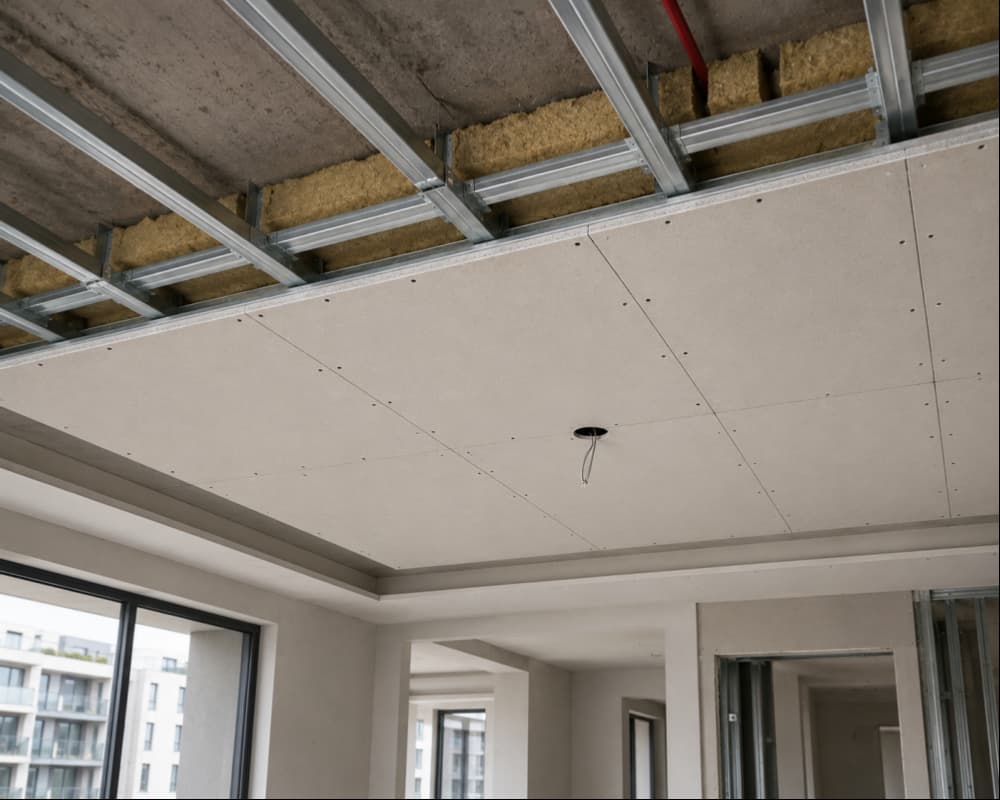
3. Position and fix the panels
Place the MgO panels on the ceiling joists and fix them using compatible fasteners.
The type of screws, spacing, edge distance, and support spacing should be carried out in accordance with the installation instructions of the manufacturer.
When fixing the screws, avoid over-tightening to prevent damage to the panel surface.
4. Handle panel seams
After the panels are fixed, handle the seams between the panels and the screw holes according to the final finish system.
Seam handling is very important because improper handling may cause obvious seams after painting, or even increase the risk of surface cracking.
5. Perform final finish treatment
After the base layer is treated, perform the final finish according to the design requirements, such as painting, coating, decorative panels, or other compatible materials.
The finish materials used should be compatible with the surface of the MgO panels and suitable for the environmental conditions of the installation area.
Conclusion
The panels made from magnesium oxide offer great benefits like being non-flammable, waterproof, durable, and maintaining a high indoor air quality level. Even though the cost is somewhat higher compared to regular gypsum boards, their great benefits can be more than worth the money paid when the environment demands certain standards.
When specifying magnesium oxide panels for ceilings, it is advisable to choose low-chlorine formulations, those with verified technical data, and to strictly follow the correct installation procedures. After proper use, magnesium oxide panels can provide safer, more durable, and more in line with current building performance expectations ceilings.
Whether it is the ceiling of a residential bathroom, a commercial corridor, or the fire protection system of multi-family residences, magnesium oxide panels are worthy of serious consideration as a high-performance solution.