

Marble Wall Panels vs Marble Tiles: Which Requires Less Maintenance?
Deciding between marble wall panels and marble tiles is one of the most common headaches homeowners and designers get when they’re planning a bathroom, a kitchen backsplash, or even a feature wall; however, they behave quite differently once installed – cleaning schedules, grout upkeep, moisture resistance can vary considerably between them, so it is wise to research both options to understand which option will save time over time and effort in maintenance costs.
Understanding the Basic Differences
What Are Marble Wall Panels?
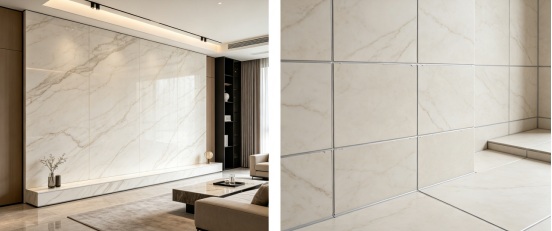
Marble wall panels are basically big format sheets, either real natural marble or a composite core with a thin marble skin or veneer, made so they work for vertical spaces. Since they come in oversized panels, like several feet across in some cases, you can cover a whole wall with just one or two sections. People use them a lot for shower surrounds, TV feature walls, and that hotel lobby cladding look— you know, that “seamless, polished” vibe where the finish matters most.
What Are Marble Tiles?
Marble tiles are, basically cut into smaller uniform pieces (like 12×12 inches or sometimes 24×24 inches) and then they get installed individually using spacers, after that you finish with grout. This is kind of been the usual way for decades and it still shows up a lot for flooring and even for mid-size wall spaces, mostly because the tiles are more manageable to haul, easier to trim, and straightforward to swap out one piece at a time.
The real core difference that ends up driving everything else in this comparison isn’t really the marble itself— it’s the installation method and how it changes the long term upkeep.
Grout Lines: The Hidden Maintenance Burden
Grout is the single biggest maintenance variable in this comparison. Marble tile installations require a network of grout lines between every piece, and grout is inherently porous — it absorbs moisture, soap residue, and soil over time. Industry data from the Tile Council of North America notes that unsealed grout can begin absorbing stains within hours of exposure to common household substances, which is why bathroom and kitchen grout so often develops discoloration or mildew within a year or two of installation.
Marble wall panels dramatically reduce this problem. Because panels are installed in large sheets, there are far fewer seams — and in many premium installations, virtually none. Fewer seams mean fewer places for grime, mold, and bacteria to take hold, and no grout to scrub, re-seal, or eventually replace.
Cleaning and Daily Upkeep Compared
Cleaning Marble Tiles
For routine care, most people end up doing things like:
- Weekly grout scrubbing using a stone-safe, pH neutral cleanser
- Re-sealing the grout now and then (typically every 1–2 years) to keep that water resistance working
- Giving the grout lines extra focus in high moisture areas, like showers
Overall this usually turns into a bit more hands-on time, especially in bathrooms where that humidity can move mold along faster in the grout.
Cleaning Marble Wall Panels
Since the surface is continuously maintained it is easier to maintain:
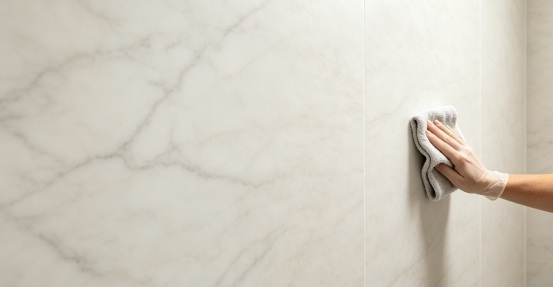
- A quick clean-up using an easy cloth and a mild non-acidic cleaner
- There is no grout cleaning or re-sealing needed
- There are fewer crevices in which dust or soap scum to collect
In practical terms, many homeowners report going from weekly deep-cleaning routines with tile to a simple monthly wipe-down with panels — a meaningful reduction in ongoing effort.
Water and Stain Resistance
Marble, in its own natural state, is a porous stone, with a water uptake rate that is usually somewhere around 0.5% to 2% , based on the Marble Institute of America. That porosity is basically the reason marble is kinda easy to stain—oil, wine, or acidic materials can sink in no matter the format.
But, the way it’s installed can really shift how easily moisture and discoloration take hold in real life:
- Marble tiles are more susceptible to the infiltration of moisture at every grout joint. That’s why bathrooms that have tiled walls are more susceptible to developing mildew along joints.
- Marble wall panels specifically those featuring sealed by the factory or composite backings, provide an even barrier to water penetration, thus reducing the possibility of moisture being trapped on the wall.
Either way, it’s still smart to seal the marble periodically , typically every 6–12 months, though the exact timing depends on foot traffic and how much it’s exposed.
Long-Term Durability and Repair Costs
Each option has trade-offs when damage occurs:
Marble tiles allow for localized repairs — if one tile cracks, only that piece needs replacing. However, matching the exact veining and color of the original batch can be difficult years later, and repeated grout repairs add up in labor cost over time.
Marble wall panels provide a stronger push against moisture related breakdown and they need way less routine maintenance, but since they’re installed as big single units, if one panel gets damaged, you might end up swapping out a larger slice instead of doing a tiny patch, you know.
In short: tiles mean simpler spot repairs, while panels mean a smoother day to day routine with fewer occasions where anything actually needs fixing in the first place.
Maintenance Comparison at a Glance
| Factor | Marble Tiles | Marble Wall Panels |
| Grout maintenance | Required, ongoing | Minimal to none |
| Cleaning frequency | Weekly | Monthly |
| Mold/mildew risk | Higher (grout lines) | Lower (fewer seams) |
| Water resistance | Moderate | Higher |
| Repair method | Piece-by-piece | Section replacement |
| Long-term effort | Higher | Lower |
Which One Should You Choose?
High-moisture zones (showers and bathroom walls and kitchen backsplashes) Wall panels made of marble tend to be the less-maintenance and more practical option.
Large floor spaces or tighter budgets: Marble tiles are an excellent, cost-effective choice when you’re ready to maintain your grout regularly.
It’s important to note it’s important to note that “low maintenance” doesn’t mean “no maintenance” — both materials benefit from regular sealing and soft stone-safe cleaning solutions to maintain their appearance over time.
In terms of regular maintenance, marble wall panels offer distinct advantages in comparison to traditional tiles; there are fewer seams, less grout to maintain and superior resistance to staining and moisture. If you are looking for a stunning appearance without the need for a rigorous cleaning routine, these panels are the better long-term investment.
If you’re considering high-quality low-maintenance alternatives for your next project, take the time to look through our wall panels to find the perfect option for your project.