

Modern Bedroom Wall Panelling Ideas for Stylish Interiors in 2026
A bedroom is the most personal room in the house, yet it’s usually the one left with the plainest walls, just four flat surfaces and not much else. Wall panelling is quietly becoming the easiest way to change, bringing texture and depth, and that sort of genuinely custom vibe, without a full renovation. Let’s walk through the styles that are currently leading bedroom design, and also how to choose a material that’ll actually hold up once those panels are on the wall.
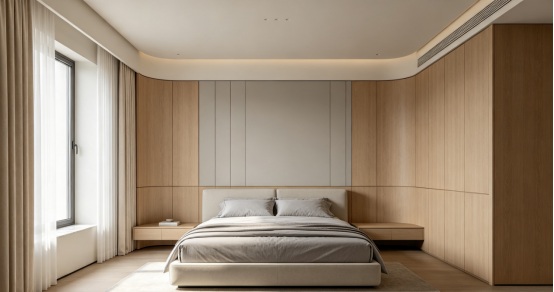
Why Wall Panelling Is Still One of the Biggest Bedroom Trends in 2026
Wall panelling is still popular for a reason: it provides an impressive visual change without any structural work. A simple weekend project could transform a boring building-grade wall to something that is architecturally designed. The thing that has changed is the substance that creates the appearance. Panelling was once a solid wood-heavy, costly, and susceptible to warping with humidity. Modern composite materials such as PVC as well as WPC (wood-plastic composite) are now able to replicate the same wood grain warmth, while preventing moisture and needing lower maintenance.
Another thing to note is the size. Interior designers are moving away from the singular “feature wall” that dominated in the past decade, and have embraced more enthralling, floor-to-ceiling designs that surround a space rather than disrupt it. It’s not a radical change, however it is transforming the way bedrooms are decorated this year.
7 Modern Bedroom Wall Panelling Ideas for 2026
1. Vertical Slat Wood-Look Panelling
Thin vertical slats that are evenly spaced remain the main style of panelling for bedrooms in 2026. The slats’ narrow lines draw the eyes upwards and make ceilings appear taller and fit perfectly in minimalist Scandinavian, Japanese-inspired and minimalist bedrooms.
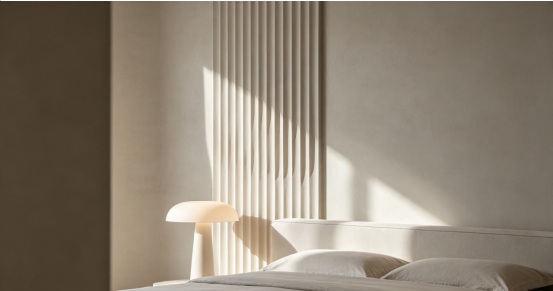
2. Fluted and Reeded 3D Panels
Fluted panels feature concave grooves. Reeded panels have convex ridges, each creating a sculptural display of shadow and light across the wall. This is one of the most popular “quiet luxury” looks right this moment, particularly on a bed frame for headboards or as an accent background.
3. Floor-to-Ceiling Full Wall Panelling
Instead of stopping at the chair rail length, the paneling now extends through the ceiling to floor, creating what architects call an effect of cocooning — the bedroom feels encased and thoughtful, not just embellished on one wall.
4. Upholstered and Acoustic Panels Behind the Bed
Soft, fabric-wrapped panels add tactile warmth and, in many cases, genuine acoustic benefit — the padded surface helps absorb sound rather than reflect it, which matters in a room meant for rest. This style works particularly well for anyone in an apartment or a home with shared walls.
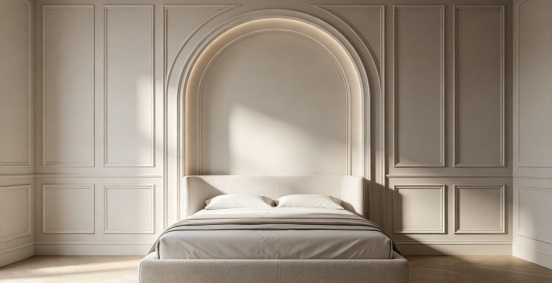
5. Arched Moulding and Grid-Style Frames
Applied trim arranged into arches or symmetrical grid frames brings a more romantic, almost Parisian-apartment feel to a bedroom. Painted in a soft neutral tone, the raised trim creates depth through shadow alone, without needing bold color.
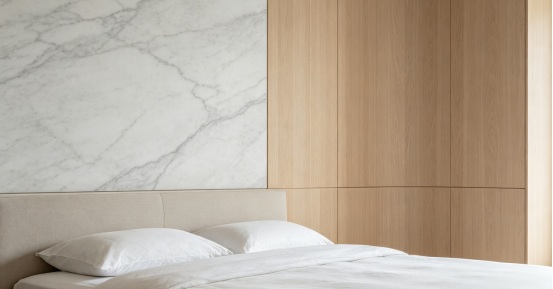
6. Wood Grain and Marble-Effect Composite Panels
Composite panels with a realistic wood grain or marble effect print now bring most of that visual richness people expect from natural materials, but without the bill, the bulk, or the moisture sensitivity you’d get with the real thing.
7. Textured Neutral-Tone Panels for a Minimalist Look
For bedrooms leaning toward a calmer, low-saturation palette, subtly textured panels in warm neutrals add quiet visual interest — enough to avoid a flat wall, without competing with the rest of the room’s decor.
How to Choose the Right Material for Your Bedroom Wall Panelling
The style you choose matters, but the material behind it determines how the panelling actually performs over time — and this is where a lot of renovation plans run into trouble.
Solid wood provides the most luxurious, authentic, most realistic texture but comes with some compromises: a higher price as well as more weight to be hung and the risk of being subject to variations in humidity that can result in gaps or warping in time which is a significant danger in rooms with windows or bathrooms.
MDF is sort of a typical mid-range pick, gives you crisp lines and a budget friendly way to get detailed moulding or even grid style patterns. But the thing is, it has a main weakness, it doesn’t love moisture ; MDF can swell, or start deteriorating if it sits in sustained humidity. So that sorta limits where you should use it.
PVC and WPC composite panels basically have become the material of choice for a bigger chunk of 2026 panelling projects, mostly because they kind of sort out two issues in one go. These composites are engineered to resist moisture, warping and also mold growth, but they’re still finished with very believable wood-grain type surfaces or more tactile textured finishes, so it looks like natural material instead of something synthetic. In bedrooms, and I mean especially the ones without ideal ventilation or climate control, that mix—visual adaptability along with moisture resistance—makes composite panelling a lower-risk long term investment than solid wood, or even MDF.
Installation Tips for a Polished Finish
A few decisions in the planning process can will determine the difference between panels that look professional and polished, versus panelling that looks like a flimsiest of a thought. Begin by deciding if you’re focusing on only a single accent wall, or extending the full height of the space. This decision must be taken before you purchase material, as it affects the panel’s total count as well as the way seams are laid out. Be aware of the how the slats are arranged: vertical ones emphasize the height of the wall, while they can also make a smaller space appear larger. Don’t forget lighting. Fluted or reeded panels depend on shadows to produce a 3D effect So a strategically placed lighting fixture or wall light can make a big distinction in the way that the texture appears once it’s installed.
Whether you’re drawn to the clean rhythm of vertical slats, the shadow play of fluted panels, or the softness of an upholstered headboard wall, the style you choose says as much about your bedroom’s mood as any paint color could. But the material underneath is what determines whether that look still holds up in five years — which is why more homeowners and designers are turning to composite panelling over solid wood or MDF. If you’re planning a bedroom renovation and want a material built to handle real-world humidity and daily wear, explore Huigong’s decorative wall panel range, including WPC and PVC options suited to a wide range of bedroom styles.