

SPC Wall Panel Thickness: How To Choose The Appropriate Thickness
SPC (Stone Plastic Composite) wall panels are a new type of interior decoration material that has gained significant attention in the decoration market in recent years. They are mainly made of natural stone powder and PVC resin, and are formed through extrusion. They possess outstanding advantages such as waterproofing, moisture resistance, wear resistance, and environmental friendliness, and are widely used in various indoor wall decoration scenarios such as residential, hotels, and commercial spaces.
During the selection process of SPC wall panels, “thickness” is often an important technical parameter. The choice of thickness directly affects the sound insulation effect, impact resistance, installation method, service life, and overall cost of the product. Choosing too thick will result in waste of costs, while choosing too thin will fail to meet the usage requirements – finding that “just right” thickness is the wise choice.
This article will start from the common thickness specifications of SPC wall panels, systematically explore the relationship between thickness and performance, recommended solutions for different scenarios, key factors affecting the choice, and help you avoid common misunderstandings, ultimately making the optimal choice that balances performance and cost.
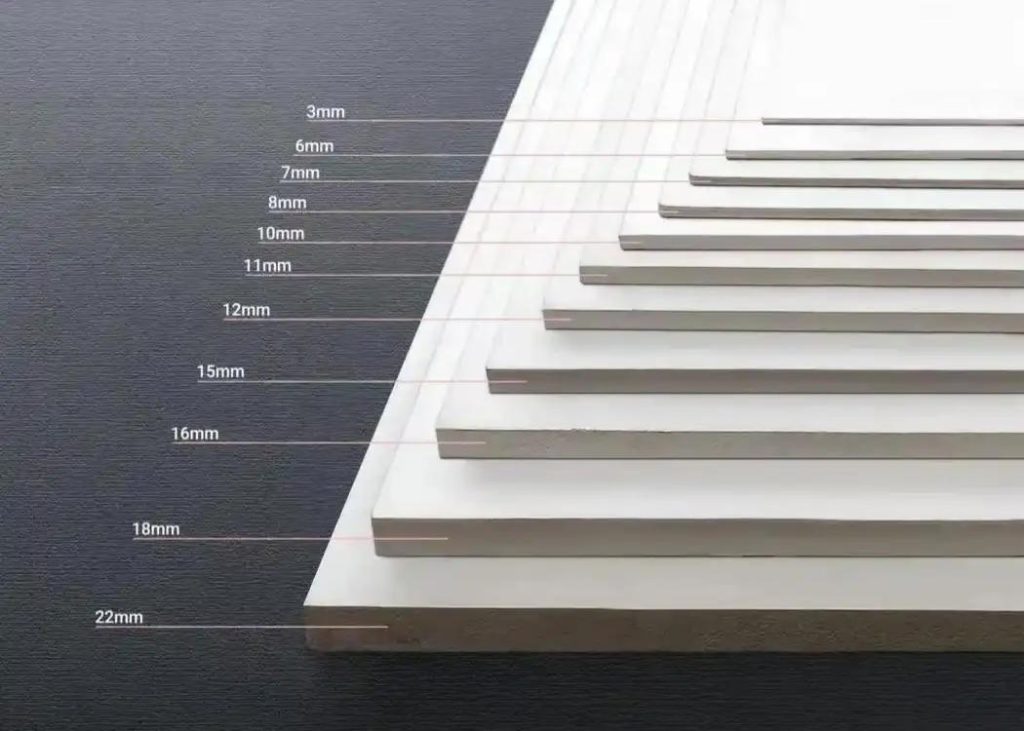
Table of Contents
Common Thickness Specifications of SPC Wall Panels
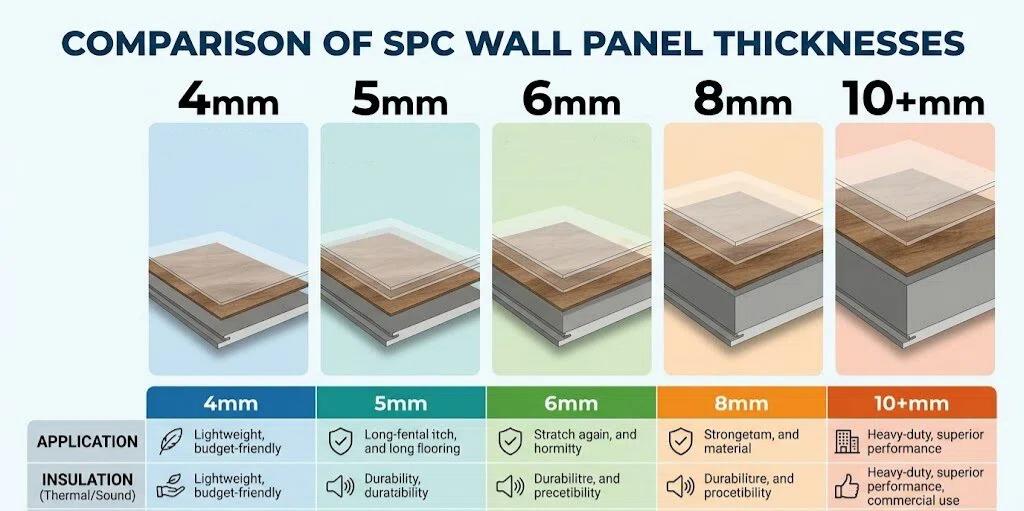
| Thickness specification | Applicable scenarios | Sound insulation performance | Impact resistance | Price range |
| 4mm | Lightweight residential wall decoration | ★★☆☆☆ | ★★☆☆☆ | Economic type |
| 5mm | Ordinary residential bedrooms, living rooms | ★★★☆☆ | ★★★☆☆ | Mid-range and low |
| 6mm | Residential entire house, light commercial | ★★★★☆ | ★★★★☆ | Mid |
| 8mm | Commercial spaces, areas with large crowds | ★★★★☆ | ★★★★★ | Mid-to-high |
| 10mm+ | Industrial, heavy-load, high-end commercial | ★★★★★ | ★★★★★ | High |
Thickness Specifications Explanation
- 4mm: Entry-level product, lightweight and low in price, suitable for light residential scenarios with low requirements for wall decoration and mainly aiming for aesthetics. The structural strength and sound insulation performance are relatively limited.
- 5mm: A moderately priced entry-level mid-range product, suitable for most ordinary residential bedrooms and secondary spaces. With controlled price, it has basic durability.
- 6mm: The current mainstream specification, with balanced comprehensive performance, covering all residential areas and light commercial scenarios. It is the preferred thickness for most home decoration projects.
- 8mm: Commercial-grade product, significantly enhancing impact resistance and sound insulation capabilities, suitable for commercial spaces with high foot traffic. Attention should be paid to the wall’s bearing capacity during installation.
- 10mm+: Engineering-level or high-end custom products, used for special scenarios or projects with extremely high requirements for sound insulation and structural strength, with relatively higher costs.
The Effect of Thickness On Performance
Thickness is not an isolated parameter; it influences multiple core performance aspects of the product. The following analysis is conducted in five dimensions one by one:
Sound insulation effect
The sound insulation principle of SPC wall panels mainly relies on the density and thickness of the material. The greater the thickness, the more attenuation of sound waves during the penetration process, and the better the sound insulation effect. Generally speaking:
- 4-5mm thickness panels: Provide basic sound insulation, which can reduce some environmental noises, but have limited effect on shielding mid-low frequency sounds.
- 6mm panels: Meet the basic requirements for wall sound insulation in daily living, suitable for ordinary residences.
- 8mm and above: Significantly improve sound insulation effect, suitable for bedrooms, meeting rooms and other scenarios requiring higher quietness.
It should be noted that the overall wall sound insulation effect is also affected by the installation process (whether there is a cavity) and the accompanying filling materials. Simply increasing the panel thickness is not the only solution.
Impact Resistance
Impact resistance indicates the ability of SPC wall panels to withstand collisions and compressions. The greater the thickness, the stronger the overall rigidity and toughness of the material. When subjected to external forces, the deformation is smaller and there is less likelihood of cracks or dents.
In scenarios with high foot traffic or frequent contact (such as corridors, exhibition halls, children’s rooms), choosing products with a thickness of 6mm or more can effectively extend the service life and reduce the frequency of subsequent maintenance.
→ Learn about Huigong SPC Wall Panel: Wear-resistant and Waterproof
Waterproof and Moisture-proof Performance
The waterproof performance of SPC wall panels mainly comes from the material itself (the natural waterproof property of stone plastic composite material), rather than the thickness. From this perspective, there is little difference in the material’s waterproof ability between the 4mm and 8mm products.
However, thickness has an indirect impact on the stability of the waterproof system: thick panels are less likely to warp and deform due to temperature and humidity changes after installation, thus maintaining the sealing of the joints and reducing the risk of water seepage. For high-humidity areas such as kitchens and bathrooms, it is recommended to choose a thickness of 6mm or above.
Thermal stability
SPC materials will undergo slight thermal expansion and contraction when the temperature changes. Thicker sheets have a larger volume and thus the absolute value of the deformation caused by temperature changes is also greater, but the overall structure is more stable and the deformation distribution is more uniform.
In regions with large temperature differences (such as northern heating areas or areas with large diurnal temperature variations), it is recommended to choose a thickness of 6mm or more, and leave appropriate expansion joints during installation to prevent warping or cracking at the joints due to thermal expansion and contraction.
Installation convenience
The thickness has a direct impact on the installation process:
- Thin panels (4-5mm): Light in weight, easy to handle and cut, high construction efficiency, suitable for DIY projects or projects with tight schedules.
- Thick panels (8mm or more): Increased weight, higher requirements for the flatness and stability of the installation base, slightly more difficult construction, usually requiring professional construction teams to operate.
Bonding method: Thin panels mostly use adhesive bonding; for thick panels, in addition to this, it is recommended to combine with snap-in or hanging systems to ensure long-term fixation effect.
Recommended thickness for different usage scenarios
The requirements for wall panels vary in different spaces. The following comparison table can serve as a quick reference:
| Usage scenario | Recommended thickness | Key reasons |
| Bedroom | 5~6mm | Quiet and comfortable, with light load and moderate sound insulation is sufficient. |
| Living room | 6mm | Main wall for visual effect, balancing aesthetics and durability. |
| Kitchen | 6~8mm | For oily and humid environments, stronger moisture-proof performance is required. |
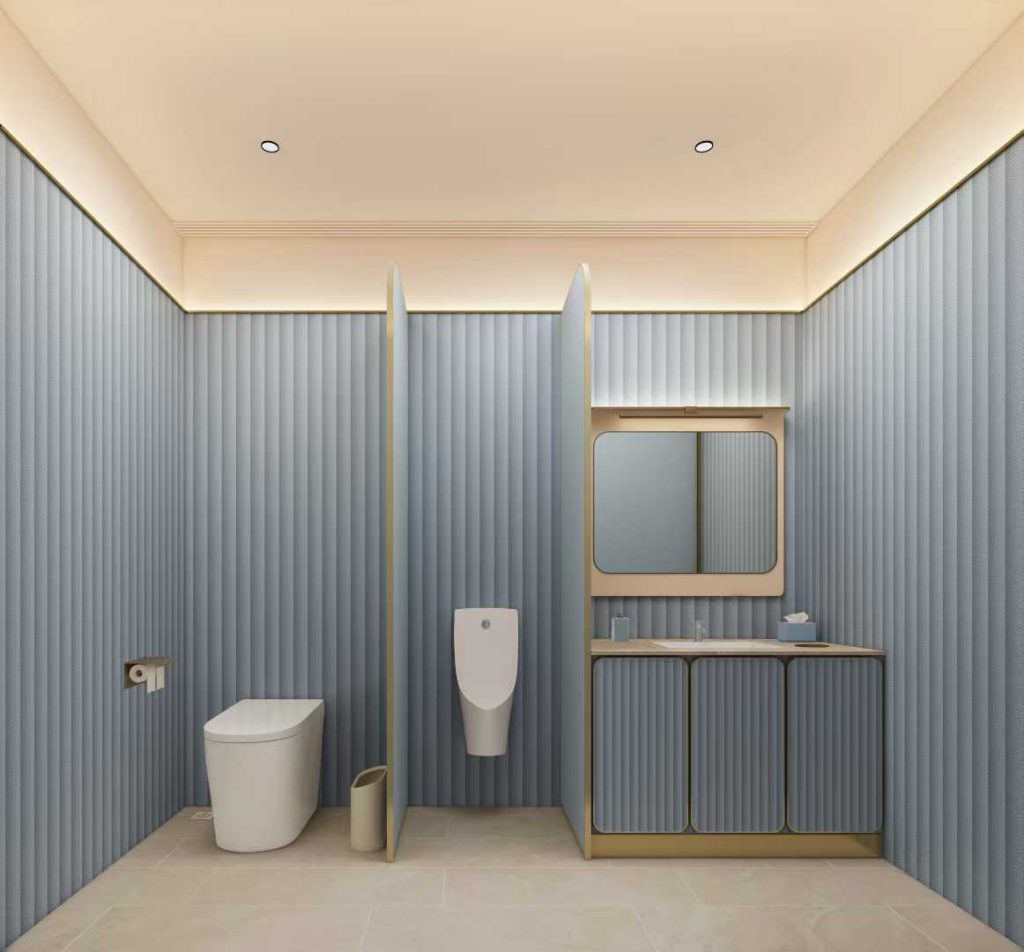
| Bathroom | 6~8mm | High humidity, waterproofing is the priority. |
| Office | 6mm | Medium flow rate, balancing economy and performance. |
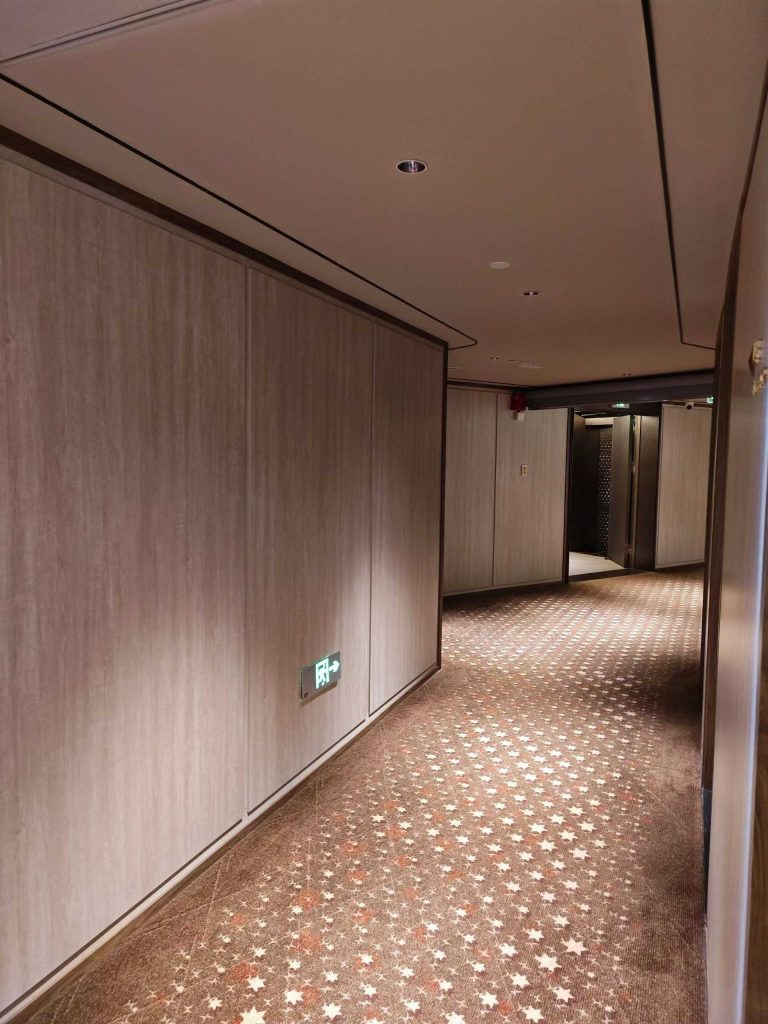
| Hotel corridor | 8mm | High-frequency collisions, high impact resistance is required. |
| Restaurant / Mall | 8~10mm | Heavy usage, frequent cleaning is needed. |
| Warehouse / Exhibition hall | 10mm+ | Heavy load or special industrial requirements. |
Key Factors Influencing Thickness Selection
Wall Substrate Condition
The flatness of the wall substrate is a crucial factor in selecting the appropriate thickness. For newly constructed walls with a perfectly flat surface, various thicknesses of boards are suitable; however, for old walls with uneven surfaces, a more nuanced approach is needed:
- If leveling the substrate is required before construction, the standard thickness can be selected.
- If substrate leveling is not possible, using thinner boards (4-5mm) allows for adjustments to the adhesive layer thickness, reducing reliance on substrate flatness.
When renovating large areas of old walls, the impact of the increased total wall thickness on the net interior space must also be considered.
Budget and Cost Control
Thickness and cost are generally directly proportional. Under the condition of limited budget, the following strategies can be adopted for optimization:
For key spaces (main walls of the living room, bathroom), choose thicker specifications to ensure the quality of the core area.
For secondary spaces (storage rooms, auxiliary corridors), select standard or thin specifications to achieve overall cost control.
The price differences among different brands for the same thickness are also significant. It is recommended to conduct brand comparisons after determining the thickness range.
Installation Method
Different installation methods have different requirements for thickness:
Direct adhesive method: The thickness requirement for the board is relatively loose, ranging from 4 to 8 mm. The key lies in the selection of adhesive and the treatment of the base layer.
Snap-in installation method: The board needs to have a certain thickness and strength to withstand the clamping force of the snap-in parts. It is usually suitable for products over 5 mm.
Railing hanging installation method: This is mostly used for thick boards of 8 to 10 mm or large-scale commercial projects. The overall structure is stable and can effectively avoid problems caused by uneven walls.
Climate and environmental factors
The climate conditions of the location have a certain influence on the thickness selection:
- Heating areas: There is a large temperature difference between indoors and outdoors. It is recommended to choose a thickness of 6mm or above, and combined with elastic joint treatment.
- High humidity areas: Pay special attention to moisture resistance. A thickness of 6 to 8mm combined with waterproof base sealant is a better solution.
- Areas with extreme temperature differences: Thick plates have better thermal stability, and this can be given priority consideration.
Purchase Suggestions
After going through the systematic review of the previous chapters, we can summarize the purchasing logic into the following three steps:
- Step 1: Determine the usage scenario → Refer to the scenario recommendation table to determine the thickness range.
- Step 2: Evaluate the base layer and installation method → Confirm whether the construction conditions match the selected thickness.
- Step 3: Comprehensive comparison of products within the same thickness range → Focus on the thickness of the wear layer, the density of the base material, brand reputation and cost-effectiveness.
In summary, there is no universal standard answer for the thickness selection of SPC wall panels. However, there is definitely a solution that best suits your specific needs. For most residential projects, 6mm is the most balanced choice in terms of performance and cost; for commercial spaces, 8mm is given priority; and for special requirements, it can be extended further. Choosing the right thickness is essential to enable SPC wall panels to truly showcase their excellent properties, bringing lasting beauty and practical value to your space.