

UV Marble Wall Panels for Bathrooms: Are They a Good Alternative to Tile?
More homeowners renovating bathrooms are shifting toward UV marble wall panels instead of the usual tile, and honestly, for good reasons. These panels give you a luxurious marble look without grout lines, lengthy duration of installation, or concerns with mold that tile typically can cause. They’re, however, not a perfect match for every job. We evaluate tiles and UV marble with regard to installation, waterproofing durability, and cost to help you decide which one is best suited to your bathroom.
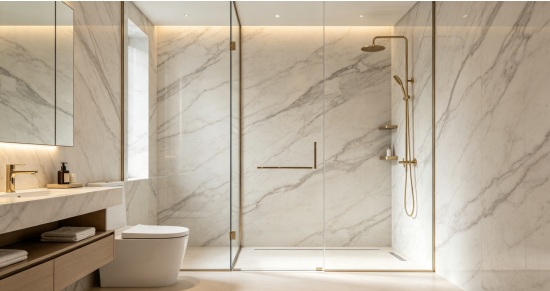
What Are UV Marble Wall Panels?
UV marble wall panels are usually built on a PVC or composite base, then they are printed with a high-resolution marble design and finished with a UV-cured protective coat. That protective coat is kinda the part that really distinguishes them from older laminate wall options — it hardens when exposed to ultraviolet light to form a scratch-resistant, shiny surface. And because of that, you typically don’t need to wax it, seal it, or keep polishing just to keep that look. So the end result feels like natural marble, but the panel itself is way lighter than stone or ceramic tile, at least by a lot.
UV Marble Panels vs. Tile: Key Differences at a Glance
| Factor | UV Marble Wall Panels | Traditional Tile |
| Installation time | 1–2 days for an average bathroom | Often 3–5+ days including curing time |
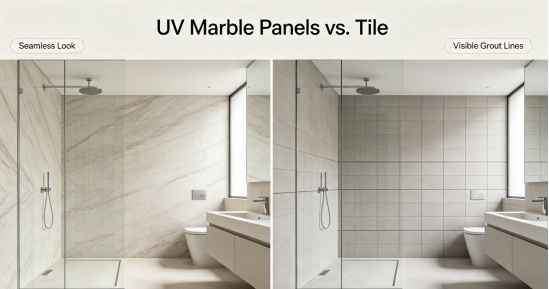
| Grout lines | None (seamless panels) | Yes, requires regular sealing |
| Waterproofing | Panel + sealed seams | Depends on grout and substrate quality |
| Weight | Lightweight, easy to handle | Heavy, especially natural stone tile |
| Maintenance | Wipe-clean surface | Periodic grout cleaning/resealing |
| Cost (material + labor) | Generally lower to comparable | Higher, especially with natural stone |
| Design consistency | Uniform pattern across panels | Natural stone varies tile to ti |
Advantages of UV Marble Wall Panels in Bathrooms
No Grout Lines Mean Less Mold and Mildew
Grout is porous and in bathrooms with humid conditions, it’s one of the typical areas for mildew and mold to grow. Seamless UV marble panels eliminate most of these joints, removing the surface area where moisture and soap scum typically accumulate — a significant advantage for anyone who has spent hours scrubbing tile grout lines.
Faster, Cleaner Installation
Since panels are installed in huge sheets instead of single tiles, bathroom remodeling projects accelerate and create less dust and debris. This is particularly important for houses or rental units, in which minimizing downtime is a top priority.
Lightweight and Easy to Handle
As opposed to natural stone or ceramic tiles, PVC-based marble panels are light enough to allow one installer to move through, thus reducing time spent on labor and reducing structural load issues on the walls of the interior.
Consistent, High-End Look Without Natural Stone Cost
Natural marble tile comes with a premium price and it also needs ongoing sealing, just to keep it from staining. UV printed panels give you that marble vibe for less, while also skipping the sealing routine that the stone would otherwise need.
Scratch and Fade Resistance from UV Coating
A UV-cured surface layer offers greater scratch, yellowing, and fading resistance from repeated cleaning than its uncoated laminate alternatives, helping panels maintain their aesthetic over time.
Potential Drawbacks Compared to Tile
UV marble panels aren’t without trade-offs. They generally have lower heat tolerance than ceramic tile, making them less suitable directly around heat sources. If a panel is damaged, replacing a single section is typically less straightforward than swapping out one tile — often the full panel section needs replacement. And while UV printing technology has improved significantly, some buyers who prioritize the exact tactile feel of natural stone may still notice a difference up close.
Waterproofing and Bathroom Suitability
Performance of waterproofing depends on the method of installation and not just the material. The seams between panels are usually secured with a water-proof strips of adhesive or trim which create a mostly continuous barrier, as opposed to the lines of grout that are found in tiled walls. This is one of the reasons panels work well for shower enclosures and wet walls, if the substrate that is used to construct them is prepared and resistant to moisture prior to installation — a process that is just as important as tiles as it does with.
Installation Process: What to Expect
- Measure and design layout – Wall dimensions are measured to determine the panel’s sizing and seam position.
- The substrate must be prepared. The wall’s surface has been cleaned, leveled and then sprayed with water as required.
- Panels cut to size. The panels are cut to be able to fit around corners, fixtures and outlets.
- Seal seams and edges — Waterproof sealant or trim finishes the joints to complete moisture protection.
This streamlined process is typically faster than tile setting, grouting, and curing, which can add several days to a renovation timeline.
Cost Comparison: UV Marble Panels vs. Tile
The cost of materials and labor varies according to the region and the product and product grade, however UV marble panels typically fall just below the price of mid-range ceramic tiles and significantly less expensive than natural marble tile when installation labor is included. The larger cost difference typically will show up in the course of the course of time. Tile requires regular grout resealing, and occasionally regrouting however panels usually require minimal maintenance for sealing and can lower the price of the ownership for a 5–10 year timeframe.
Maintenance and Cleaning
Maintenance and Cleaning
Daily upkeep is pretty straightforward—just a damp cloth and a mild cleaner are usually enough to keep the panels looking fresh, without all that specialized grout cleaner or those sealants tile maintenance often asks for. The UV coating also does a nice job of helping to resist the slow dulling and discoloring that can build up over time on unsealed or older grout lines.
Is It the Right Choice for Your Bathroom? Best Use Cases
UV marble wall panels tend to be a strong fit for:
- Quick bathroom renovations or updates
- Rental properties where low maintenance is a priority
- Budget-conscious projects that still want a high-end marble aesthetic
They’re worth approaching more carefully for:
- Extreme high-heat environments, such as steam rooms or saunas
- Projects where authentic natural stone texture is a non-negotiable design requirement
For most bathroom renovation projects, UV marble wall panels offer a genuinely competitive alternative to tile — faster installation, no grout maintenance, and a consistent high-end look at a more accessible cost. The main exceptions are high-heat applications and projects where authentic natural stone is a strict requirement.
If you’re weighing panel options and specifications for your next project, you can contact us for available UV marble panel finishes and technical details.