

Which Wall Panels Are the Most Stable in Wet Areas?
Bathrooms, kitchens, and basements share one problem: moisture eventually finds the weak point in whatever’s on the wall. Panels that look identical in a showroom can behave completely differently after a year of steam and splashback. Some warp, others are prone to tearing around the edges, and some remain in place without any apparent change. The differences are usually due to the composition of the material and the manufacturing quality rather than the “waterproof” label on the box. This is what determines the water resistance in wet conditions and which types of panel can stand up to the harshest conditions.
What Makes a Wall Panel “Stable” in Wet Areas?
“Stable” is a more specific phrase that “waterproof,” and it is important. A panel can technically resist surface water while still failing structurally over time. True moisture stability means the panel resists long-term swelling, warping, and delamination — not just a single splash test.
Three factors determine this:
- Core density and water absorption rate — denser, low-porosity cores absorb less moisture into the substrate itself
- Surface treatment – laminating film or UV coating or PVC-facing that protects the surface from the penetration of vapors
- Edge seal is the most frequent problem; un-sealed or badly sealed edges let moisture infiltrate through the core of the face, even though the face is properly secured
If any of these three fails, you will notice the typical signs: bubbles along seams, blackening or discoloration of edges, and noticeable bowing following repeated cycles of humidity. Making sure you select the right wall panels for wet areas is a matter of evaluating the three points of performance and not only the surface.
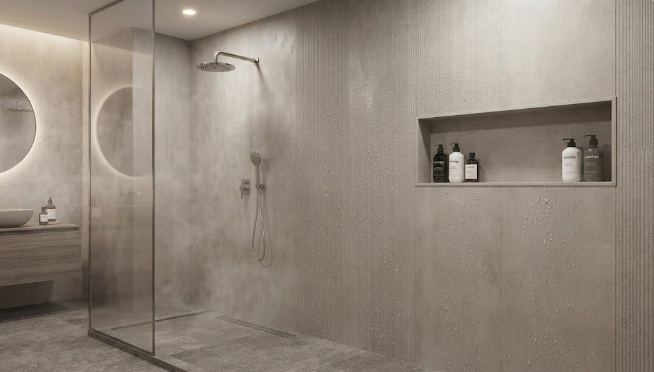
Comparing the Most Common Wall Panel Materials for Wet Areas
Not all wall panel materials respond to moisture the same way, here is how the most commonly used categories compare:
| Material | Moisture Resistance | Stability Over Time | Typical Use |
| PVC Wall Panels | High — near-zero water absorption | Excellent, resists warping | Bathrooms, kitchens, commercial restrooms |
| Aluminum/Metal Composite Panels | High — non-porous by nature | Excellent, unaffected by humidity | Commercial and industrial wet environments |
| WPC (Wood-Plastic Composite) | Moderate-high | Good, but quality varies by manufacturer | Semi-enclosed spaces, balconies |
| MDF/HDF with Waterproof Coating | Moderate | Depends entirely on coating and edge integrity | Dry-side of split bathrooms, low-splash zones |
| Solid Wood Panels | Low | Poor — swells and cracks with humidity cycles | Not recommended for wet areas |
PVC panels lead the category because the material itself doesn’t absorb water — there’s no core to swell, unlike wood-based composites that rely entirely on a coating to keep moisture out. Aluminum composite panels perform just as well and are common in commercial settings where heavy, sustained moisture exposure (steam rooms, commercial kitchens) makes even PVC edge sealing a secondary concern.
WPC Panels are located in the middle; their wood content indicates the quality of control is more important than for pure PVC because a poorly extruded WPC board can absorb more moisture at a greater amount than a properly-constructed one. HDF and MDF panels, even with an impervious coating, are best dependent on coatings: when the surface film gets damaged, chipped, or not properly sealed near the edges, water gets into the fiberboard core, and the process of swelling starts. Solid Wood is beautiful, but isn’t designed to withstand long-term humidity, making it a less feasible option for direct splash zones.
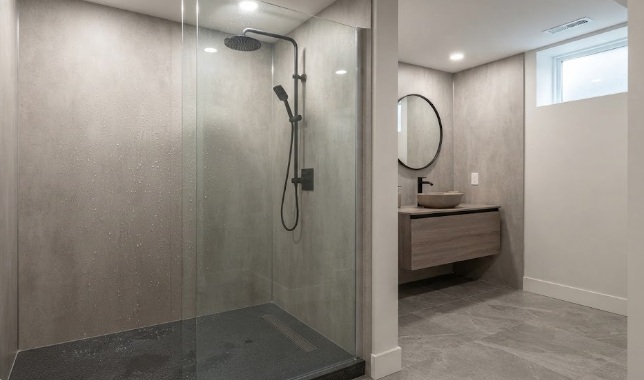
Key Certifications and Standards That Indicate Real Moisture Stability
Marketing claims like “waterproof” aren’t standardized — a panel manufacturer’s own claim isn’t the same as third-party verification. When evaluating real moisture stability for wall panels for wet areas, look for:
- Tests for water absorption (commonly used to refer to standards like ASTM D570, which is for the plastics industry or comparable national standards for building panels made of composite) This test measures the amount of moisture a substance absorbs when immersed in a controlled manner.
- Humidity and temperature cycling tests, which simulate the expansion/contraction stress that causes warping over months of real-world use, not just a single exposure
- Formaldehyde emission class (E1/E0), which is important for wet-area panels since the accumulation of moisture and a core that is less durable can impact the durability of the panel as well as the quality of indoor air over time.
A panel with third-party tests for the absorption rate and dimension stability is a significantly more reliable option than one that relies solely on the marketing copy. If a vendor isn’t able to provide test results upon demand, consider it as a red alert rather than an oversight.
How to Choose the Right Wall Panel for Your Specific Wet Area
Different wet areas place different stresses on a panel and what is the “best” material shifts slightly depending on the application:
- Showers and direct-splash zones — PVC or aluminum composite panels are the safest choice; both resist sustained water contact without relying on coating integrity
- Kitchens — look for panels rated for both moisture and grease/oil resistance, since surface cleaning chemicals can degrade lower-grade coatings faster than water alone
- Basements and semi-enclosed spaces — WPC or metal composite panels handle the combination of ambient humidity and temperature swings better than coated fiberboard
Installation is just as important as the choice of material. Even the best moisture-resistant panel could fail prematurely in the event that seams aren’t properly secured with the right sealant or adhesive or if the edges remain exposed on the cut-points when installing.
Why Panel Quality and Manufacturing Process Matter as Much as Material
Two sheets made of the same base material could perform differently based on the quality of manufacturing. Consistency of density during extrusion along with its thickness, adhesion of the surface film, and the extent to which edges are sprayed during production can affect the actual lifespan of the material higher than the material’s specifications suggest.
This is where sourcing from a manufacturer with consistent production standards and documented testing becomes important, rather than choosing purely on price. CQHGJX’s decorative wall panel line is a useful reference point here — their panels are produced with attention to core density control and edge sealing, the two factors most responsible for long-term stability in wet environments. For buyers or specifiers comparing suppliers, asking for the same process and testing documentation from any manufacturer is a reasonable baseline before committing to a large order.