
2026 WPC Wall Panel Price Trends for B2B Buyers
In 2025, it was clear that the WPC wall panel market experienced steady growth, which laid an excellent foundation for the future. However, 2026 will present more complicated conditions that is characterized by volatile raw materials, evolving environmental regulations, as well as major shifts in supply chains across the globe. For B2B buyers being aware of the price trend isn’t just about reducing costs, it’s about having a stable supply, staying competitive and maximizing market opportunities.
So, let’s look at the main elements which determine WPC wall panel prices for 2026 together with a complete price prediction and practical solutions that will enable you to handle these difficulties successfully.

Table of Contents
2026 Global WPC Wall Panel Market Overview
Market Size & Growth Projection
The world WPC Wall Panel market expected to increase in 2026 with a predicted CAGR of 8-11 % (higher than the 2024-2025 average of 7-10 %). The market will reach $5.8 billion in 2026 because three main industries will drive demand which includes residential construction through apartments and villas and commercial projects through hotels and malls and offices and public infrastructure through airports and schools and hospitals. The fastest-growing regions will be Asia-Pacific and North America while urbanization in the Middle East will create additional demand.

Supply-Demand Dynamics
China (55%) leads as the top exporting country in 2025 because its production capabilities have reached massive levels and its advanced technology. India (15%) expands its market share due to lower labor costs. Vietnam (8 %) is growing as an environmentally sustainable manufacturing hub. Europe (12 %) retains its top quality position and the rest (10 %) are serving the regional market.
The most important regions for imports are Europe (eco-friendly material preferences, rigid guidelines), North America (booming construction), Southeast Asia (real real estate development) and Middle East & Africa (infrastructure development) stimulate the demand for goods and services in the world.
Core Factors Impacting 2026 WPC Wall Panel Prices
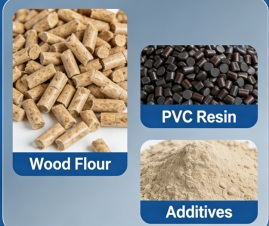
Raw Material Costs (60-70% of Total Production Cost)
Raw material costs constitute the major expense of manufacturing operations because they represent the largest portion of total production costs.
- Wood Flour/Fiber prices will increase by 7-12% because stricter forestry conservation policies which European and Southeast Asian countries enforce restrict wood supply.
- Plastic Resins (PVC PE PP) prices will increase by 9-14% because crude oil markets experience price fluctuations and changes occur within the supply chain. More manufacturers use recycled plastics because they want to reduce expenses and achieve their sustainability objectives.
- Additives (UV stabilizers fire retardants) face an 8-10% price increase because new environmental regulations require safer and more durable product designs.
Production & Operational Costs
Global energy policy changes which include Europe cashing in on its green energy revolution will increase electricity and fuel costs which will bring higher expenses to factories.
Supply Chain & Logistics
- Shipping Costs: Container freight rates will stabilize but remain above pre-2020 levels because seasonal demand in Q2 and Q3 will create slight rate increases during peak times.
- Tariffs & Trade Policies: The U.S.-China trade relationship and EU import duties face potential changes which will affect regional buyers’ total purchase expenses.
- Geopolitical Risks: Trade conflicts and regional military disputes will create disruptions to both raw material production facilities and transportation routes.
Market Demand & Competition
High Demand in Key Regions North America and Europe will experience construction activity which drives price increases while Southeast Asia’s emerging market will limit price growth through its domestic manufacturing capabilities.
The new production capacity from Vietnam and India will create pricing equilibrium while products with special colors and textures and fire resistance features will sell at 15 to 20 % higher prices.
The minimum wage increases which China and India implemented as their main production centers will increase labor costs but the automated production lines which 60% of leading manufacturers use will reduce some of these expenses.
New environmental regulations which include the EU carbon tariff and VOC emission limits will force production upgrades which manufacturers will finance through their pricing system.
2026 WPC Wall Panel Price Forecast
Price Range by Product Type (USD/m²)
| Product Type | Price Range (USD/m²) | YoY Change |
| Standard WPC Wall Panel | $8.5 – $13 | +6-8% |
| Fire-Resistant WPC Panel | $11 – $16.5 | +7-10% |
| High-Density WPC Panel | $13 – $19.5 | +8-12% |
| Eco-Friendly Recycled WPC | $9 – $14 | +5-7% |
Regional Price Variations
| Region | Price Range (USD/m²) | Key Explanation |
| North America | $11 – $22 | Higher due to shipping costs, tariffs, and quality premiums. |
| Europe | $10 – $20 | Eco-compliance fees and high-quality standards drive premiums. |
| Asia-Pacific | $7.5 – $15 | Most competitive, thanks to low production and logistics costs. |
| Middle East & Africa | $9 – $17 | Moderate pricing, with demand-driven peaks in Q3. |
Quarterly Price Trend
| Quarter | Price Performance for Standard Panels | Reason |
| Q1 | Stable ($8.5 – $13/m²) | As demand slows post-holiday. |
| Q2 | Slight increase (+3-5%) | Due to raw material procurement peaks. |
| Q3 | Peak prices (+5-8%) | Driven by construction season demand. |
| Q4 | Moderate decline (-2-3%) | As manufacturers clear inventory. |
Cost-Effective Procurement Strategies for B2B Buyers in 2026
Bulk Purchasing & Long-Term Contracts
The organization must establish annual contract agreements during Q1 which occurs before price increases to obtain fixed pricing. The organization provides an 8-12% discount rate for orders which exceed 10,000 square meters. The organization should include price linkage clauses which connect pricing to raw material costs in order to reduce financial exposure.
Diversify Suppliers
The organization should implement a 7:3 sourcing strategy which requires 70% of purchases from core suppliers who provide Chinese suppliers for bulk requirements and European suppliers for better quality and 30% from Indian and Vietnamese alternatives. The approach decreases supply chain interruption threats while utilizing benefits from local markets.

Monitor Raw Material & Market Trends
The organization needs to monitor three essential indicators: crude oil futures which affect resins and timber industry reports which provide wood fiber information and currency exchange rates. The procurement team should utilize Bloomberg and industry newsletters to determine the best time to purchase materials which includes acquiring resin when its price decreases.
Optimize Product Selection
The organization must select affordable solutions which match specific requirements by choosing standard panels for residential use and recycled panels for eco-friendly tenders and high-density panels for high-traffic commercial areas. The organization should choose suppliers who provide panels with multiple functions which include fire resistance and waterproof capabilities because this approach reduces unnecessary expenses.
Prioritize Reliable, Certified Suppliers
The organization needs to choose manufacturers who possess ISO and CE and SGS certifications because these credentials guarantee compliance.The organization needs to verify production capacity which should exceed 500,000 square meters per year and after-sales support which includes delivery time promises and technical support.
Ready to access 2026’s latest supplier quotes, sample requests, or bulk order discounts? Contact Chongqing Huigong for premium WPC wall panels – seize the year’s opportunities with confidence.