

Can You Install WPC Wall Panels Over Existing Walls?
Yes – In most cases, WPC (wood-plastic composite) wall panels can be directly installed onto existing walls. This makes them an ideal choice for renovation projects as you can refresh the space without removing the old surface, thus avoiding the chaos, costs and time consumption caused by demolition. However, the success of the installation depends on whether the surface preparation is adequate, the condition of the existing wall, and the selection of the correct installation method.
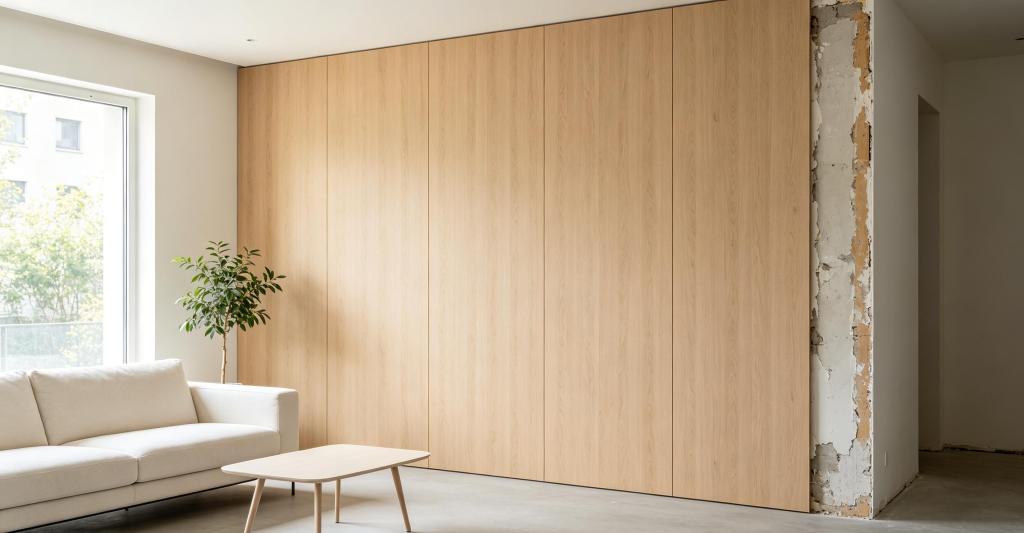
Can You Install WPC Wall Panels Over an Existing Wall?
WPC wall panels can be installed on various existing walls and surfaces, including drywall, plaster walls, concrete, brick walls, and even old wooden walls. The key requirement is that the base layer must be clean, dry, structurally stable, and relatively flat. Minor defects are usually acceptable as the wall panels can bridge over smaller irregularities. Major issues such as dampness, mold, loose materials, or significant unevenness require additional treatment (or repair first).
This method is particularly suitable for residential renovations, hotels, offices, and retail spaces as it minimizes downtime and waste.
Which Existing Walls Are Suitable for WPC Wall Panels?
Not all walls should be treated with the same method. The correct installation method largely depends on the existing substrate.
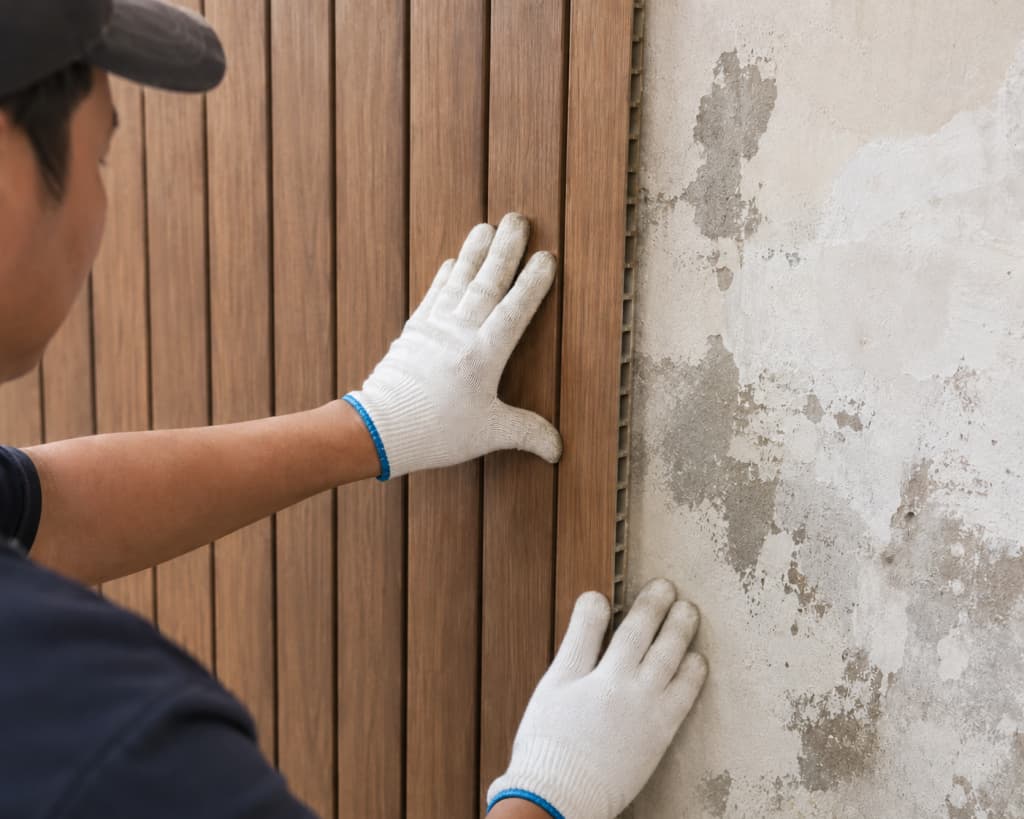
Ceramic board wall
As long as it is solid and relatively flat, painted or unpainted ceramic board walls are one of the easiest surfaces for installing WPC wall panels.
Before applying the adhesive, remove loose paint, dust and other contaminants. If the surface is smooth, gentle sanding can enhance the adhesion of the adhesive. As long as there are no large cracks, loose areas or signs of damp damage, intact ceramic walls are also applicable.
Concrete wall
A smooth and stable concrete surface can also support WPC wall panels.
However, concrete may absorb moisture, especially in basements or areas with poor ventilation. Before installation, ensure that the wall is sufficiently dry and there is no continuous water leakage. For uneven concrete surfaces, installing wooden strips or keel strips can form a more flat supporting structure.
Tile wall
The existing tile walls bring different challenges. Although WPC panels can sometimes be installed on tiles, direct gluing is not always the best solution. There may be issues such as uneven grouting on the tile surface, poor compatibility of adhesives, or insufficient bonding strength.
For old tile surfaces or walls with uneven surfaces, using joists or spacers is usually a more reliable choice.
Brick walls and concrete block walls
Although brick walls and concrete block walls are sturdy, they rarely achieve complete flatness. Their joints and surface textures make direct installation difficult. The framing system can help create a flat installation surface, while also providing space for cables or limited ventilation on the back of the panels.
Existing wooden boards
If the existing wooden wall panels are in good condition and firmly attached, they can be used. Before installing new WPC panels on the existing wooden wall panels, check for any signs of loosening, water damage, rot, or excessive movement.
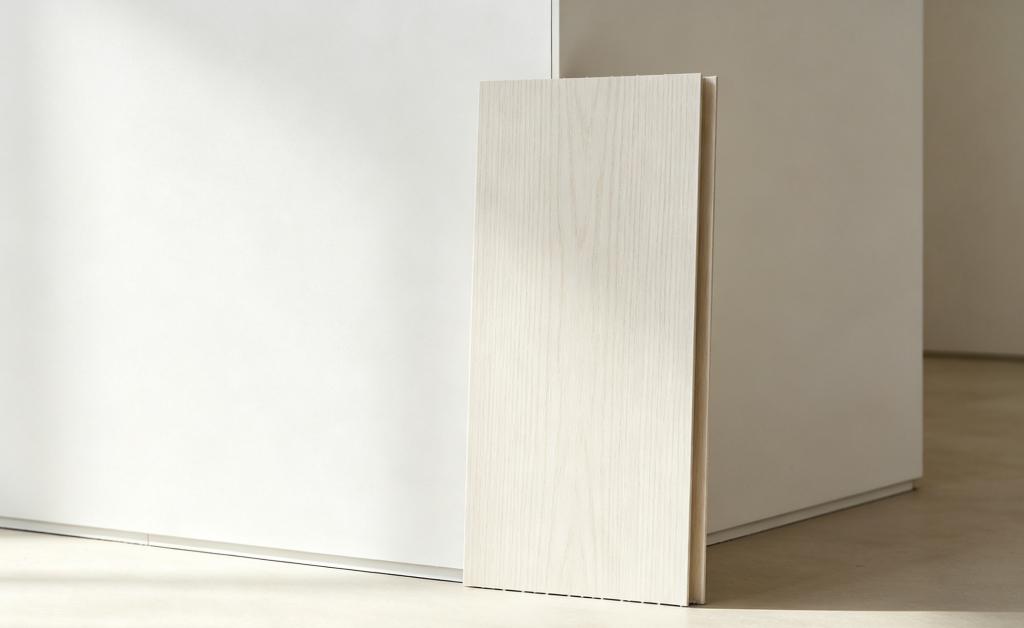
Walls That Should Not Be Covered Directly
- Wallpaper (must be completely removed – the adhesive will pull it up).
- Wet, moldy or leaking walls.
- Soft, loose or surfaces that make hollow sounds when tapped.
- Foam backing or cushioning backing materials.
- Wall surfaces that are severely not vertical and not level.
How to Prepare an Existing Wall for WPC Wall Panels
Whether the preparatory work is thorough or not directly determines whether the installation can last for many years or if it will encounter problems within a few months.
- Thorough cleaning – Remove dust, grease, loose paint, wallpaper residues and all debris. If necessary, degrease the glossy surface.
- Check humidity – Use a hygrometer, especially on concrete or exterior walls. Excessive humidity may cause warping, mold growth or adhesive failure. Address the moisture source first; consider adding a moisture barrier if necessary.
- Evaluate flatness – Use a long straight ruler or level to check against the wall. When the gap exceeds approximately ¼ inch (6 millimeters) within a reasonable span, it is usually necessary to level or add keels.
- Repair defects – Fill cracks, holes and depressions. Sand high points. Ensure the wall is solid – Tap the tiles or plaster to check for voids and remove any loose materials.
- Polish glossy surfaces – Slightly sand the glossy paint or tiles to ensure better adhesion of the adhesive.
- Allow wall panels to adapt to the environment – Remove the WPC wall panel packaging, and lay them flat in the installation room for 24–48 hours. This allows them to adapt to the local temperature and humidity, reducing the risk of deformation later.
If the wall surface is uneven, weak or not suitable for direct gluing, install horizontal or vertical joists (made of wood, aluminum or WPC wood strips) with a spacing of typically 300–600 millimeters. This will create a flat and stable base and leave a beneficial ventilation gap behind the wall panels.
How to Install WPC Wall Panels Over Existing Walls
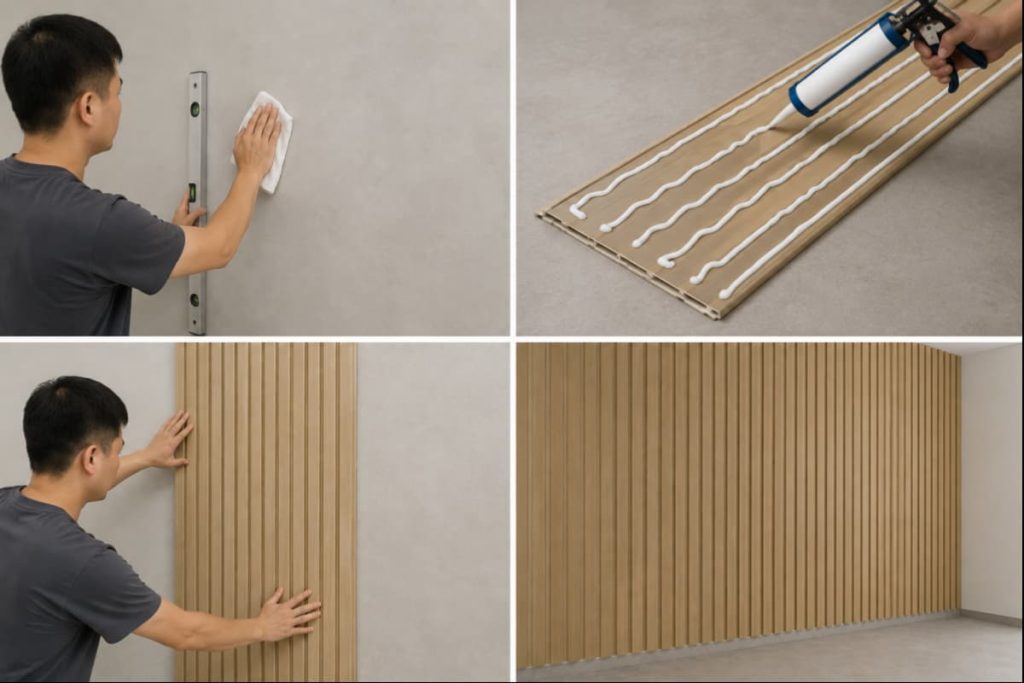
Method 1: Direct Gluing (Best for smooth and solid walls)
- Apply high-quality construction adhesive (usually MS polymer or polyurethane-based) in a zigzag or strip pattern on the back of each wpc wall panel.
- Secure the wall panel firmly to the wall and use a roller to ensure full contact and eliminate air pockets.
- Align carefully and maintain consistent expansion joints (usually a few millimeters at the edges, floor, and ceiling).
- Support the wall panel as necessary until the adhesive fully cures according to the manufacturer’s instructions.
Method 2: Railing + Mechanical Fixing (Recommended for tiles, brick walls, concrete or uneven walls)
- Use appropriate anchors or screws to firmly fix the railing to the wall.
- Carefully level the railing, filling the low areas with spacers.
- Use snap-in clips, screws or adhesives combined with fasteners to fix the WPC wall panels to the railing. Many systems adopt tongue-and-groove or hidden snap-in design, resulting in a cleaner appearance.
- This method can enhance long-term stability, improve air circulation, and facilitate future removal.
General instructions for both methods:
- Start from the corner, the bottom, or a carefully set reference line.
- Use a fine-tooth saw or appropriate blade to precisely cut the wall panels.
- Leave expansion joints and complete the professional finishing with matching edge strips, corner profiles and baseboards.
- In damp areas (bathroom, kitchen), ensure good ventilation and use moisture-proof adhesives or sealants at the appropriate positions.
Special Considerations for Different Wall Surfaces
- Concrete wall – Carefully check the humidity. It can be directly glued on smooth and dry concrete, but using a frame is usually safer and provides ventilation.
- Tiled wall – Do not simply rely on adhesives to directly stick on glossy tiles and grout. A frame should be installed.
- Old wooden wall – Ensure that the existing wooden boards are firmly attached and flat. After thorough cleaning, they can be directly glued or a new secondary frame can be added.
- Uneven wall surface – Always use a frame or backboard to achieve the best effect. WPC wall panels are relatively rigid and will show larger irregularities.
Benefits of Installing Over Existing Walls
Significantly save time and cost (no need to dismantle or carry out large-scale repair of old surfaces).
A cleaner and less disruptive renovation process.
Can cover cracks, stains, outdated finishes or minor damages.
The final surface is durable, low-maintenance, moisture-proof, and can enhance the appearance and feel of the room for a long time.
Conclusion
WPC wall panels can absolutely be installed over existing walls when the surface is properly prepared and the right method is chosen. For flat, dry, solid walls such as drywall or good plaster, direct adhesive installation is straightforward and effective. For tiles, brick, concrete, or uneven surfaces, a batten system delivers more reliable long-term results.
By taking the time to clean, dry, level, and repair the substrate — and by allowing the panels to acclimate — you can achieve a durable, attractive finish without the expense and disruption of starting from bare structure. Always consult the manufacturer’s installation instructions for your specific WPC product, as recommendations can vary slightly by brand and panel design.