

How to Choose the Right SPC Flooring for Your Home or Business
SPC flooring (Stone Plastic Composite Flooring) has become one of the most popular floor materials in residential and commercial spaces due to its 100% water resistance, durability, scratch resistance, ease of installation, and a wide range of wood grain and stone texture designs.
Nevertheless, there is an abundance of brands and variants of SPC flooring in the marketplace, and each element from thickness to locking system will affect the end result. Most customers tend to be preoccupied with the price alone without paying attention to the actual elements that decide quality.This guide will provide detailed information on how to choose the right SPC flooring and help you select the most suitable product based on different space requirements.
What is SPC Flooring?
SPC flooring is a kind of rigid core material floor made by combining stone powder (calcium carbonate) with PVC resin. It is also one of the high-end elastic floors of LVT (Luxury Vinyl Tile).
The standard SPC floor is usually composed of five layers:
- Acoustics Underlay
- UV Coating
- Wear Layer
- Decor Film
- Middle Basic Layer
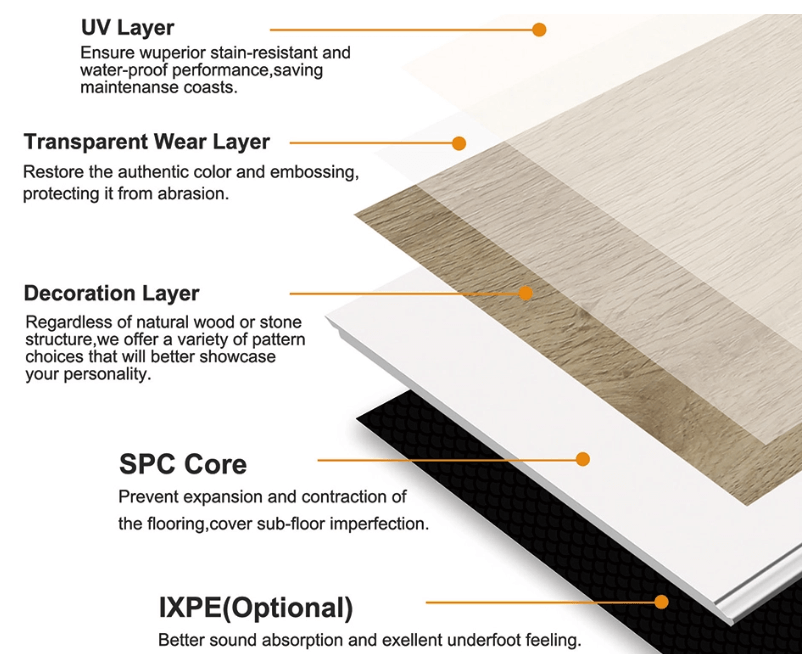
Compared with traditional laminate flooring, SPC flooring will not expand or deform due to moisture; compared with solid wood flooring, it doesn’t require complex maintenance; compared with ordinary PVC flooring, it has higher stability and impact resistance.
Whether for home decoration or commercial projects, SPC flooring can provide a more durable and stable ground solution.
Key Factors to Consider When Choosing SPC Flooring
Choose the Right Thickness
Many consumers believe that the thicker the floor, the better. However, this is not necessarily true.
The common thicknesses of SPC flooring include:
- 4mm
- 5mm
- 5.5mm
- 6mm
- 7mm
- 8mm
Different thicknesses are suitable for different spaces.
| Thickness | Applicable scenarios | Advantages |
| 4 – 5mm | Lightly used areas such as bedrooms, apartments, and rental houses | Lower cost, easy installation, suitable for daily household use |
| 5.5 – 6mm | Home decoration (most common thickness) | Better foot feel, better sound insulation, higher stability, longer service life |
| 7 – 8mm | High-traffic commercial spaces such as hotels, shopping malls, office buildings, and restaurants | High strength, wear-resistant and durable, suitable for high-frequency stepping environments |
It should be noted that thickness is not the sole criterion; the importance of the wear-resistant layer is often greater.
Pay Attention to the Wear Layer
The wear-resistant layer is the most crucial protective layer of SPC flooring. It significantly influences the product’s wear resistance, scratch resistance and stain resistance.
Common market specifications include:
| wear-resistant layer | Applicable Scenarios |
| 0.2mm | Light residential use |
| 0.3mm | Ordinary households |
| 0.5mm | High-end residences, light commercial areas |
| 0.7mm | Commercial spaces, high-traffic areas |
If there are children, pets or furniture that is frequently moved in the home, it is recommended to choose a floor with a wear-resistant layer of 0.5mm or thicker, which can significantly extend the lifespan of the floor.
Consider Surface Texture
SPC flooring not only affects the user experience, but also determines the overall decoration effect.
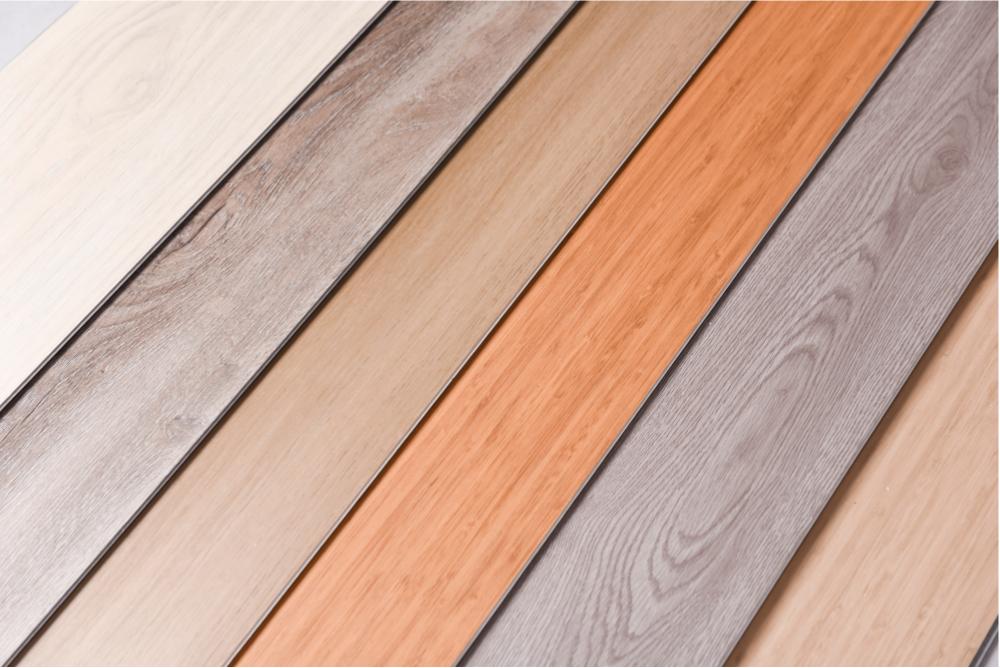
The common textures currently include:
- Standard embossing (Embossed)
With a natural wood grain texture, suitable for most home decorations. - Synchronized pattern (EIR)
The wood grain texture is exactly the same as the printed pattern, with the highest simulation degree, and the visual and tactile experience is closer to natural wood. - Stone texture surface
Suitable for modern style, industrial style or commercial spaces, it can present decorative effects such as marble and cement. - Anti-slip texture
For areas prone to moisture such as the kitchen, bathroom and balcony, it is recommended to choose products with anti-slip textures to enhance safety.
Verify Waterproof Performance
“Waterproofing” is one of the biggest selling points of SPC flooring, but there are still differences among different products.
High-quality SPC flooring usually has the following characteristics:
- The SPC rigid core is 100% waterproof.
- The locking connection is tight, reducing the risk of water seepage.
- It maintains its size stability in humid environments and is less prone to expansion.
- It has better anti-mold and anti-moisture properties.
For spaces such as kitchens, bathrooms, basements and laundry rooms, it is advisable to choose SPC flooring with excellent waterproofing properties.
Evaluate the Click Lock System
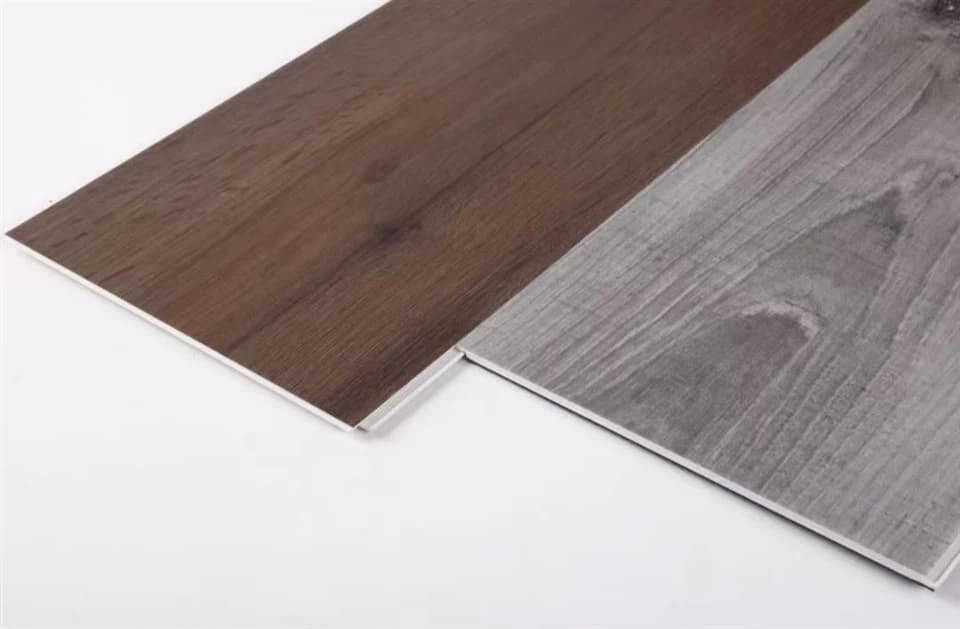
Most SPC flooring is installed using a locking mechanism. The quality of the locking mechanism directly affects the installation efficiency and the stability of the flooring in the long term.
The high-quality locking system has the following advantages:
- Installation is faster
- Jointing is tighter
- Less likely to have gaps
- Easier for post-installation maintenance
- Improves overall stability
For households that choose DIY installation, high-quality locking mechanisms can also reduce the difficulty of the construction process.
Look for Certifications
When purchasing SPC flooring, you can give priority to products that have obtained the following certifications:
- FloorScore
- GREENGUARD
- CE certification
- ISO 9001 Quality Management System
These certifications indicate that the product meets high standards in terms of VOC emissions, production processes and quality, which is more conducive to ensuring indoor air quality.
How to Choose SPC Flooring for Different Rooms
Different rooms have different flooring requirements.
- Living Room
Choose realistic wood grain, medium color tones, and a wear layer of at least 0.3 mm for everyday family use. - Bedroom
Comfort is the priority. Select thicker flooring with an attached underlayment to reduce noise and improve walking comfort. - Kitchen
Since spills are common, choose waterproof flooring with good slip resistance and a durable wear layer. - Bathroom
Although SPC flooring is waterproof, proper installation is essential to prevent water from entering the joints.
Textured surfaces are recommended for improved safety. - Commercial Spaces
Retail stores, offices, hotels, and restaurants require higher durability.
Look for:- 0.5–0.7 mm wear layer
- Heavy-duty locking system
- Commercial-grade certification
- Scratch-resistant surface
Common Misconceptions to Avoid When Purchasing SPC Flooring
Many consumers often fall into the following misconceptions when purchasing SPC flooring:
- Only focus on the price and ignore the product quality.
- Believe that the thicker the better, while neglecting the importance of the wear-resistant layer.
- Don’t check the environmental certification and product inspection reports.
- The color selection is not in harmony with the overall decoration style.
- Ignore the quality of the latch system, which affects installation and later use.
- Did not choose the corresponding specifications of products according to different rooms.
When making a purchase, one should take into account the product’s performance, usage scenarios and budget, rather than merely focusing on the low price.
Summary
In selecting the right SPC flooring, not only should one consider the aesthetics, but one must also look out for important aspects like thickness, wear resistance, water resistance, surface finish, locking mechanism, and environmental certifications of the flooring.
For ordinary households, a 5-6mm thickness combined with a 0.3-0.5mm wear-resistant layer usually meets most living needs. However, for commercial spaces or areas with high foot traffic, it is recommended to choose commercial-grade SPC flooring with a 6-8mm thickness and a wear-resistant layer of 0.5mm or more, to achieve a longer service life and more stable performance.