

SPC Flooring in Hotels: 6 Pros, 2 Cons, and Where to Install (2026 Update)
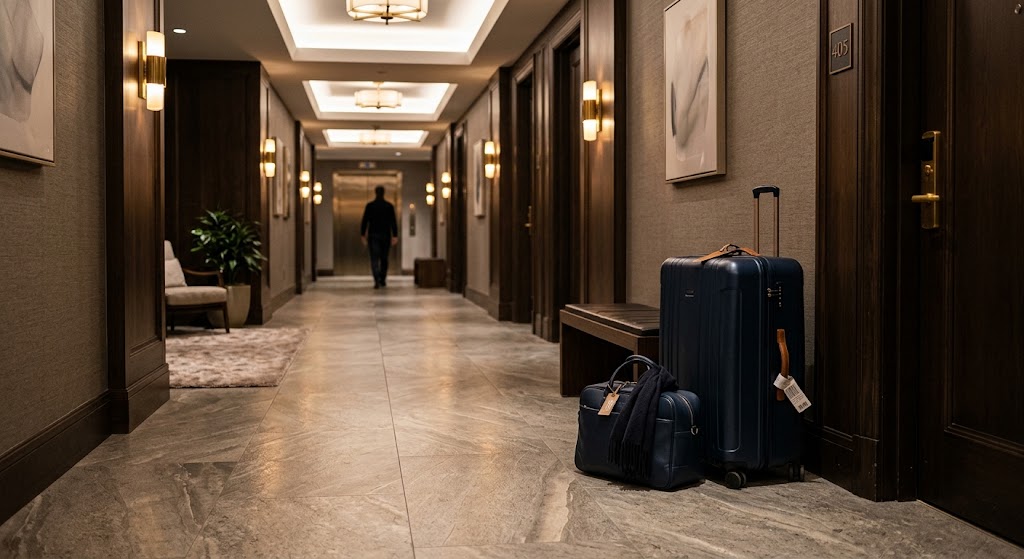
Hotel owners and facility managers face a constant battle when choosing flooring. It must withstand thousands of footsteps daily, survive rolling luggage and spilled drinks, yet still look luxurious enough to justify premium room rates. Traditional options often force a trade-off: carpet feels cozy but stains easily, while tile is durable but cold and noisy.
In recent years, SPC flooring (Stone Plastic Composite) has emerged as a serious contender in the hospitality sector. But is it truly a good fit for hotels?
The short answer is yes – but only in the right areas. This guide breaks down the real pros, cons, and best-use scenarios to help you make an informed decision for your property.
SPC vs. Other Commercial Flooring
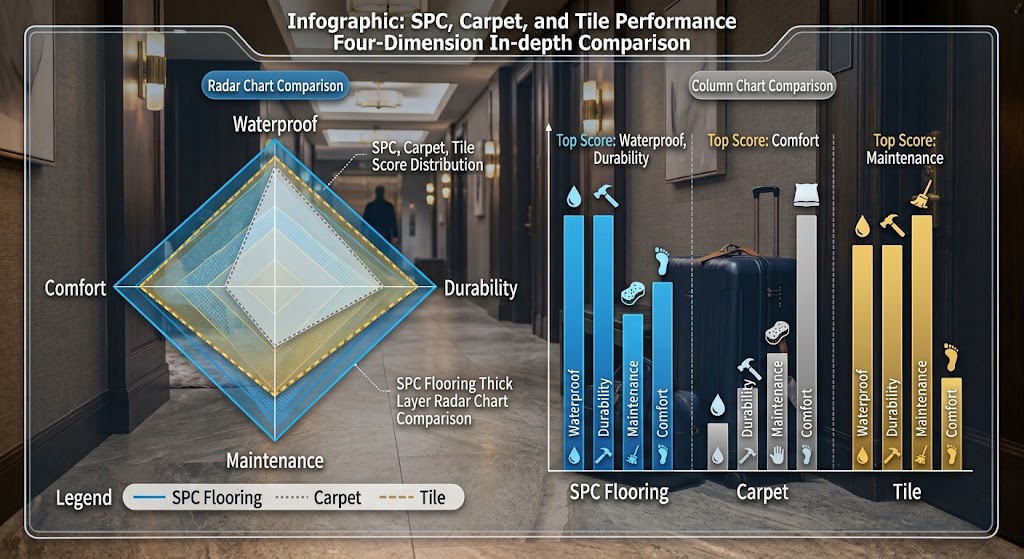
| Material | Waterproof | Durability | Maintenance | Comfort |
| Carpet | No | Low | High (stains) | High |
| Ceramic Tile | Yes | High | Moderate | Cold, hard |
| Laminate | No | Moderate | Moderate | Moderate |
| SPC | Yes | High | Low | Moderate (with pad) |
This comparison immediately highlights why hoteliers are taking a second look at SPC.
The Key Benefits of SPC Flooring in Hotels
1. Unbeatable Waterproof Performance
Hotels have countless wet zones-bathroom entrances, poolside changing rooms, restaurant kitchens, and beachfront lobbies where guests track in sand and moisture.
SPC’s stone-plastic core contains zero organic materials, meaning it will never swell, warp, or rot when exposed to water. Unlike laminate, which can buckle within hours of a spill, SPC gives housekeeping staff peace of mind during mopping or accidental overflows.
Real-world application: Coastal resorts in humid climates have reported zero moisture-related failures after switching to SPC in ground-floor public areas.
2. High Durability & Scratch Resistance
Hotels are high-traffic environments. Suitcases with metal wheels, moving banquet tables, high heels-all of these leave marks on weaker floors.
With a commercial-grade wear layer (20 mil or thicker), SPC flooring easily achieves AC4 or AC5 commercial ratings. It resists scuffs, stains, and indentations far better than luxury vinyl tile (LVT) without a rigid core. Many manufacturers offer 15-to 20-year commercial warranties-a testament to its toughness.
3. Acoustic Comfort (Sound Insulation)
Noise complaints are among the top guest grievances. Footfall echoes, rolling carts, and even conversations can travel through hard surfaces.
SPC with an attached IXPE foam underlayment significantly reduces impact noise. In corridors, it can achieve IIC (Impact Insulation Class) ratings above 60 when properly installed-comparable to carpet, but without the maintenance headaches. This makes it ideal for mid-rise hotels where floor-to-floor sound transmission must be controlled.
4. Design Versatility (Aesthetics)
Modern SPC print films use rotogravure printing technology that captures the grain of oak, the veining of marble, or the texture of slate with remarkable realism.
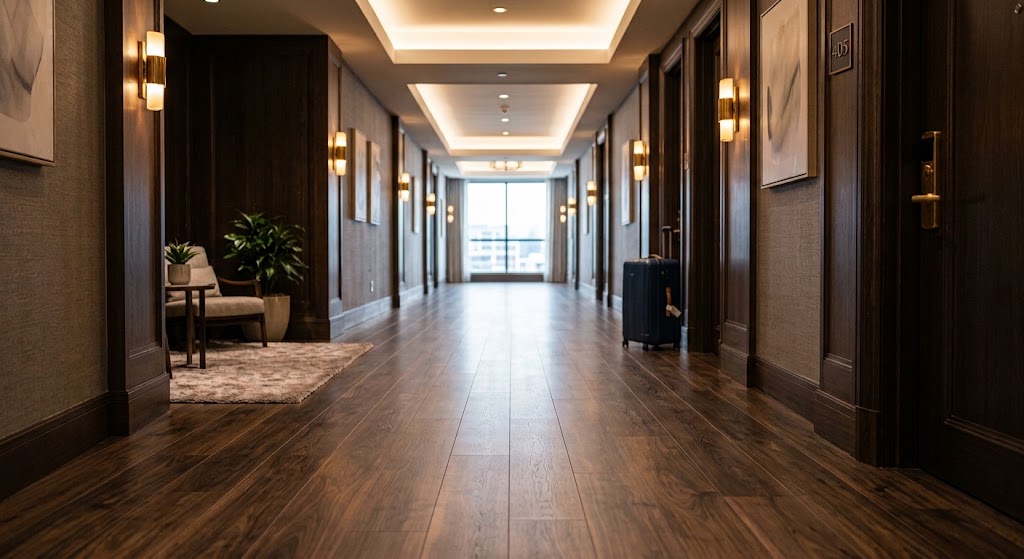
Hotel designers appreciate the ability to create cohesive visual flows-for example, extending a wood-look floor from the lobby into the elevator lobby and down the corridors, reinforcing the brand’s design language. SPC offers more than 1,000 decorative patterns, giving architects creative freedom without sacrificing performance.
5. Easy Maintenance & Low Cost of Ownership
For hotel operations, time is money. SPC requires only daily dry mopping and occasional damp mopping with a neutral cleaner. No waxing, no stripping, no special polishes.
More importantly, repairs are localised. If a plank gets damaged, a maintenance technician can replace that single piece without tearing up the entire section-a huge advantage over sheet vinyl or glued-down carpet tiles. Over a 10-year lifecycle, SPC typically costs 30–40% less to maintain than carpet, considering labour, cleaning chemicals, and replacement frequency.
6. Hygienic and Allergen–Free
Guests are more conscious of indoor air quality. Carpet fibres trap dust mites, pollen, and mould spores, which get stirred up during vacuuming.
SPC’s dense, sealed surface does not harbour allergens. With integrated antimicrobial additives (available from premium suppliers), it actively inhibits bacterial growth-a compelling feature for medical recovery hotels or wellness retreats.
Potential Drawbacks (Honest Considerations)
No product is perfect. Here’s where SPC falls short-and how to mitigate those issues.
1. Subfloor Preparation Is Critical
SPC is unforgiving about subfloor flatness. Manufacturers typically require flatness within 2 mm over 2 metres. Any dips or humps will cause the click-lock joints to strain and eventually break under heavy rolling loads.
Mitigation: Budget for a self-levelling compound before installation. While this adds initial cost, it prevents expensive call-backs later.
2. The “Cold” and “Hard” Feel
Despite the foam backing, SPC feels cooler and harder underfoot compared to carpet or even engineered wood. In luxury suites or bedrooms, this can reduce the perception of warmth and comfort.
Mitigation: Reserve SPC for hallways, lobbies, and dining areas. In guest rooms, consider combining SPC in entranceways with carpet in sleeping zones-a popular hybrid approach among upscale brands.
Application Guide: Where to Use SPC in a Hotel?
Best Areas (Highly Recommended)
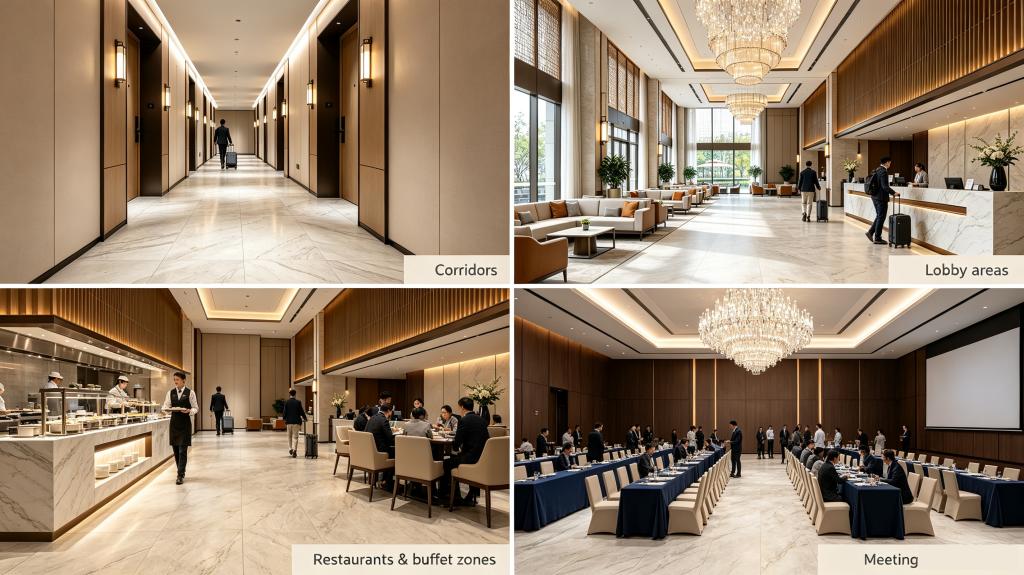
- Corridors–high foot traffic, rolling luggage, and cleaning trolleys-SPC excels here.
- Lobby areas-impressive aesthetics, easy to clean after muddy shoes or wet umbrellas.
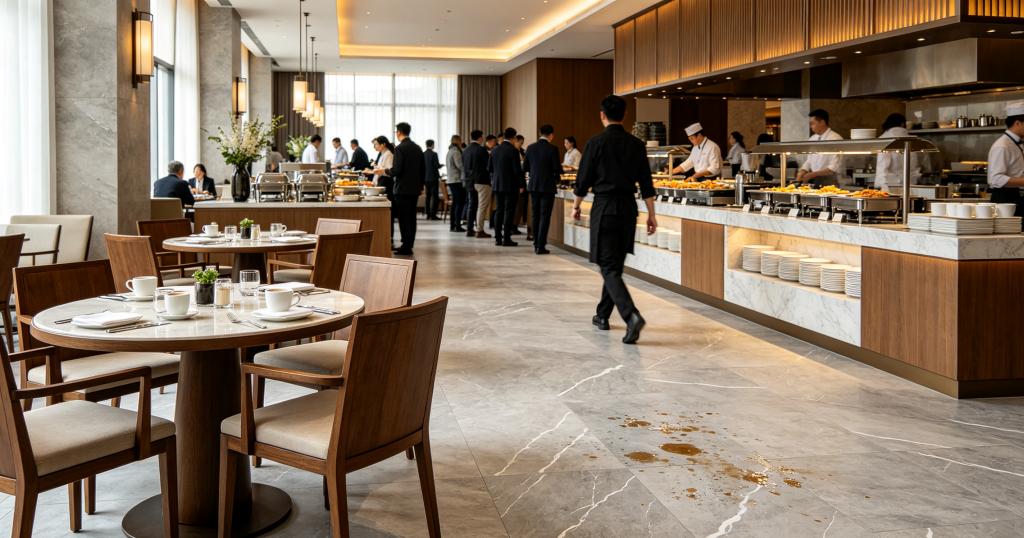
- Restaurants & buffet zones-spills are inevitable; waterproof construction is non-negotiable.
- Meeting/event rooms-chairs slide easily without scuffing, and the floor supports heavy AV equipment.
- Fitness centres & spa changing rooms-humidity and moisture are constant, making SPC a sanitary choice.
Areas to Avoid
- Premium guest room sleeping areas-the hard surface can feel uninviting. If you must use SPC here, choose a thicker underlayment (2 mm+) and consider area rugs beside the bed.
- Uneven historic buildings-if the concrete slab is over 50 years old and levelling is cost-prohibitive, stick with carpet or glue-down LVT that tolerates minor imperfections.
SPC vs. WPC: Which Is Better for Hospitality?
Hotel buyers often confuse SPC with WPC (Wood Plastic Composite). Here’s a quick breakdown:
| Feature | SPC | WPC |
| Core density | Very high (stone-based) | Lower (foam-based) |
| Indentation resistance | Superior | Moderate |
| Heat resistance | Stable up to 85°C | Softer, may warp near radiators |
| Underfoot warmth | Cooler | Slightly warmer |
| Best application | High-traffic zones | Guest rooms, quiet areas |
Recommendation: Use SPC in public, high-wear spaces; use WPC or a thick SPC (≥6.5 mm) in guest corridors where a balance of durability and comfort is desired.
Installation Methods: Floating vs. Glue–Down
SPC can be installed in two ways:
Floating (click-lock): Planks lock together over an underlayment, resting freely on the subfloor. This allows natural expansion and contraction, and makes replacement easy. Ideal for large open lobbies and long corridors.
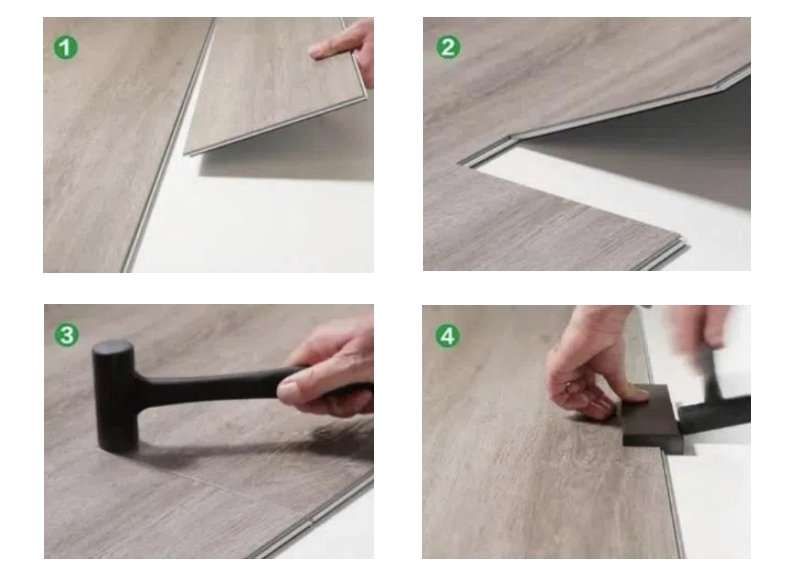
Glue–down: Each plank is adhered directly to the subfloor. This eliminates any chance of the floor “bouncing” under heavy carts and works better in very long, narrow spaces (e.g., hotel corridors over 30 m long) where floating floors might experience joint separation due to expansion forces.
Our advice: For most hotels, floating installation is preferred due to speed (up to 1,200 sqft per day per crew) and lower labour costs. Reserve glue-down only for extreme load conditions.
Cost Analysis: Is SPC Cost‑Effective?
Let’s look at the numbers (average US market, 2026):
- Material cost: $3.50-$6.00 per sqft (commercial grade, 20+ mil wear layer).
- Installation cost: $1.50-$2.50 per sqft (floating, including underlayment).
- Total initial investment: $5.00-$8.50 per sqft.
Compare this to:
- Ceramic tile: $8-$15 per sqft (installed)-higher material and labour.
- Carpet (commercial): $4-$7 per sqft (installed)-similar upfront but replacement every 5‑7 years.
When you factor in lifecycle cost-including maintenance, cleaning supplies, and replacement frequency-SPC often proves the most economical over 15 years. Many hotels report payback within 3‑4 years solely from reduced cleaning labour and eliminated carpet replacement cycles.
Conclusion
So, is SPC flooring good for hotels?
Absolutely–but with strategic placement.
SPC is the undisputed champion for wet areas, high–traffic corridors, and commercial public spaces within a hotel. It offers waterproofing, scratch resistance, acoustic control, and design flexibility at a competitive lifecycle cost.However, it should not be treated as a universal replacement for carpet in luxury sleeping rooms. The guest experience relies on warmth and quiet; a hybrid approach-SPC in hard-working zones and softer surfaces in private quarters-delivers the best of both worlds.