

SPC vs WPC Flooring: Which Is Better for Your Home or Project?
When you’re picking a durable and waterproof floor solution, SPC flooring and WPC flooring often come to the forefront, kind of. Both are PVC floors with a hard core material, and they all show good looks, effortless upkeep, and solid resistance to wet conditions. Yet, the inside build, the feel underfoot, the hardness level, and where each one fits best aren’t the same.
So, which one is better between SPC flooring and WPC flooring?
The answer depends on which aspects your project values the most. SPC flooring is usually more popular due to its rigidity, size stability, impact resistance, and high traffic application, while WPC flooring is favored for its comfort, sound absorption, and soft foot feel.
This guide will compare SPC flooring and WPC flooring in terms of structure, durability, waterproof performance, comfort, installation, cost, and application scenarios to help you choose the appropriate solution.
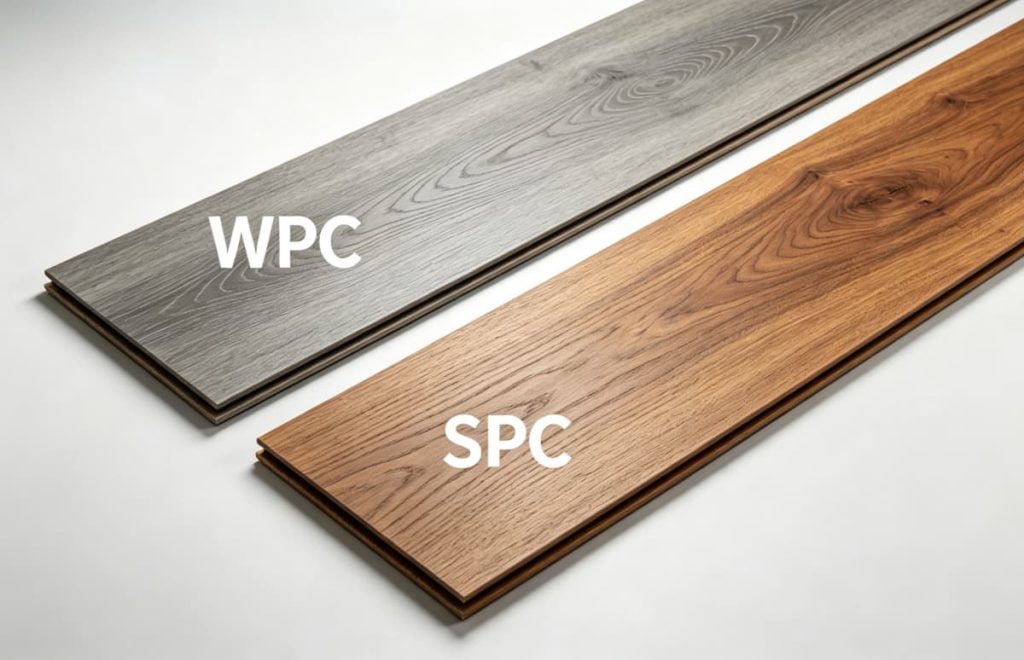
What Is SPC and WPC Flooring?
Both SPC and WPC belong to the rigid core luxury vinyl plank (Rigid Core LVP) category. Their appearance closely resembles wood or stone patterns. They are installed using snap-in technology. The core advantage of both is 100% water resistance. The real difference between them lies in the core structure.
- SPC (Stone Plastic Composite): Composed mainly of stone powder (calcium carbonate) and PVC, it is a high-density, non-foamed rigid core material. It feels hard and has excellent dimensional stability.
- WPC (Wood Plastic Composite): Made mainly of wood powder/cornstarch powder + PVC + foaming agent, it is a core material with a foaming structure. It feels softer and more elastic, and has a foot feel closer to that of real wood.
In simple terms: SPC is harder and more stable, while WPC is softer and warmer. The other surface layers (wear-resistant layer, pattern layer) have similar structures, and the main difference in performance comes from the core material.
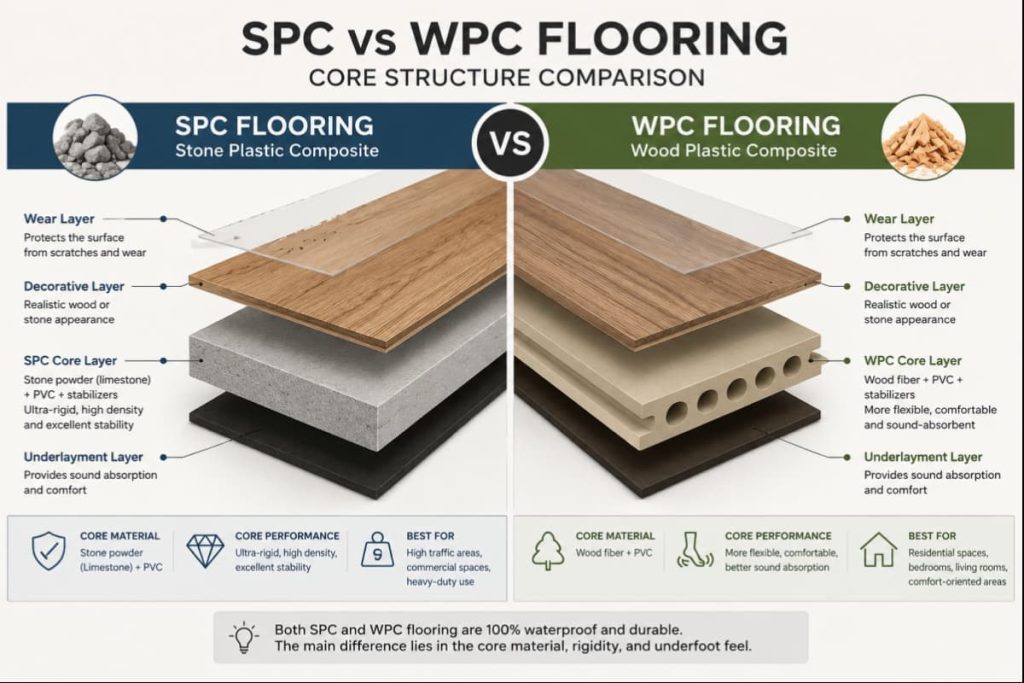
SPC vs WPC Flooring Comparison Table (2026)
| Comparison Factor | SPC (Stone Plastic Composite) | WPC (Wood Plastic Composite) | Winner / Verdict |
| Core Material | Limestone (60–75%) + PVC, non-foamed | Wood/bamboo flour + PVC + foaming agent | — |
| Core Density | Very high (approx. 1.8–2.1 g/cm³) | Moderate to low (approx. 0.5–1.4 g/cm³) | SPC denser and harder |
| Typical Total Thickness | 4–6.5 mm | 6–8.5 mm+ | WPC thicker |
| Waterproof Performance | 100% waterproof (inorganic core, almost zero absorption) | 100% waterproof (foamed core requires good edge sealing) | Nearly equal, SPC slightly better |
| Underfoot Feel & Comfort | Firm, cooler, similar to thin tile | Softer, warmer, cushioned, closer to real wood | WPC clearly better |
| Dent / Indentation Resistance | Excellent – resists heavy furniture and heels | Good – may show slight dents under long-term point loads | SPC significantly better |
| Scratch / Wear Resistance | Depends on wear layer thickness (recommend ≥0.5 mm) | Same – depends on wear layer | Equal (depends on wear layer) |
| Dimensional Stability | Excellent – minimal expansion/contraction | Good – slightly more movement with temperature | SPC better |
| Underfloor Heating | Excellent – preferred choice | Compatible, but stricter temperature control needed | SPC preferred |
| Sound Absorption | Moderate – usually needs extra underlayment | Better – often includes attached pad | WPC better |
| Subfloor Requirements | Higher flatness demand | More forgiving of minor imperfections | WPC more tolerant |
| Price (Material) | Generally lower (10–30% cheaper at similar specs) | Generally higher | SPC more affordable |
| Best For | Kitchens, bathrooms, basements, commercial, high traffic, underfloor heating | Bedrooms, living rooms, comfort- and quiet-focused spaces | — |
The table gives a quick overview. Below we explain each point in detail.
Related Reading:SPC Flooring VS PVC Flooring
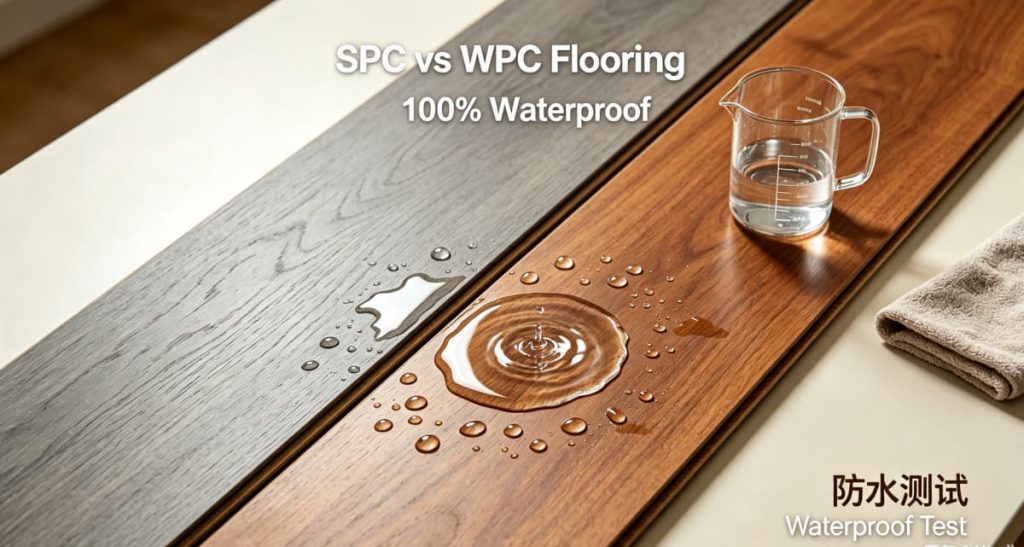
SPC vs WPC: Waterproof Performance Comparison
Both products claim “100% waterproof”, but their actual performance is very similar.
The stone powder core material of SPC is an inorganic material and hardly absorbs water. Even if it is soaked for a long time, it hardly expands. The foamed wood-plastic core material of WPC itself does not absorb water either, but due to the foaming structure, higher requirements are placed on the sealing and locking quality of the board edges. If the locking mechanism is damaged or the installation is not standardized, WPC is theoretically more prone to problems.
Conclusion: For daily household use (kitchen, bathroom, laundry room), both are sufficient. For scenarios with extremely high waterproof requirements and concerns about long-term dampness, SPC is more reliable.
SPC vs WPC Underfoot Comfort and Feel
This is the most obvious difference between the two.
Because of its high density and almost no compression, the SPC has a hard and cool feel, somewhat like thin tiles. It’s fine in summer, but when wearing bare feet in winter, it feels cold. The foaming core material of WPC has an air layer, so it has slight elasticity when stepped on, is warmer, and is less likely to cause fatigue when standing or walking for a long time, giving a feeling similar to solid wood flooring.
Conclusion: If you are particularly concerned about the comfort when barefoot, if there are elderly or children in the family who often go barefoot, or if the living room or bedroom is used for a long time, choose WPC first. If you value the feeling of “not being soft and collapsing”, choose SPC.
Durability: SPC vs WPC Dent Resistance and Scratch Performance
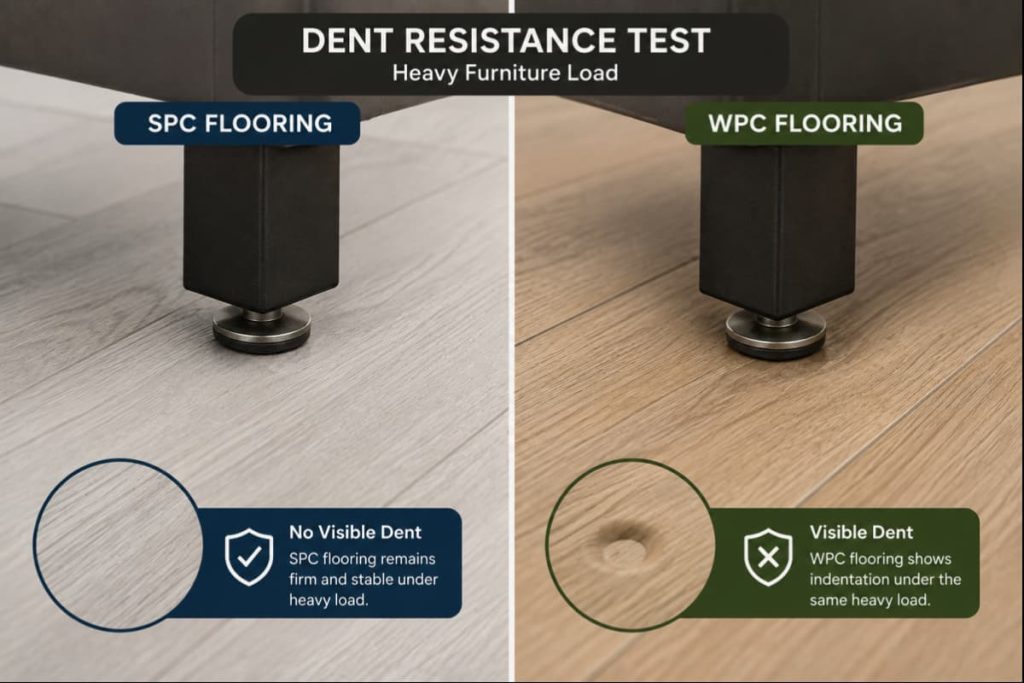
In terms of resistance to pressure and indentation, SPC outperforms all others.
The high-density stone powder core material makes SPC significantly more resistant to heavy furniture, office chair wheels, high-heeled shoes, and pet paw prints. Although WPC is not bad either, it is more prone to minor indentation under long-term point-like heavy pressure.
The resistance to surface scratching mainly depends on the thickness of the wear-resistant layer (commonly 0.3–0.7mm), which has little relation to the core material. Under the same thickness of the wear-resistant layer, the surface performance of both is similar. Since the core material of SPC is harder, the wear-resistant layer receives better support, and in the long run, SPC has a slight advantage in surface lifespan.
Conclusion: For areas with pets, children, heavy furniture, commercial use, or high traffic, it is strongly recommended to use SPC.
Dimensional Stability and Underfloor Heating: SPC vs WPC
The dimensional stability of SPC is one of its core advantages. It has minimal thermal expansion and contraction, making it suitable for spaces with significant temperature variations (such as sunrooms, underfloor heating rooms, and basements). WPC is also not bad, but it has a slightly higher expansion coefficient during extreme temperature fluctuations.
For underfloor heating: Both can be used, but SPC is the more recommended choice in the industry. Most brands limit the surface temperature of SPC underfloor heating to 27–28℃, which offers better stability. WPC also has compatible products, but it is necessary to carefully review the manufacturer’s instructions to avoid problems caused by excessively high temperatures.
Conclusion: In areas with underfloor heating, sunrooms, or significant temperature differences, SPC should be preferred.
Thickness, Weight, and Subfloor Requirements in SPC vs WPC Flooring
SPC is usually thinner (4–6.5mm), but has a higher density and a heavier single piece. The advantage of being thin is that the door gap transition is easier and the overall height increase is less. WPC is thicker (6–8.5mm+), and can better cover minor unevenness of the base layer. During installation, the requirement for the floor’s flatness is relatively less strict.
Conclusion: If the floor is already very flat or sensitive to height, choose SPC. If the base layer has slight undulations and you don’t want to go to great lengths to level it, WPC is more suitable.
SPC vs WPC Price Comparison and Value
Under the same specifications and with the same thickness of the wear-resistant layer, SPC is usually 10-30% cheaper than WPC. The reason is simple: the cost of stone powder is lower and the production process is relatively mature.
However, it should be noted: do not only look at the unit price. The thickness of the wear-resistant layer, the quality of the lock, whether it comes with a floor mat, and the brand warranty all affect the final cost-effectiveness. If the wear-resistant layer of cheap SPC is only 0.3mm, it may not be as good as the medium configuration WPC in the long run.
Conclusion: For those who are sensitive to budget and seek cost-effectiveness, SPC is more cost-effective. Those who are willing to spend a little more for comfort choose WPC.
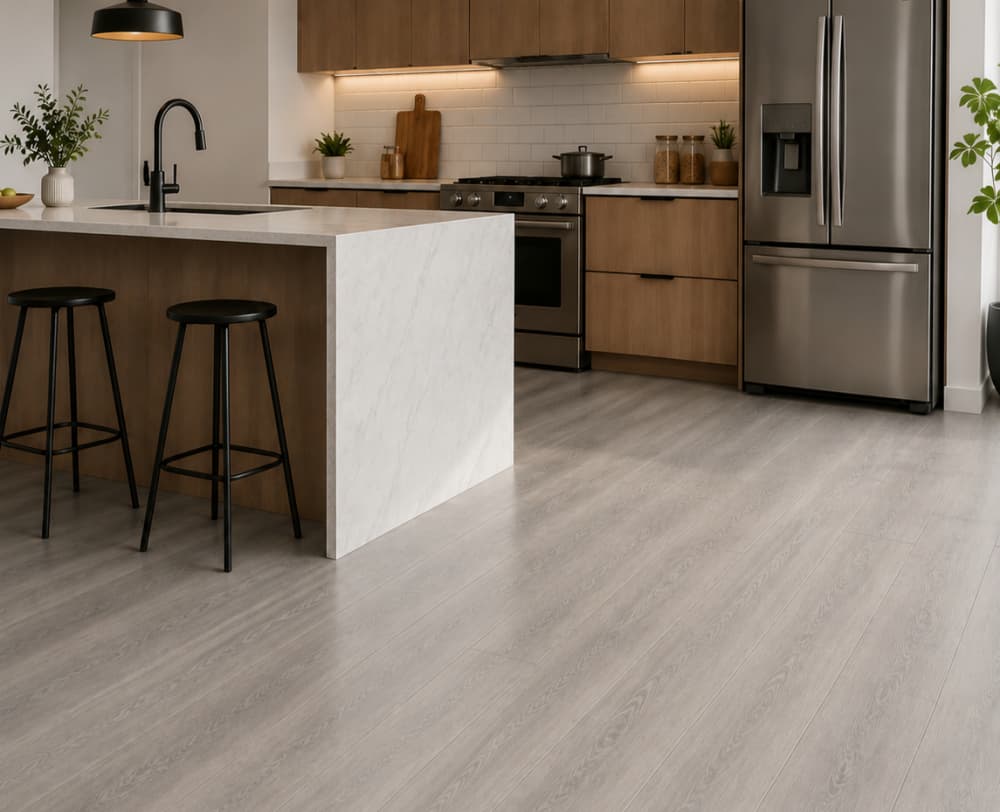
SPC vs WPC Flooring: Best Choice by Room
| Room / Situation | Recommended | Reason |
| Kitchen, bathroom, laundry | SPC | Better waterproof stability and dent resistance |
| Basement, sunroom | SPC | Superior dimensional stability and temperature tolerance |
| Living room, bedroom, study | WPC | Better comfort and quieter performance |
| Homes with pets, kids, or heavy furniture | SPC | Higher resistance to dents and wear |
| Underfloor heating | SPC | Better stability |
| Commercial, rental, high-traffic | SPC | Durability and lower cost |
| Priority on barefoot comfort & quiet | WPC | Softer, warmer, better sound absorption |
Common Myths About SPC vs WPC Flooring
Thicker isn’t always better. SPC is thin but dense, often resulting in higher strength; WPC is thicker for better foot feel.
“100% waterproof” doesn’t mean haphazard installation. The quality of the locking mechanism and proper installation are equally important.
The abrasion layer is key to the surface’s lifespan. Always ask about the abrasion layer thickness when buying (≥0.5mm recommended for home use).
Cheap doesn’t necessarily mean bad, but consider the specifications. At the same price point, prioritize the abrasion layer, locking mechanism, and warranty.
Installation greatly affects the final result. SPC is more sensitive to the flatness of the substrate; hiring an unprofessional installer can easily cause problems.
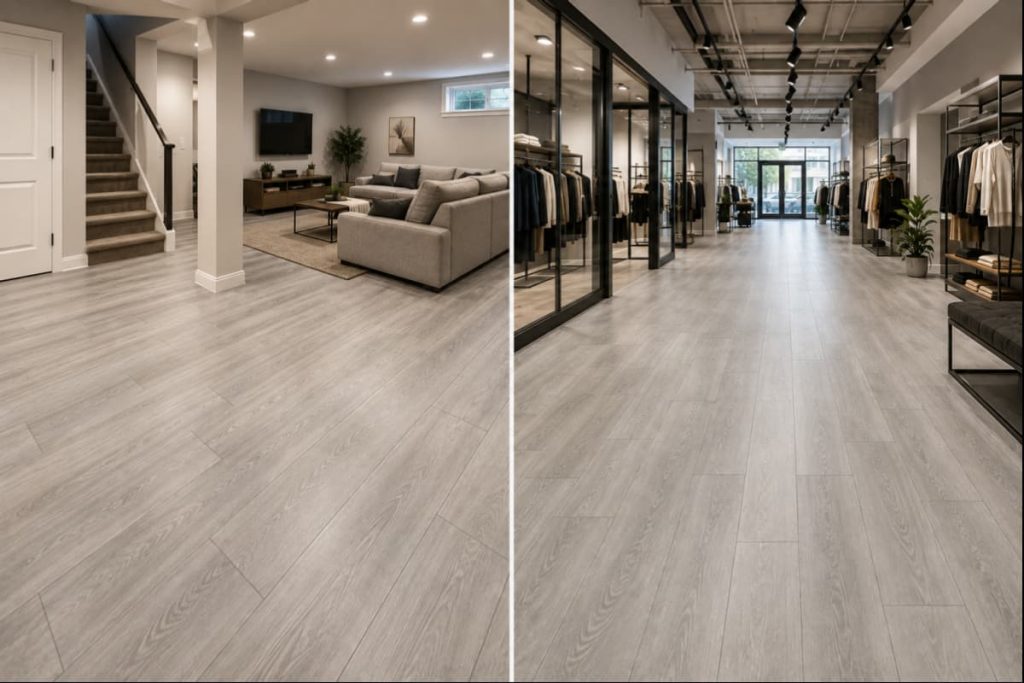
Summary: SPC vs WPC – Which Should You Choose?
For stability, rigidity, durability, affordability, and suitability for underfloor heating and wet areas → Choose SPC.
For softness, warmth, comfort, quietness, and a feel closer to solid wood underfoot → Choose WPC.
There is no absolute “better,” only choices that are more suitable for your home.
If you have already determined your general direction, the most important next step is to look at the specific product’s wear-resistant layer, locking system, warranty terms, and the feel of actual samples underfoot.