

Installing SPC Flooring in Sunrooms: Need an Expansion Gap?
Sunrooms are intended to bring the natural light in and create a cozy indoor-outdoor living area, but the flooring products to intense sunlight, temperatures, and heat. These environmental changes could affect even the most durable flooring materials in the course of time. This is why many homeowners and contractors have the same question at the time of the process of SPC flooring project: Does SPC flooring installed in the sunroom need the expansion of a gap? The answer is simple: yes. Although SPC flooring is well-known for its water-proof and dimensional stability performance, a proper spacing for expansion is essential to prevent the buckling, stress and long-term problems with installation in sunrooms.
Table of Contents
What Is an Expansion Gap in SPC Flooring Installation?
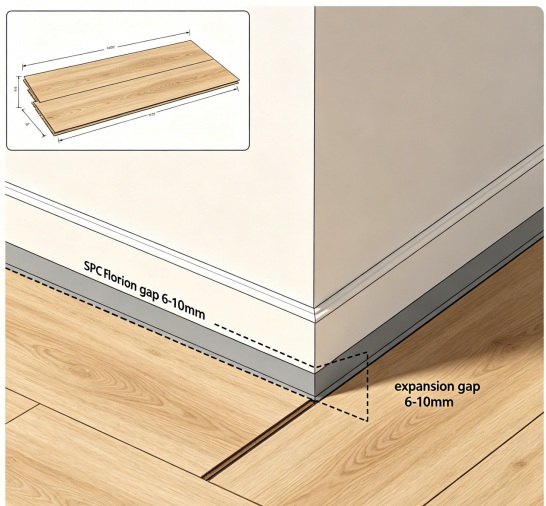
A gap for expansion is tiny space that is deliberately created between flooring doors, walls columns, or fixed objects. Since SPC flooring is generally used in a floating flooring it requires space for expansion and contraction naturally as the conditions in the environment change.
In contrast to glue-down flooring, floating SPC flooring is not permanently attached onto the subfloor. This improves the efficiency of installation and flexibility, however it also means that the flooring must be able to move in a sufficient in the area all around.
In the majority of SPC flooring installations, the manufacturers suggest leaving an expansion gap of 6-10 millimeters (1/4″-3/8″). This gap is usually filled by trim or baseboards after installation, and will not alter the overall appearance of the room.
If there isn’t enough expanding space may build up inside the flooring, ultimately leading to problems such as:
- Floor lifting
- Edge peaking
- Joint separation
- Surface buckling
- Click-lock failure
These issues are more likely to be encountered in sunrooms because of the elevated temperatures and direct exposure to UV.
Does SPC Flooring Expand in Sunrooms?
SPC flooring is widely acclaimed as having greater quality and durability than laminate flooring or traditional vinyl flooring. Its solid stone-plastic composite core reduces the effects of the effects of temperature and moisture.
Yet, “more stable” does not necessarily mean “movement-free.”
When it is installed in sunrooms SPC floors are exposed to environments which are more harsh than typical indoor environments. In summer the direct sunlight that shines from large, glass-fronted windows could dramatically increase the temperature of floors. In some instances the floor temperature of a sunroom can surpass 120°F (49°C) in particular with darker flooring colors and inadequate air circulation.
Even the flooring that is made of rigid core materials may be subject to a small thermal expansion under these conditions. Although the expansion might appear to be minimal but the stress accumulated across the floor could be substantial if there is there is no expansion gap.
Professional installers and flooring makers suggest expansion spacing, even for the most expensive SPC flooring.
Why Expansion Gaps Are Especially Important in Sunrooms
Sunrooms create a unique indoor climate. They are not like standard living rooms. they usually have:
- Large glass walls
- Extended exposure to sunlight
- The daytime temperature is increasing rapidly
- Seisonal thermal variations
These conditions put additional strain to floating floors.
Preventing Buckling and Peaking
A frequently-cited sunroom flooring issues is the buckling. If flooring expands insufficient space around it the planks press against each other, and eventually raise upwards.
This pressure could lead to:
- Raised seams
- Uneven floor surfaces
- Damaged locking systems
- Visible gaps between planks
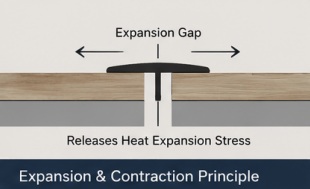
An expansion gap serves as a relief zone, which allows the floor to naturally move without stressing the structural structure.
Supporting Long-Term Floor Stability
SPC flooring is specifically designed to ensure durability, however its long-term performance is dependent on the installation quality. Proper spacing of expansion is essential to preserve its integrity click lock system and helps reduce wear caused by the continuous expansion pressure.
For commercial projects including covered patios and sunrooms and other high temperature environments expansion gaps are regarded as crucial to the correct SPC flooring.

Recommended Expansion Gap for SPC Flooring
Most SPC flooring manufacturers recommend leaving an expansion gap of:
- 6–10 mm (1/4″–3/8″)
- Around all walls and fixed objects
- Around pipes, columns, and kitchen islands
- Near sliding doors and window frames
Installers who work on larger sunrooms or areas that receive direct sunlight during extended periods should increase the expansion gap to handle the extra thermal movement which occurs in these spaces.
Larger Rooms Require More Flexibility
The installation area size determines the total expansion capacity because larger spaces generate more expansion movements. For oversized sunrooms or open-concept spaces, transition moldings may also be recommended to divide expansion zones and reduce stress across the floor.
The SPC flooring manufacturer requires you to follow their installation specifications because different plank sizes and core densities and climate conditions create different installation needs.
Best Practices for Installing SPC Flooring in Sunrooms
A successful SPC floor installation for sunrooms is more than making an extension gap. A variety of additional techniques can enhance longevity.
Use Window Coverings or UV Protection
Window film blinds, curtains or drapes can decrease direct sunlight heat exposure during peak hours. This helps reduce thermal stress on the flooring’s surface.
Maintain Proper Expansion Space Everywhere
Gaps in expansion should be left unobstructed all around the perimeter. Do not trap the floor below:
- Heavy fixed cabinets
- Tight trim installations
- Built-in furniture
Floating floors need consistent freedom of movement.
Prepare the Subfloor Correctly
The subfloor should be:
- Clean
- Dry
- Level
- Structurally stable
Uneven subfloors can increase stress on SPC click-lock systems and contribute to premature floor movement.
Follow Manufacturer Installation Guidelines
Each SPC flooring item may require slightly different installation specifications. Always follow the manufacturer’s guidelines on:
- Underlayment compatibility
- Maximum room size
- Expansion spacing
- Transition molding usage
Frequently Asked Questions
Q:Can SPC flooring buckle in direct sunlight?
A:Yes. Even though SPC flooring is extremely robust, long exposure to heat and gaps in expansion that are not sufficient can result in buckling or lifting.
Q:What is the most common extension gap of SPC flooring?
A:The majority of manufacturers recommend an interval of 6-10 millimeters (1/4″-3/8″) within the room’s perimeter and the fixed objects.
Q:Are SPC flooring superior to laminate for sunrooms?
A:In the majority of cases it is. SPC flooring has greater resistance to moisture and dimension stability when compared with laminate flooring, which makes it ideal for areas with high temperatures and sunrooms.