

Why Is My SPC Flooring Separating?
A complete guide to cause analysis, diagnosis methods, and solutions
SPC flooring has been widely accepted due to its benefits such as waterproofing, durability, and stability in dimension. Nevertheless, many consumers face the problem of floor separation, which is characterized by loose lock mechanisms in connection with adjacent boards, cracks, edges curling, or even bubbles. This adversely affects the appearance of the flooring as well as raises concerns regarding safety. In this paper, the causes of floor separation will be examined comprehensively in five different perspectives, along with appropriate solutions.
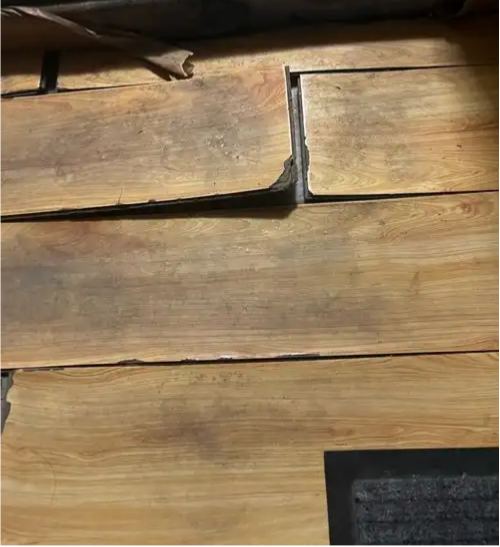
Table of Contents
5 Reasons for SPC Floor Separation
Improper installation
Irregular base layer: The unevenness in height is more than 3 mm per every 2 meters, causing irregularity in the load on the flooring upon installation, leading to the gradual release of the lock.
No provision for expansion joints: Expansion joints of 8-10 mm need to be created around walls, doors, and other obstructions. Lack of sufficient gaps would cause no room for expansion due to temperature changes, lifting of the edges of the flooring, or breaking of the locks.
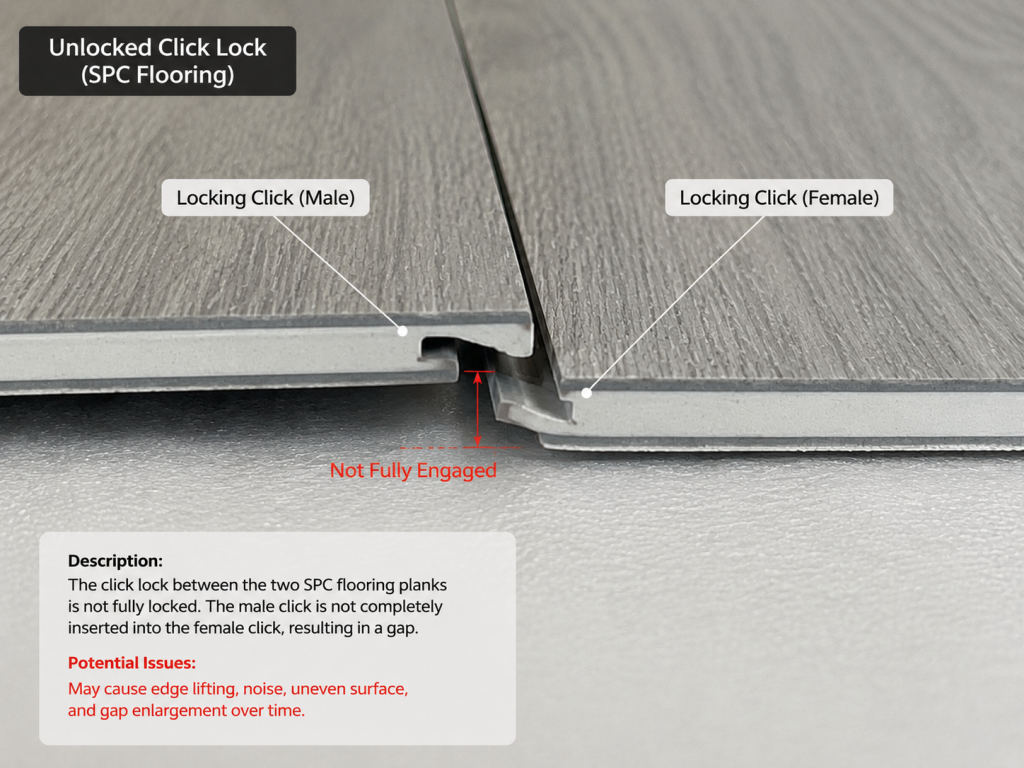
Incorrect insertion of the lock: Locks need to be inserted in the right angle and a clicking sound must be heard to indicate that it is properly locked.
Temperature and humidity changes
Extremely large temperature differences: A sudden increase or decrease in room temperature can cause materials to expand and contract rapidly, leading to fatigue and loosening of the fasteners under repeated stress.
The overheating of the floor heating system: The reason behind the excessive heating of the water within the floor heating system might be that some owners attempt to create an excessively warm living space by setting the water temperature above 45℃. Under such circumstances, the PVC element in the core layer of SPC will become softer and the locking mechanism bearing power would diminish. It is advisable to control the water temperature in the floor heating system within 35℃-40℃ range.
Humidity fluctuations: From dry winter to humid rainy season, repeated contraction and expansion will gradually damage the locking mechanism’s accuracy. It is recommended to keep the indoor humidity between 35% and 65%.
Product quality does not meet standards
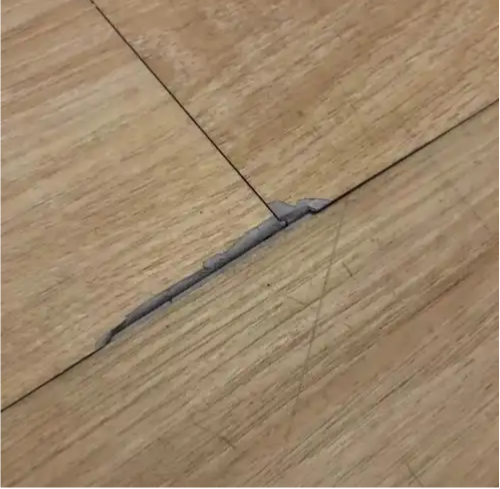
The locking mechanism has poor accuracy: Locks with insufficient processing accuracy are prone to gradually loosen under daily walking loads, resulting in visible gaps.
The thickness of the sheet is uneven: Thickness deviation leads to height differences at the seams, and the locking mechanism is subjected to irregular shear forces, accelerating its damage.
Insufficient core layer formulation: Low proportion of limestone powder or use of recycled PVC leads to insufficient core layer density, poor rigidity, and decreased dimensional stability.
The base pad is too thin or too soft: It cannot provide effective support for the locking mechanism, and after long-term use, it will compress and deform, causing separation.
Improper use and maintenance
Heavy furniture is subjected to concentrated pressure: the legs and feet of heavy items like pianos and bookcases have excessively high pressure, which can cause cracking or deformation of the locks. It is necessary to install felt pads under the legs of the furniture to distribute the pressure.
Dragging heavy objects: lateral shear force directly damages the locks. When moving furniture, it is essential to lift it rather than drag it.
Excessive water cleaning: when water seeps into the joints, it erodes the base pad, causing local expansion and separation. Use a wrung-out, slightly damp mop instead of a steam mop.
Foundation and cushion layer issues
Improper subbase thickness: Too thick (over 3 mm) reduces overall rigidity, while too thin provides insufficient cushioning; both will increase stress on the locking mechanism.
Excessive moisture content in the base layer: Newly poured concrete must be dried for at least 28 days, with a moisture content below 3%, before laying. Otherwise, moisture evaporation will damage the base layer, leading to separation.Loose floor slab structure: Deflection or vibration of old floor slabs will cause repeated stress on the locking mechanism during movement, gradually causing it to wear down and loosen.
How to Determine the Separation Type
Different forms of separation often correspond to different underlying causes. Accurately identifying the type is the prerequisite for formulating a repair plan.
According to the separation range classification
Local separation (1-3 boards): Usually caused by specific reasons in this area, such as a raised base layer somewhere, concentrated pressure from a heavy piece of furniture, or an incomplete locking mechanism during installation. Such situations are relatively easy to repair.
Large-scale arching or separation: If this occurs in multiple areas simultaneously, or even if the entire floor of the room bulges, it is often a systemic problem, such as a severely insufficient expansion joint, extensive dampness of the base layer, or improper temperature and humidity control. Such situations usually require a complete rework.
According to the separation position
Edge warping (near walls or door frames): The most common cause is insufficient expansion gaps. When the floor expands due to heat, it gets blocked by the wall, causing the edges to lift.
Greater openings in the middle area: This condition is normally associated with shrinkage due to over-dryness, or settlement of the sub-floor in specific locations.
Bubbles in the middle region: These are normally associated with a non-level subfloor (a projection in the sub-floor beneath the bubble), damage to the sub-floor in the particular region, or wetting of the sub-floor.
According to the time division
Separation occurs within a few weeks after laying: It is almost certain to be an installation issue, including uneven base, loose locking mechanisms, or insufficient expansion joints. The construction party should be required to make the necessary corrections.
Separation occurs after 1-2 years of use: It may be related to the long-term accumulation of seasonal temperature and humidity changes, or it could be a gradual manifestation of quality problems under the pressure of use.Separation occurs on a large scale after many years: It is usually caused by aging and failure of the base pad, changes in the base structure, or fatigue damage to the locking mechanisms. Usually, renovation needs to be considered in conjunction.
Solutions and Repair Methods
Slight separation
Reassembly: Remove the adjacent panel, clean the debris inside the locking groove, and reassemble it back in the correct position and secure it with a click.
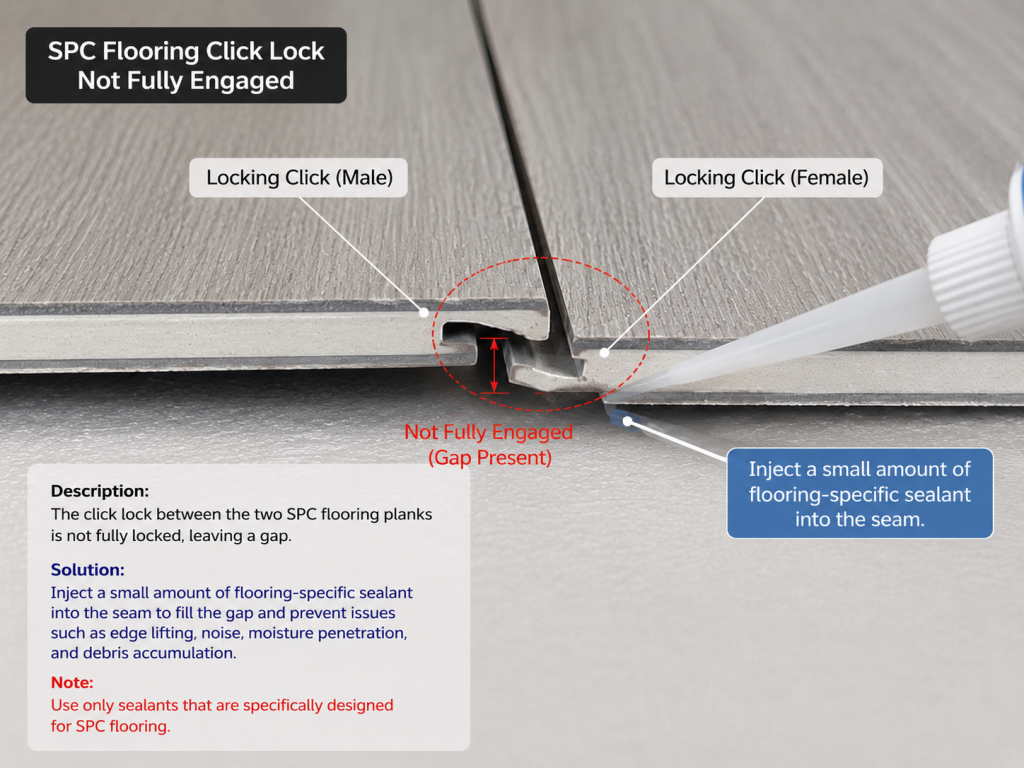
Inject sealant: Inject a small amount of floor-specific sealant at the joint to temporarily fix the gap and prevent any hindrance to future disassembly.Adjust expansion joint: If the edges are lifting, check the space below the baseboard, and if necessary, cut the floor edge to release the pressure.
Severe separation
Local replacement: Remove the damaged sections, replace the damaged floor or base pad, and re-lay after checking the flatness of the base layer.
Overall rework: If the separation is due to the base layer (uneven, damp, deformed), first sand down the protrusions, repair the potholes, apply a moisture-proof layer, and then re-lay.
Professional assessment: For deep issues such as floor structure deformation or building settlement, a structural engineer should be involved.
Prevention and Purchasing Advice
Pre-installation inspection
- Levelness: Use a 2-meter ruler to measure the height difference, which should not exceed 3 millimeters. If it exceeds this limit, self-leveling treatment is required.
- Moisture content: The moisture content of the concrete base layer must be lower than 3%.
- Adaptation period for new boards: After the floor arrives, it should be placed flat indoors for 24 to 48 hours before laying.
Product Selection
- Thickness and Density: Prefer products with a total thickness of more than 5mm and a core layer density of more than 1.8g/cm³.
- Latch Quality: For manual assembly samples, those with uniform biting resistance and clear locking sensation are preferable.
- Brand Certification: Choose products with ISO, FloorScore or GREENGUARD certifications; for underfloor heating environments, ensure that the product has an underfloor heating compatibility certification.
Daily Maintenance
- Clean the damp mop gently. Do not use a large amount of water or steam to clean the mop.
- Add felt pads under the legs of heavy furniture. Lift them up when moving and do not drag.
- Place a doormat at the entrance to prevent sand and gravel from entering and damaging the latch.
- Check the seams during the changing of seasons every year. Address any problems as soon as they arise.
Conclusion
Despite the simplicity that might be attributed to the separating of the SPC floor, the process actually requires the proper management of many aspects including the installation techniques, quality of materials, environmental controls, and even maintenance practices. It is very important to determine the causes of the problem since it would help deal with the issue. In terms of homeowners who wish to lay flooring, efforts directed towards the installation are the best approach.