

Repainting vs Replacing PVC Wall Panels: Which Is More Cost-Effective?
As PVC wall panels gradually yellow and age, many people struggle with the decision: should they simply buy a can of paint to repaint and make do for a while, or should they simply replace them all for a permanent solution? This article will help you comprehensively analyze the pros and cons, clarify the costs and effects, and explain both options clearly.
Table of Contents
Can You Paint PVC Wall Panels?
Yes, but it’s not that easy.
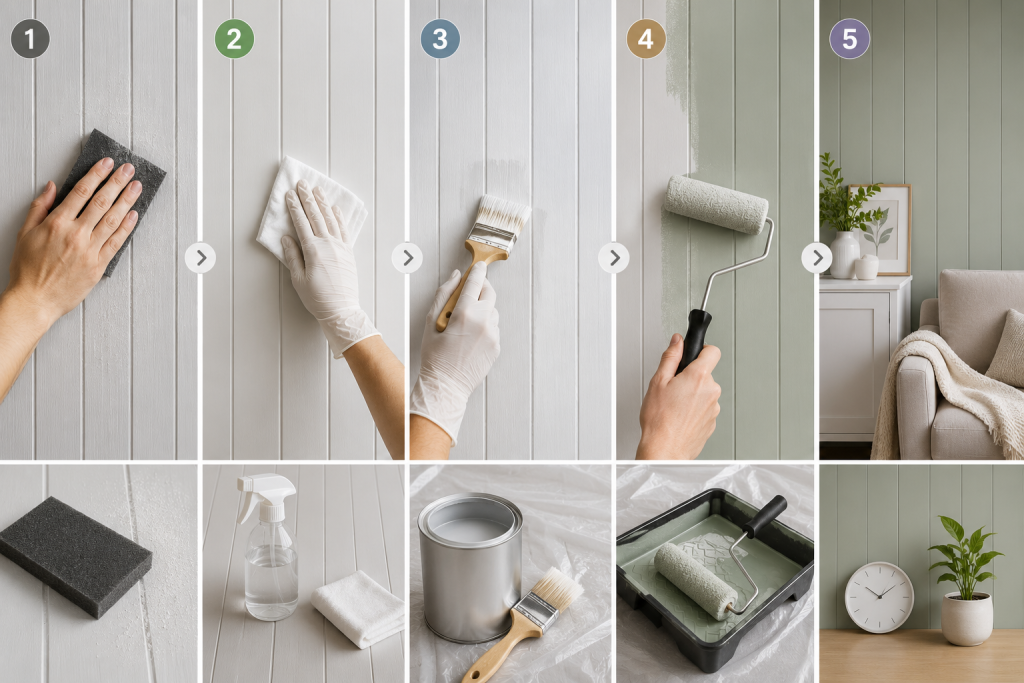
PVC functions as a plastic material which exhibits both smooth surface characteristics and low absorption properties. The surface of PVC will experience peeling and complete detachment when ordinary latex paint is applied directly onto it and allowed to dry. The process requires complete execution of its steps to achieve proper application:
- Polish the surface – Use 400-grit sandpaper to thoroughly sand the surface, breaking up the smooth surface.
- Clean and remove grease – Wipe with alcohol or a dedicated cleaner.
- Apply special primer – Must use a plastic-specific adhesion primer; no compromise allowed.
- Apply topcoat – Recommend acrylic or polyurethane paint; at least two coats are recommended.
- Allow to dry completely – At least 48 hours; in humid environments, a longer time is required.
If the process goes smoothly, it will take about 2-3 days. Adding the cost of materials, the cost for renovating one wall is approximately $20–$50.
How is the actual effect of the painting and renovation?
To be honest, the results vary from person to person, but there are several issues that are almost impossible to completely avoid:
The color coverage is limited, and changing from dark to light colors is particularly difficult.
Edges and seams are prone to cracking and warping.
The waterproofing property decreases, and PVC wall panels painted after the application are more likely to blister in a humid environment.
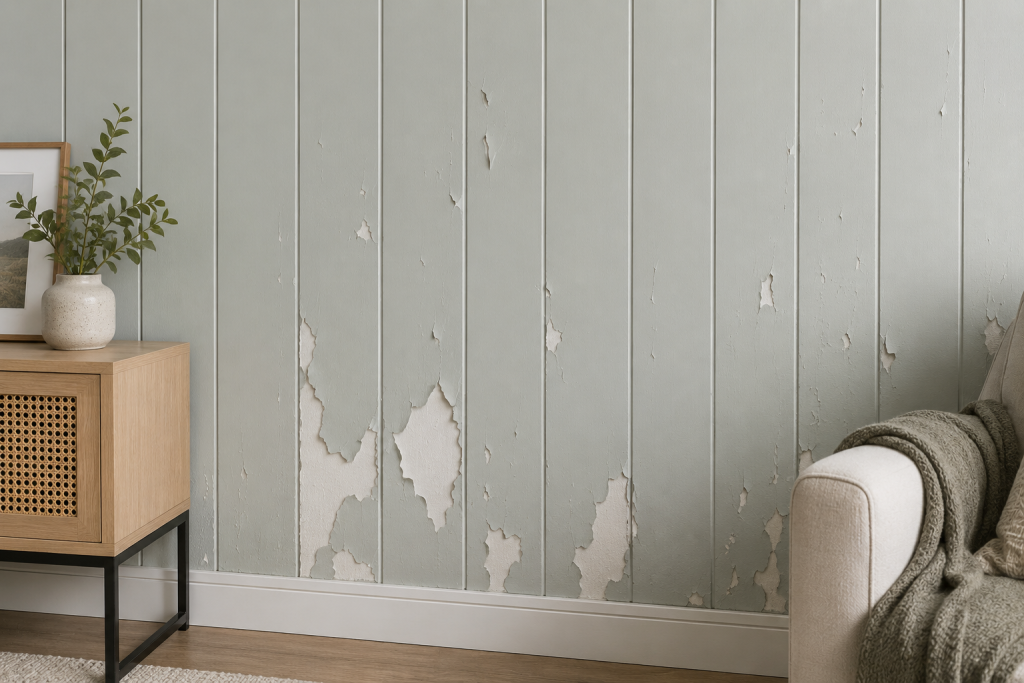
The lifespan is short, and they usually need to be reprocessed within 1-2 years.Painting is a temporary solution that treats the symptoms but not the root cause. It is suitable for short-term transitions but not for long-term use.
Painting vs. Replacing the Panel – Make the Accounts Clear
Many people think that painting is cheap, but when you factor in the cost of time and the expense of repeated renovations, it may not be a good deal.
| Comparison item | Painting and renovation | Replace with new PVC wall panels |
| Material costs | $20–$50 per wall | $30–$80 per wall |
| Operational difficulty | ⭐⭐⭐⭐(moderate difficulty) | ⭐⭐ (Simple) |
| Completion time | 2 to 3 days | Half a day |
| Service life | 1-2 years | 8-10 years |
| Waterproof effect | degradation | Original factory waterproofing |
| Color/style options | restricted | Rich |
| Overall cost-effectiveness | Generally | ✅ Higher |
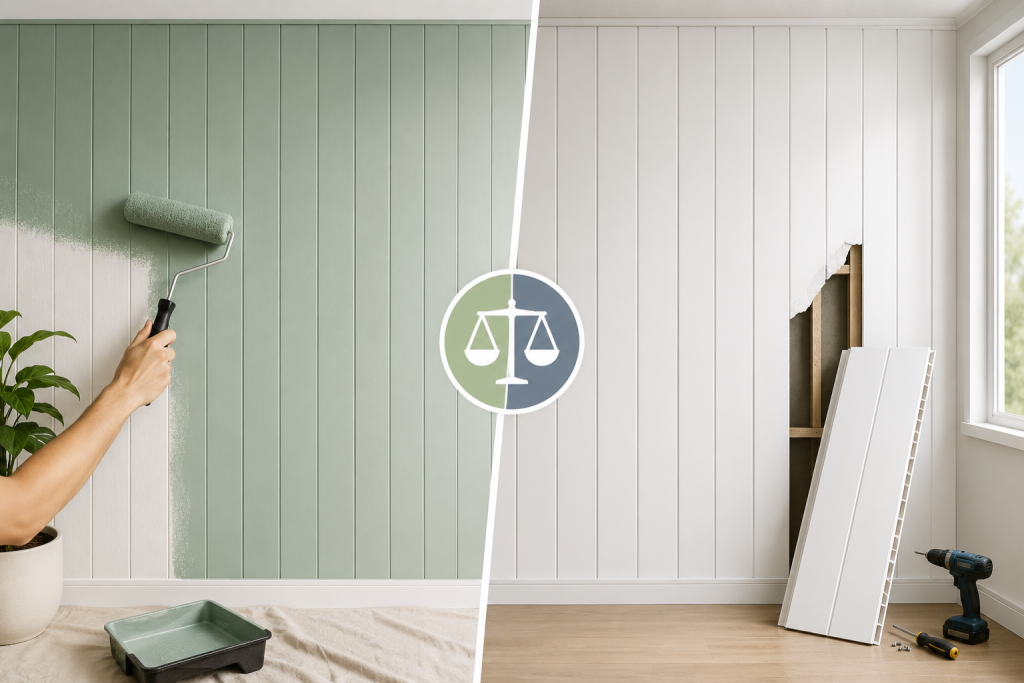
Conclusion: If the wall panels have been in use for more than 3 years, or if the area exceeds 5 square meters, replacing them with new ones is almost always a more cost-effective option.
How good is the PVC wallboard on the market now?
Many people’s perception of PVC wall panels is still stuck in the stage of “cheap but of poor quality”. However, in recent years, the products have undergone significant upgrades:
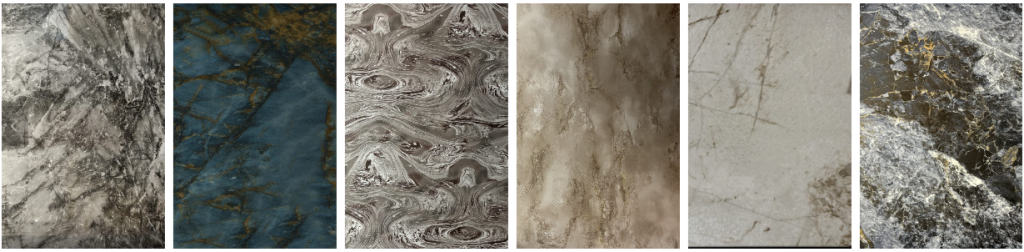
Rich in colors and textures
From solid matte finishes to imitation marble, wood grain, and cement, the visual effects are almost comparable to real materials, but without the installation difficulty and maintenance costs of the latter.
Self-adhesive design, DIY is easy!
Most products nowadays feature self-adhesive snap-on panels, requiring no special tools. Simply align the panels and press them down. A 2-square-meter wall can be covered by one person in two hours.
Waterproof and mildew-proof design
Unlike temporary waterproofing after painting, PVC material itself does not absorb water, making it perfectly suitable for high-humidity areas such as bathrooms, kitchens, and balconies, and it will not mold or turn black.
Long service life
Reputable brand PVC wall panels generally come with a 5-10 year warranty. Routine maintenance only requires wiping with a damp cloth, making it the top choice for lazy homeowners due to its extremely low maintenance cost.
When choosing PVC wall panels, pay attention to these 3 points
① Check the thickness
For household wall panels, a thickness of 8mm or more is recommended. Panels thinner than 5mm are prone to deformation and have poor sound insulation.
② Check the surface treatment
Matte finish is more resistant to scratches and less likely to leave fingerprints, making it suitable for daily use; glossy finish is suitable for scenarios that require a bright appearance.
③ Check the formaldehyde content
Official products should indicate E0 or E1-level environmental protection certification. Special attention should be paid to enclosed spaces such as bathrooms and children’s rooms.
If your PVC wall panels are only slightly faded and your budget is limited, painting and refurbishing them as a short-term solution is feasible – but be sure to do a good job of surface treatment, otherwise it might be better not to paint at all.
However, if the wall panels are already old or warped, or if you simply want to change the style, replacing them with new panels is a smarter choice. Considering the overall cost, the price difference between the two is not much, but the experience and lifespan are worlds apart.
Currently, our wood-grain imitation, matte pure color, and marble pattern series are all in stock. Sample color tests are available. Please leave a message or click the link below to learn more details.