
2026 Bathroom Design Trends: How SPC Wall Panels Define Minimalist Style
If you still define the bathroom as just a “place for taking a shower”, then you might be lagging behind the current trend in home design.
According to the “2026 Bathroom Design Trends Report” jointly participated by 101 top interior designers, the bathroom in 2026 is evolving from a purely functional space into a “private sanctuary for daily healing” – integrating the serene atmosphere of a spa, luxurious tactile experiences, and design language that enables people to truly relax in their busy lives.Behind this transformation, there is a material quietly taking the lead: SPC wall panels.
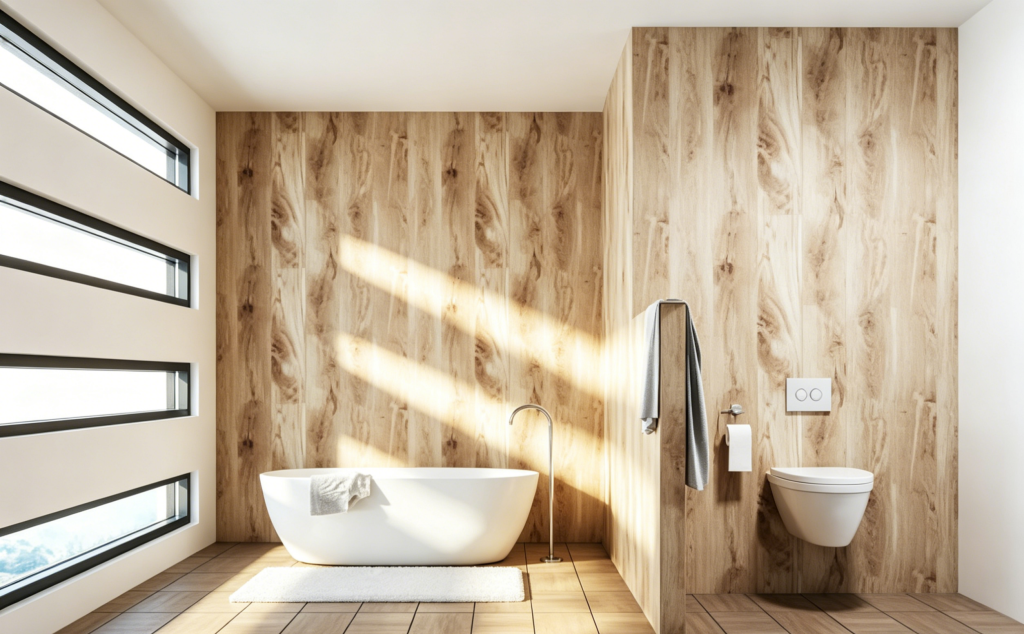
Table of Contents
Core Aesthetic of 2026 Bathroom Design: Minimalism Is Not “Empty,” but “Refined”
Clean lines become the mainstream
In 2025, the aesthetic direction of bathroom wall design underwent a clear transformation: more and more homeowners and designers began to bid farewell to the complex tile mosaics and visual fragmentation, and instead pursued clean and neat lines and a “de-noised” sense of space. This trend further intensified in 2026.
This is not “rudimentary” minimalism, but a more mature aesthetic of restraint – with fewer visual elements, it conveys a stronger sense of spatial quality. Under this design concept, joint lines, joint seams, and complex color combinations all became “unnecessary noise”.
Warm neutral tones replace cool white.
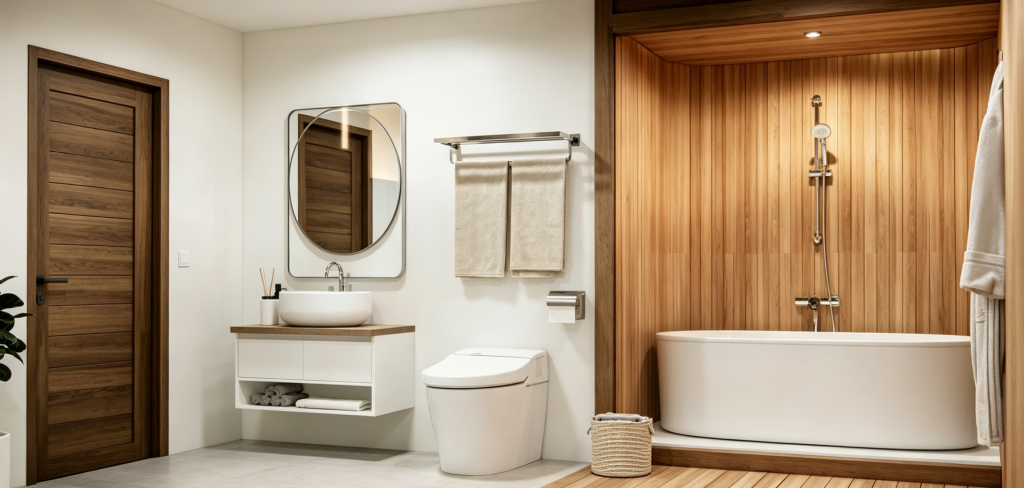
Another significant change in 2026 is that the color of bathrooms is shifting towards warm neutral tones. Soft white, warm gray, sandy brown, and beige camel have become the dominant colors. The high-gloss cool white is giving way to matte surfaces with a soft texture. This color choice conveys a “timeless” aesthetic that is pleasing to the eye rather than chasing fleeting trends.
Designers generally believe that homeowners have shifted from “following the trend” to “choosing designs that stand the test of time” – this is the true reflection of the current consumer mentality.
Bionic Design: Bringing Nature into the Bathroom
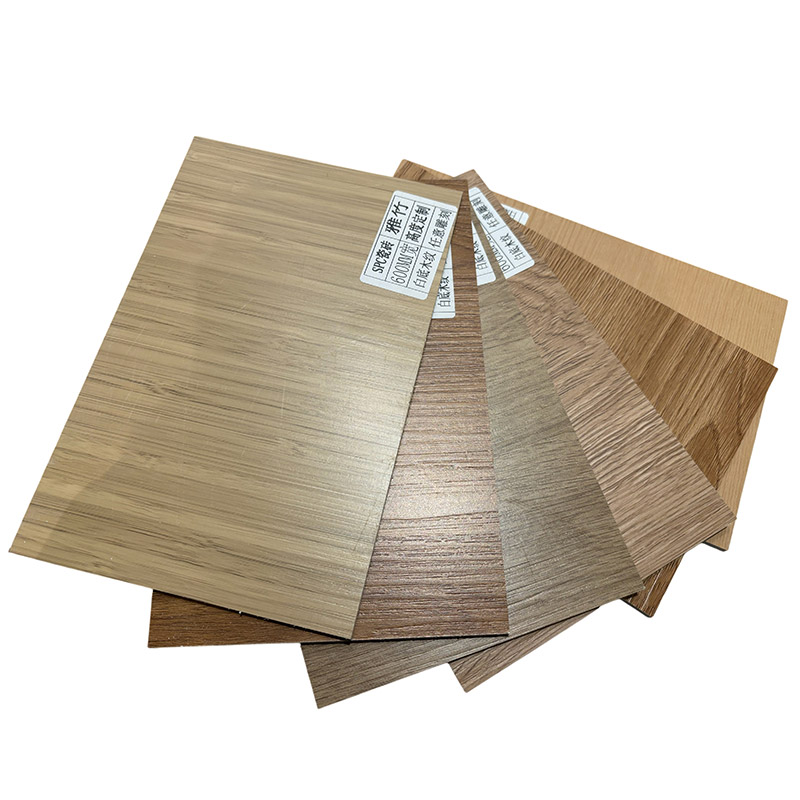
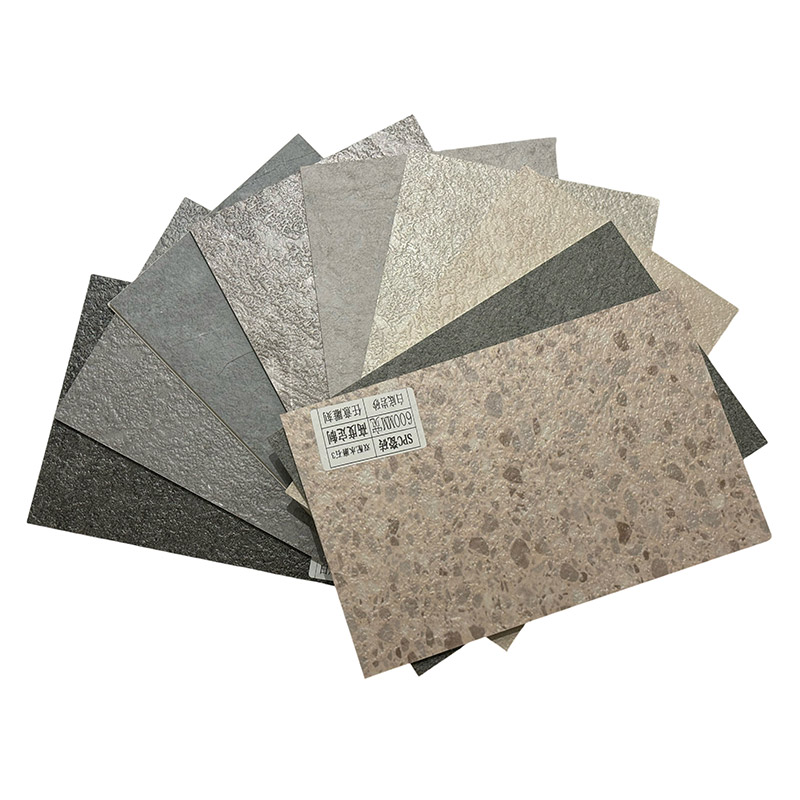
A survey shows that 42% of designers have listed “bionic design” as one of the core trends for bathrooms in 2026: the expression of wood grain, stone texture, and marble patterns, as well as warm organic tones, are all creating a sense of tranquility in the bathroom, away from the hustle and bustle of digital noise and a return to nature.
This trend aligns perfectly with the product characteristics of SPC wall panels – the latter achieves the experience of “touching nature in the bathroom” at an affordable price by relying on highly realistic stone and wood grain surfaces.
What are SPC Wall Panels? Why is Perfect Match for Minimalist Aesthetics?
SPC is the abbreviation of “Stone Plastic Composite”, which refers to a type of stone-plastic composite material. The core layer is formed by high-temperature pressing of approximately 75% limestone powder (calcium carbonate) and 25% PVC resin, resulting in a dense and hard solid board core. On top of this, high-definition printed decorative layers, UV-resistant layers are successively stacked, and usually an IXPE silent buffer layer is attached at the bottom.
This structure determines several key properties of the SPC wall panels:
- 100% waterproof: The limestone powder core layer does not absorb water, completely blocking the infiltration of moisture.
- Dimensional stability: After being exposed to an 80°C high temperature for 6 hours, the shrinkage rate does not exceed 0.02%, and it will not warp or deform due to temperature differences or humidity changes.
- Hard and durable: The solid and bubble-free structure is resistant to pressure and impact, and is not prone to indentation or marks.
- Zero formaldehyde: No glue or adhesives are needed for bonding, and no harmful substances such as formaldehyde are added throughout the production process.
Seamless Aesthetics: Making Minimalist Design Possible
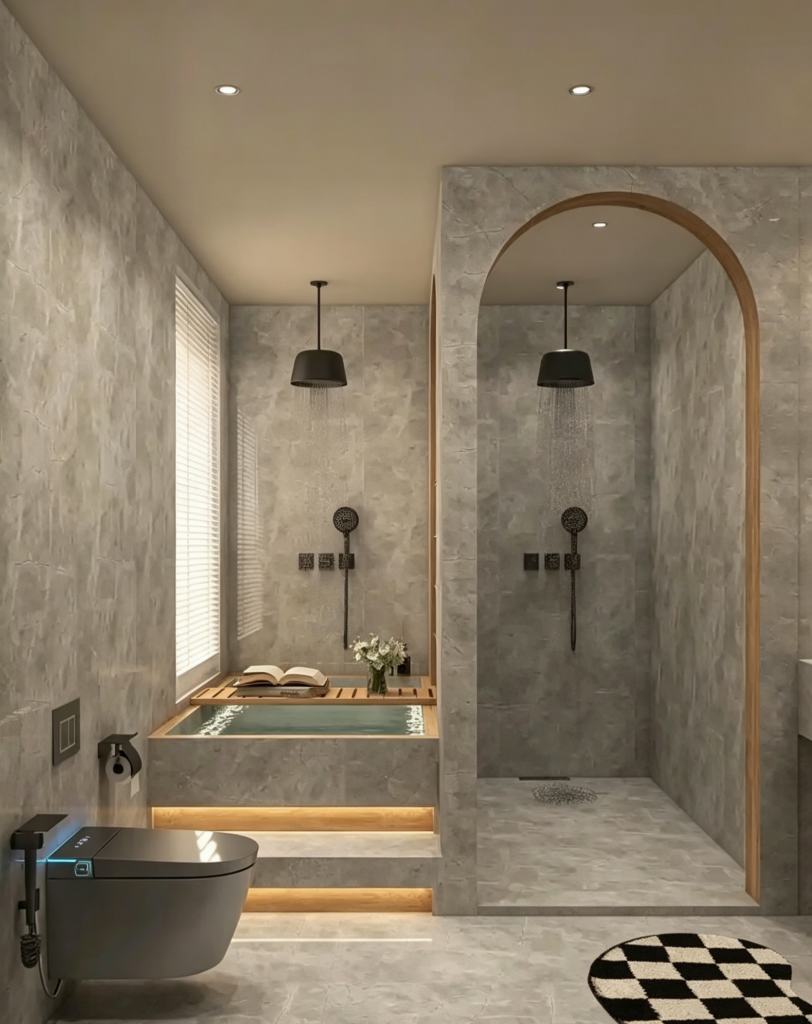
The biggest visual “pain point” in traditional tile decoration is the ubiquitous grout lines. No matter what color grout is used, the cross-hatched grid pattern always disrupts the overall sense of the space, and over time, it becomes a breeding ground for mold due to the accumulated moisture.
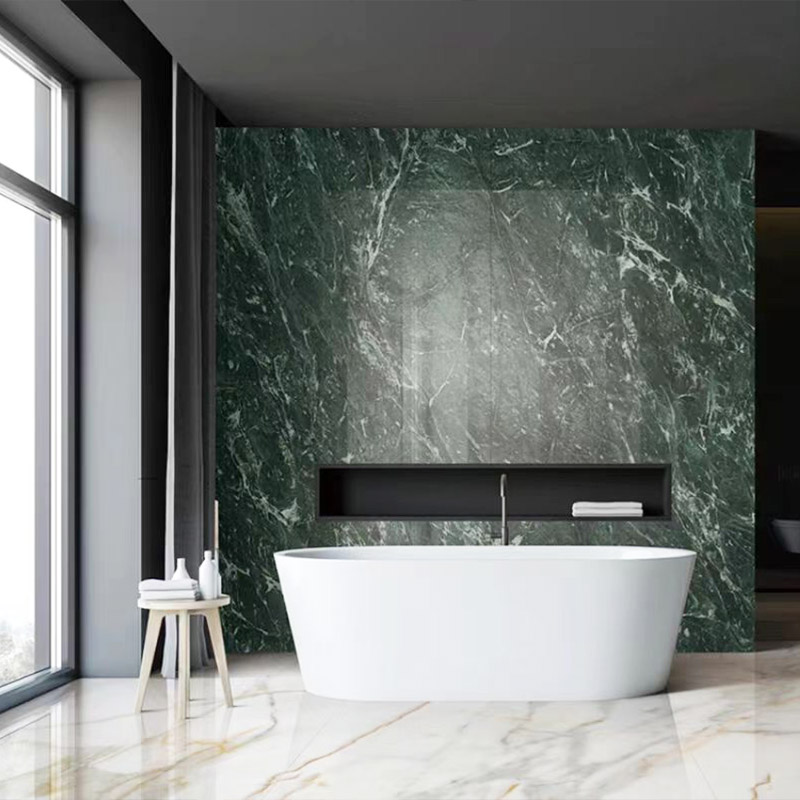
The installation method of SPC wall panels completely solves this problem. The large panels are joined together through dovetail joints, forming a seamless large area wall visually, and the sense of space is greatly expanded. One wall becomes a complete stone texture canvas. This is precisely what minimalist aesthetics strives for – “remove the superfluous and leave the essence”.
Five Design Trends, SPC Wall Panels All Hit
Trend 1: Seamless large panels, doubling the sense of space
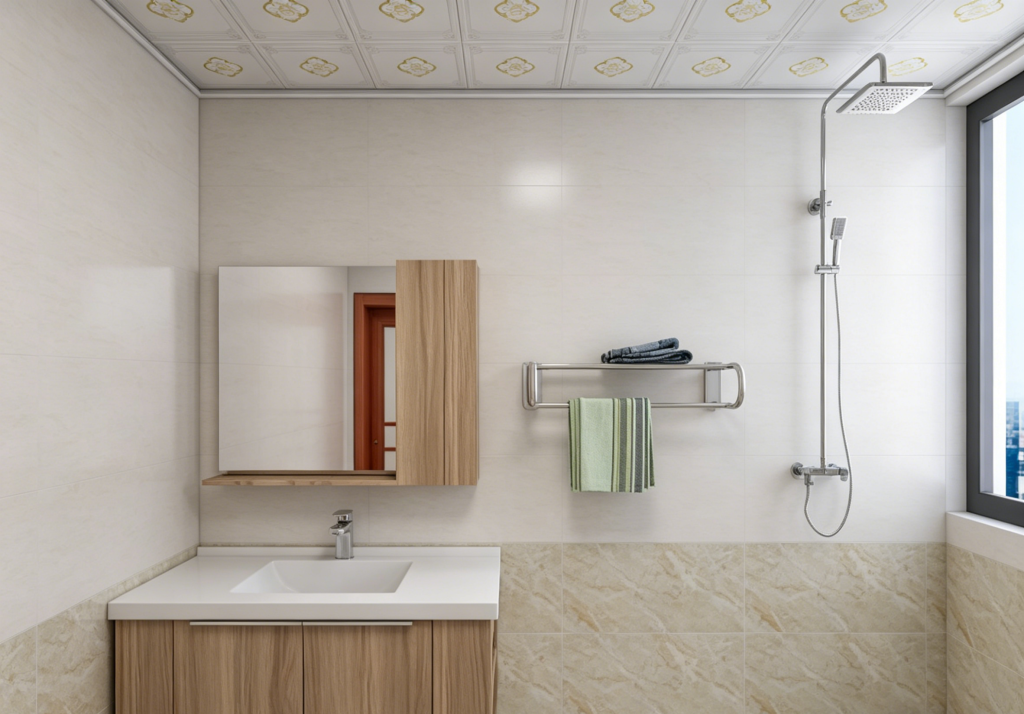
Large-format wall panels have transitioned from a niche choice to a mainstream configuration in global residential bathrooms. The continuous, seamless surface of the panels offers a visual effect that makes the same-sized bathroom appear wider and more transparent, and significantly reduces cleaning difficulty.
SPC wall panels naturally align with this trend: The lock-and-clip installation system ensures a smooth and tight fit at the joints, with no visible seams that can be seen with the naked eye, truly achieving a “less is more” spatial effect.
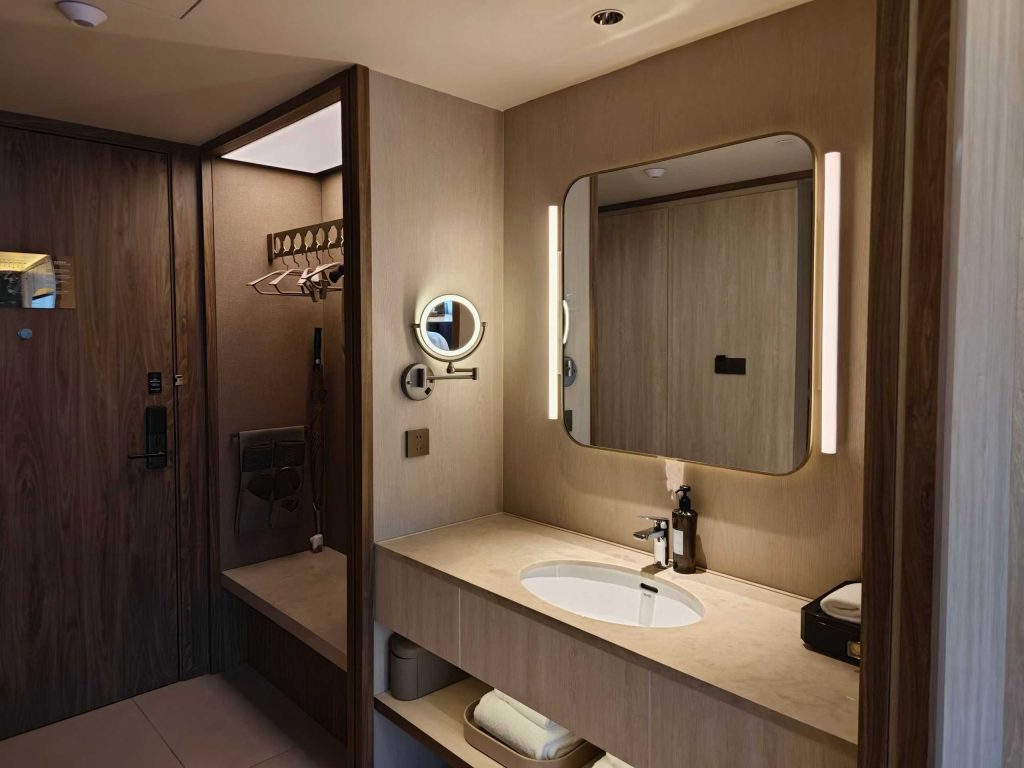
Trend 2: Warm Minimalism, Return of Beige and Earth Tones
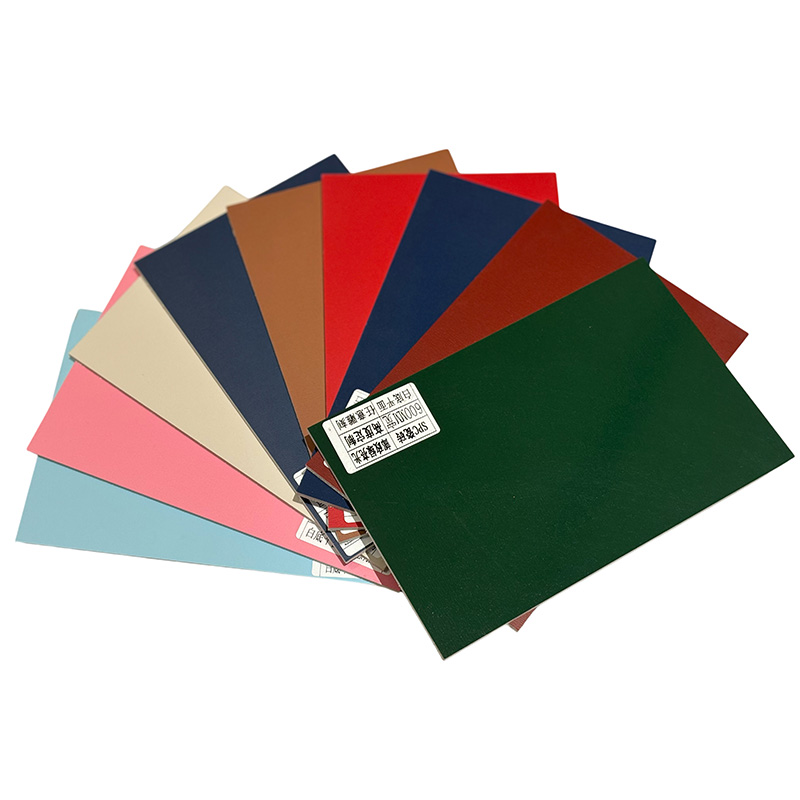
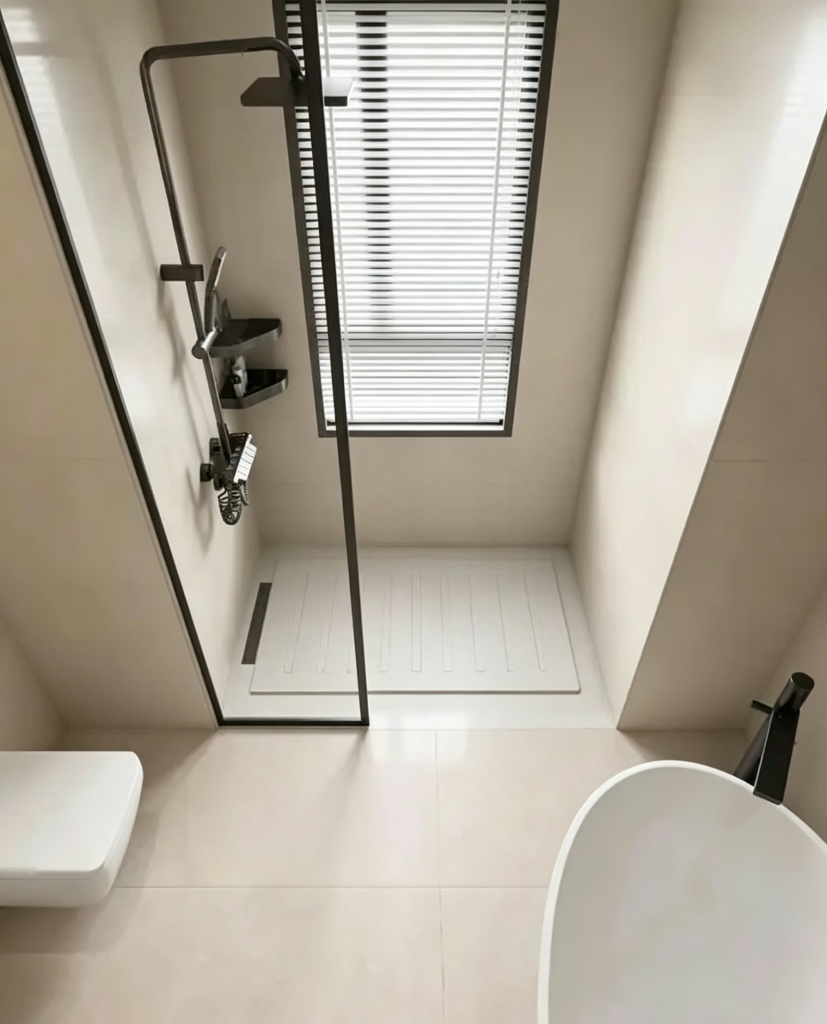
The evolved version of minimalism in 2026 is “Warm Minimalism” – not the cold, industrial white, but incorporating earth tones such as sand brown, oatmeal, and light gray, creating a space tone that is both simple and warm.
The color schemes of SPC wall panel products on the market have highly met this demand. Matte khaki, warm off-white, and deep wood gray have become best-selling options. Combined with simple hardware and green plants for decoration, an elegant minimalist bathroom can be achieved without the need for complex soft furnishings.
Trend 3: Mimicking natural materials, achieving high-end texture at low cost
The texture of marble is an eternal symbol of luxury, but true natural marble is expensive, porous and prone to staining, and its maintenance is complex. SPC wall panels, through advanced printing and embossing techniques, can highly replicate the effects of popular stone materials such as Carrara White, Jazz White, and Grey Wood Grain. The difference is almost imperceptible to the naked eye.
More importantly, SPC wall panels do not have the porous staining problem of natural stone – they are waterproof, mold-resistant, and easy to clean, allowing the “luxurious feeling” to truly be realized in daily use, rather than only existing in the photos taken at the end of the decoration process.
Trend 4: DIY-friendly, renovations can be completed on weekends
The design trend research shows that younger homeowners are increasingly inclined to undertake interior renovations by themselves. The demand for high-quality products that are easy to install and ready to use has significantly increased.
The installation efficiency of SPC wall panels is approximately 2.7 times that of traditional tiles – no need to remove the wall, no need to level with sand and cement, no need to wait for the cement to dry, and the mortise and tenon locking system can directly cover the old tiles or the existing wall surface. For an ordinary shower room, it can be completed by two people within one day, ready for immediate use.
Trend 5: Health and Environmental Protection Are No Longer Optional but Mandatory
In recent years, consumers’ awareness of indoor air quality has significantly increased. Harmful substances such as formaldehyde and VOC (volatile organic compounds) have become the primary considerations when choosing materials for home decoration.
High-quality SPC wall panels adopt a fully glue-free process and do not contain formaldehyde. Some products have even obtained the French A+ level VOC certification, ensuring indoor air safety. This makes SPC wall panels not only a “attractive” decorative material but also a responsible choice for family health.
SPC vs Traditional Tiles: A Realistic Comparison
| Comparison dimensions | Traditional tiles | SPC wall panel |
| Waterproof performance | The tiles themselves are waterproof, but the joints are prone to leakage | 100% waterproof, no jointing, completely moisture-proof |
| Mold risk | The grout will darken and mold over the next 2-5 years | Seamless design, no space for mold growth |
| Installation efficiency | The installation process requires leveling, laying, troweling, and drying, which is time-consuming | Latch assembly, efficiency about 2.7 times that of tiles |
| Renovation difficulty | Bricks need to be knocked down, resulting in loud noise and a lot of dust | Can directly cover the original wall, green construction |
| Visual effect | The joint lines are visually jagged, limiting the space perception | Unseamed large surface, more transparent space |
| Formaldehyde/VOC | The adhesive contains certain organic solvents | Zero formaldehyde, low VOC, healthier |
| Difficulty of maintenance | The joints need to be cleaned or refilled regularly | Easily wiped with a damp cloth, maintenance is minimalist |
| Applicable group | Professional construction teams are required | Suitable for DIY as well as professional installation |
Not Only In Bathrooms – The Application Scenarios of SPC Wall Panels
The application of SPC wall panels has long gone beyond the scope of bathrooms. In the interior design practices from 2025 to 2026, the following scenarios are also the “strongholds” of SPC wall panels:
- Kitchen splash-proof walls: Oil stains can be wiped clean immediately, with a fire resistance rating of B1 level, combining safety and practicality.
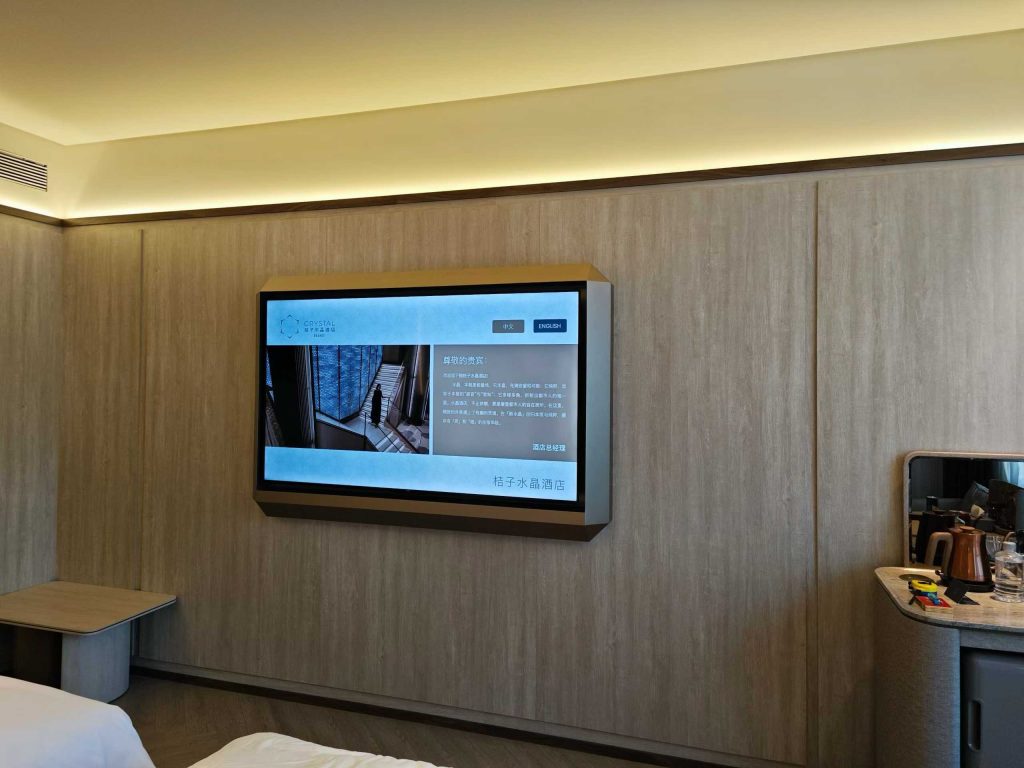
- Hotel guest room bathrooms: In the hotel industry that pursues efficient renovation and reduces maintenance costs, SPC wall panels have gradually replaced traditional tiles as the mainstream solution. Many domestic and international chain hotel brands have case studies of large-scale application.
- Commercial spaces (clinics, gyms, retail stores): Waterproof, antibacterial, wear-resistant, durable, meeting the strict requirements of high-frequency usage scenarios.
- Whole-house dry area walls: Living room background walls, corridor walls, can also achieve the high-grade texture of seamless large panels through SPC wall panels.
Several points to note when purchasing SPC wall panels
1. Wear layer thickness: Typically between 0.3mm and 0.7mm. For high-humidity areas like bathrooms, a wear layer thickness of 0.5mm or more is recommended for a longer lifespan.
2. Density and weight: The denser the core layer, the heavier the board and the stronger its impact resistance. Products with a noticeable weight in hand are generally of more reliable quality.
3. Environmental certifications: Look for zero-formaldehyde test reports, China Environmental Labeling (Ten-Ring) certification, and French A+ VOC certification to ensure indoor air safety.
4. Fire rating: For bathrooms and kitchens, products with a fire rating of B1 or higher are recommended.
5. Size specifications: Large-format boards (e.g., 1200mm × 2400mm or larger) offer better visual effects and are suitable for minimalist styles that emphasize a seamless look.
Conclusion
The charm of a minimalist bathroom lies not in “spending less money and reducing items,” but in “making every square meter feel worthwhile through precise selection.”
The rise of SPC wall panels perfectly addresses the pain points of modern home renovation: people want aesthetics without the hassle of maintenance; they care about environmental health while controlling their budget; they pursue design while hoping for a short renovation cycle.
From beachfront apartments in North America to renovations of older apartments in Europe, and to the rapidly growing high-end renovation market in China, SPC wall panels are quietly and firmly redefining the bathroom.
And that bathroom, bidding farewell to grout mold and cold white tiles, boasting seamless walls with warm marble textures, is where you start your day every morning—it deserves better materials, better design, and deserves your careful selection.