

Large Format SPC Wall Panels: The Future of Commercial Interior Walls
When specifying wall finishes for commercial projects, the options have long come with frustrating trade-offs: ceramic tile requires lengthy wet-process installation; natural stone is heavy, expensive, and inconsistent; wood paneling is moisture-sensitive; paint offers little visual impact. Today, a new category of material is eliminating these compromises — large format SPC wall panels.Combining the structural performance of stone with the versatility of engineered composites, large format SPC wall panels are fast becoming the preferred wall solution for hotels, retail environments, corporate offices, and high-end residential developments worldwide.
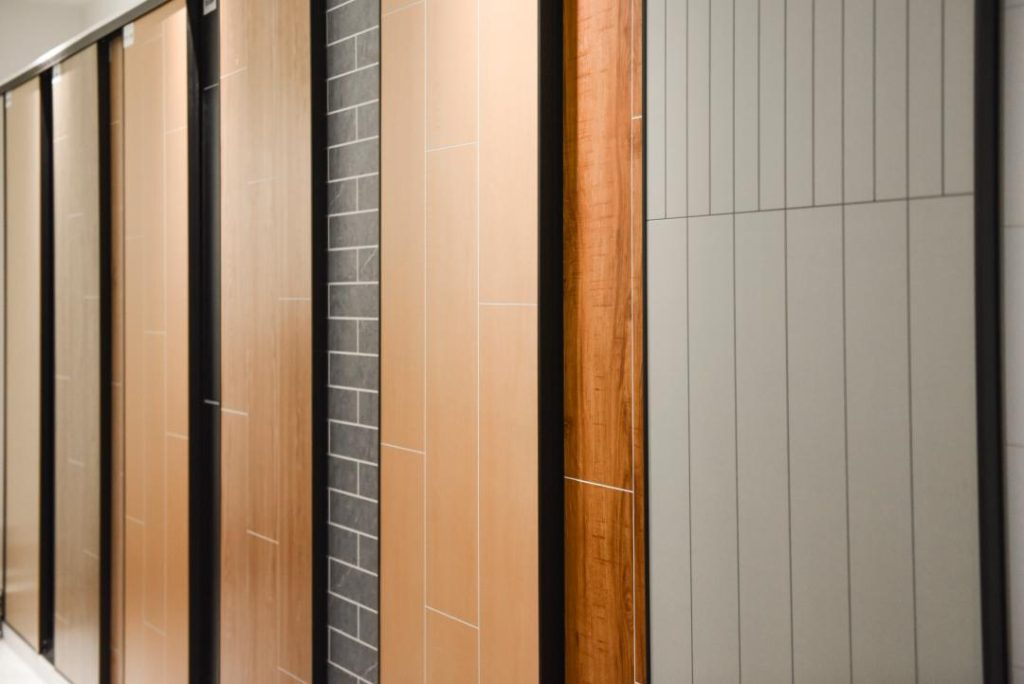
Table of Contents
What Are Large Format SPC Wall Panels?
SPC stands for Stone Plastic Composite — a high-density rigid core material manufactured from a blend of natural limestone powder (typically exceeding 70% by weight), PVC resin, and stabilizers. The result is a panel that inherits the hardness of stone and the workability of engineered materials.
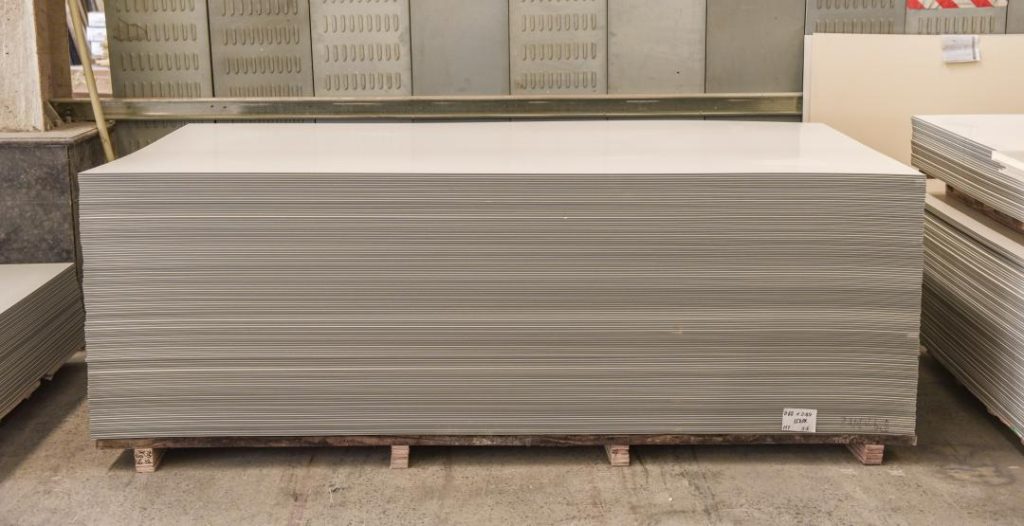
“Large format” usually means panels with widths from 600mm up to 1220mm, and lengths that are more than 2800mm or something close. You often see common specs like 1200mm × 2440mm, 1200mm × 2800mm, and 1200mm × 3000mm. In comparison with standard wall tiles, one single big panel can cover way more surface area, so basically it cuts down the amount of joints across the same wall.
The decorative surface layer uses high-definition film printing technology to realistically reproduce marble veining, concrete texture, natural wood grain, and other premium finishes, with far greater consistency than natural materials allow.
Why Large Format Is the Right Direction for Commercial Specification
Fewer Joints. Cleaner Aesthetics. Less Maintenance.
Every joint in a tiled wall is a potential maintenance liability — a place where grout discolors, mold takes hold, and cleaning crews spend unnecessary time. In hospitality, healthcare, and food service environments, this is more than an aesthetic problem; it’s a hygiene concern.
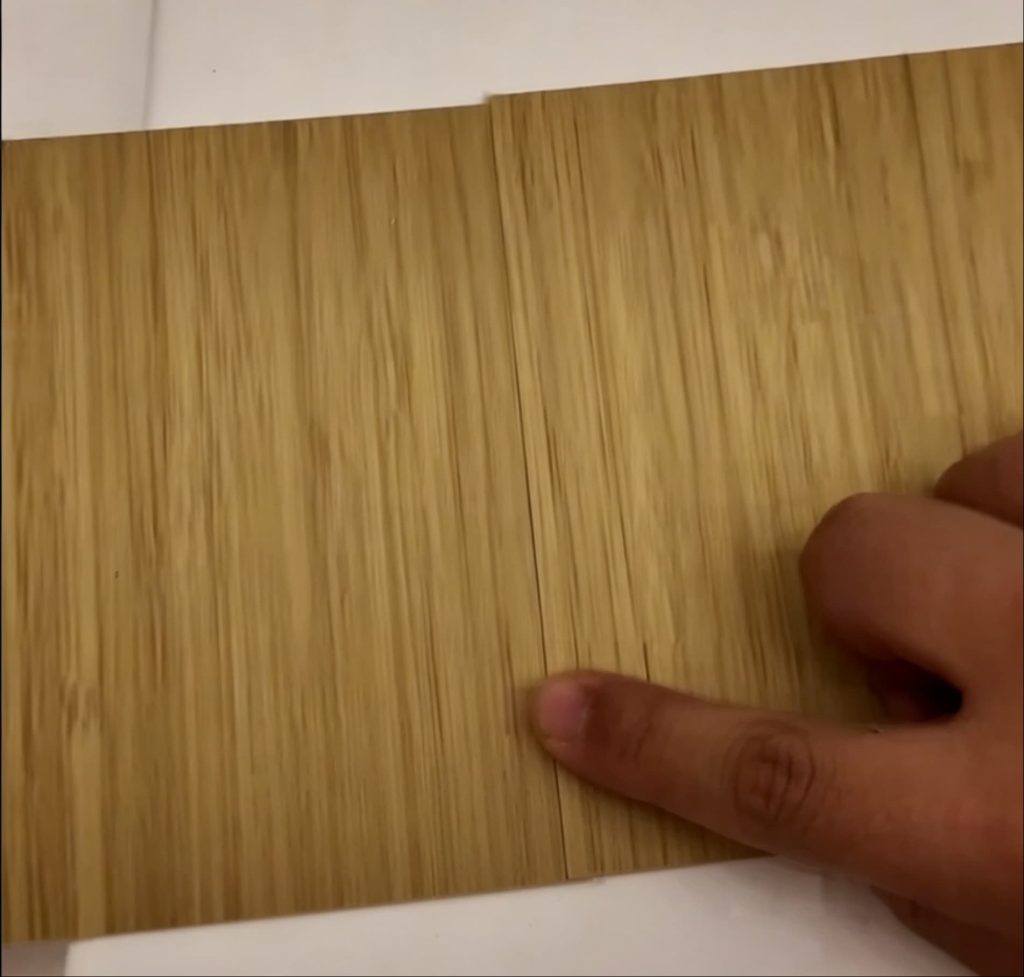
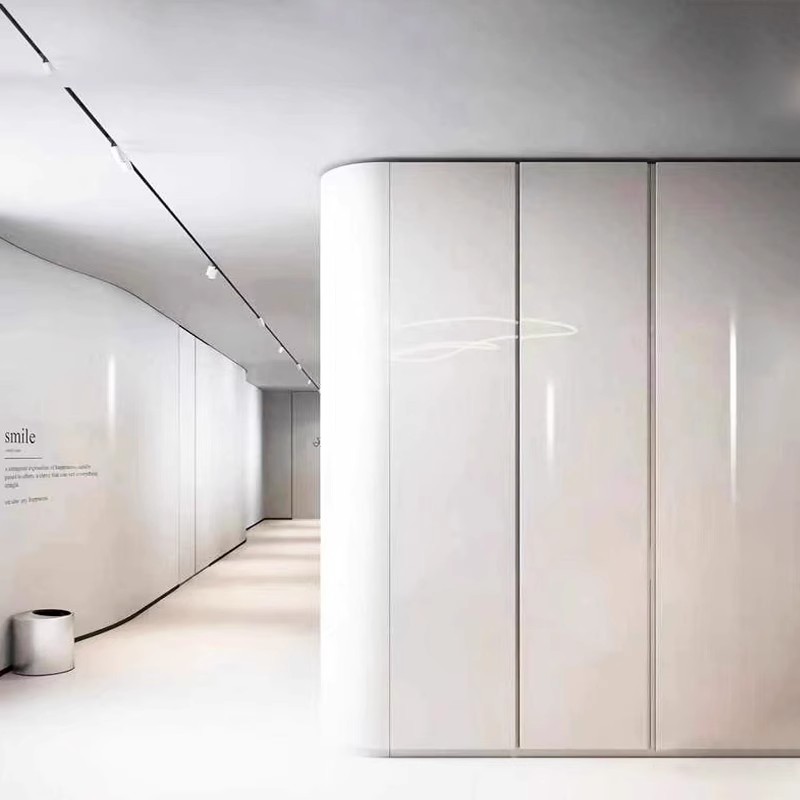
Large format SPC panels dramatically reduce joint frequency. A standard hotel corridor wall that would require dozens of tile joints can be completed with a handful of panel seams — or, in many configurations, virtually none at all. The result is a continuous, uninterrupted surface that is easier to clean, more resistant to microbial growth, and considerably more refined in appearance.
Premium Visual Impact Without the Premium Price Tag
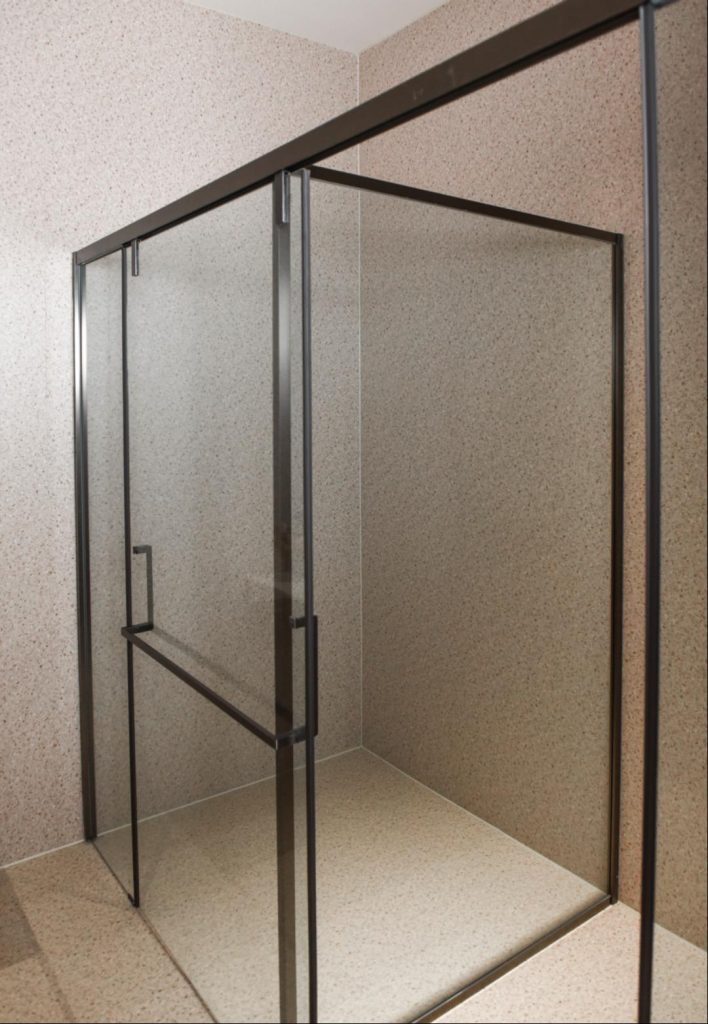
High-definition surface printing allows large format SPC panels to replicate the look of bookmatched marble slabs, polished concrete, or brushed timber with remarkable accuracy. Unlike natural stone — which carries inherent color variation and requires careful selection — SPC panels deliver consistent patterning across every unit, making large-scale uniform installations straightforward.
For brand-sensitive environments such as flagship retail stores, hotel lobbies, or corporate reception areas, this consistency translates into predictable, repeatable design outcomes. The visual effect reads as high-end; the specification cost does not.
Performance Comparison: SPC vs. Traditional Wall Materials
| Performance Factor | Large Format SPC | Ceramic Tile | Gypsum Board / Paint |
| Moisture Resistance | ✅ 100% waterproof, zero swelling | ✅ Waterproof, but grout is vulnerable | ❌ Deteriorates when wet |
| Installation Method | ✅ Dry-fix, no curing required | ❌ Wet process, extended curing | ✅ Faster, but multi-coat process |
| Maintenance Requirement | ✅ Wipe-clean surface | ⚠️ Grout joints trap dirt | ❌ Repainting required |
| Impact & Scratch Resistance | ✅ High-density core, 20+ year lifespan | ✅ Hard, but brittle at edges | ❌ Low durability |
| Design Fidelity | ✅ Consistent HD finish | ✅ Natural, but color variation | ⚠️ Limited visual range |
Key technical benchmarks: SPC panels exhibit near-zero thickness swell after water immersion, and leading products carry fire ratings at Class B1 (non-combustible substrate) — making them compliant for use in regulated commercial environments.
Installation Efficiency: The Commercial Case
For commercial operators, construction downtime is a direct revenue cost. This is where large format SPC wall panels deliver one of their most compelling business arguments.
Traditional ceramic tile installation involves substrate leveling, adhesive application, tile placement, grouting, and a mandatory curing period — a process measured in days per room. Large format SPC panels use dry-fix installation systems: click-lock profiles or concealed mechanical fixings that require no adhesive, generate no construction dust, and allow immediate use upon completion.
A standard hotel guest room wall that would take a tiling team two to three days can be completed in a matter of hours. Panels can be installed directly over existing tile, concrete, gypsum board, or OSB substrates — eliminating demolition in renovation projects and reducing both labor costs and waste disposal requirements.
For a 200-room hotel refurbishment, the difference in installation speed alone can represent weeks of recovered trading time.
Commercial Application Environments
Hospitality — Guest rooms, bathrooms, lobbies, and corridors. The combination of waterproof performance, fast installation, and consistent aesthetics makes SPC the preferred choice for hotel brands managing large-scale rollouts.
Retail — Brand feature walls, display backdrops, fitting room interiors. Large panel formats provide unbroken visual surfaces ideal for brand storytelling.
Corporate Offices — Reception areas, boardrooms, open-plan dividers. SPC panels integrate cleanly with glazed partition systems and contemporary office design.
Residential Developments — Bathrooms, kitchen splashbacks, living room feature walls. Particularly valued in high-specification projects where a premium finish is required without the cost or fragility of natural stone.
Wet and Demanding Environments — Spa facilities, commercial kitchens, basement spaces. SPC’s complete moisture resistance makes it one of the few wall materials genuinely suited to sustained humidity.
Total Cost of Ownership: A Stronger Business Case Than It Appears
Initial material cost for large format SPC panels may be positioned above commodity tile or paint. However, for commercial clients evaluating total project cost, the calculation looks different:
- Reduced labor costs — faster installation translates directly into lower contractor hours per square meter
- Zero renovation waste — dry-fix systems over existing substrates eliminate demolition and associated disposal costs
- Minimal maintenance expenditure — no regrouting, no repainting, no specialist surface treatments over the product’s 20+ year lifespan
- Downtime savings — for operational environments, the reduction in installation period has quantifiable commercial value
When these factors are modeled across a project lifecycle, large format SPC consistently outperforms traditional alternatives on a cost-per-year basis.
Specifying Large Format SPC: What to Look For
When evaluating large format SPC wall panels for commercial specification, key criteria include:
- Core density — higher limestone content improves rigidity and dimensional stability
- Surface wear layer — UV-cured finishes with anti-bacterial treatment for high-traffic applications
- Fire classification — verify compliance with local building regulations (B1 or equivalent)
- Substrate compatibility — confirm fixing system works with existing site conditions
- Panel size availability — confirm stock sizes align with floor-to-ceiling heights to minimize cutting waste
Conclusion
The shift toward large format SPC wall panels is not a passing trend — it reflects a fundamental change in what commercial clients expect from interior wall solutions. Fewer joints. Faster installation. Better-looking results. Lower long-term costs.
As surface printing technology continues to advance and panel formats expand, SPC wall systems will cover an increasingly wide range of aesthetic and performance requirements. For architects, interior designers, and procurement teams specifying wall finishes for commercial projects, large format SPC deserves serious consideration as the default starting point — not the alternative.