

How to Choose a Reliable WPC Wall Panel Manufacturer
Choosing the right WPC wall panel manufacturer involves much more than simply comparing quotes. A truly reliable wall panel supplier needs a standardized, traceable raw material supply chain, mature and advanced extrusion production technology, a complete quality control process, authoritative international certifications such as CE and SGS, and extensive practical experience in foreign trade exports.
The demand for WPC wall panels has been steadily increasing globally in recent years. As professionals in the building materials industry, we are well aware of their durability, low maintenance costs, and natural wood-like texture, making them highly sought after in residential, commercial, and hotel projects. For contractors, interior designers, and developers, choosing the right manufacturer is the most crucial step in the entire procurement process.

Currently, sourcing wall panels from China offers significant advantages — strong cost competitiveness, a wide variety of products, and large-scale production. However, the quality of suppliers varies greatly, and choosing the wrong partner can lead to substandard product quality, delivery delays, and even costly disputes. Therefore, this article aims to provide a systematic evaluation method to help identify and select truly reliable wall panel suppliers, ensuring that every procurement decision is based on sound reasoning.
Table of Contents
Understanding WPC Wall Panels
Before evaluating any manufacturer, it is necessary to first clarify your own procurement requirements. WPC, or wood-plastic composite material, is an engineering material made by mixing wood fibers (or wood powder) with thermoplastic polymers (such as PVC, PE or PP). It is usually also reinforced with stabilizers, colorants and foaming agents to enhance the performance and appearance of the product.
WPC wall panels can be mainly divided into two categories:
- Interior wall panels: Suitable for indoor scenarios such as living rooms, hotel lobbies, office spaces and retail stores. For this type of product, I will focus on the surface texture, color consistency and ease of installation.
- Outdoor cladding panels: They need to withstand ultraviolet radiation, humidity, temperature changes and impacts, and have higher performance requirements. Usually, such products also need to pass specific climate durability certifications.
Clearly identifying which category your project belongs to directly determines which technical specifications you need to request from the manufacturer in the future, and also helps you pose more targeted questions during the evaluation process.
How to Clarify One’s Own Needs
Many buyers start contacting suppliers without having a clear demand before making a purchase. This is one of the most common mistakes. Without a clear definition of requirements, it is impossible to effectively compare manufacturers, and it is also easy to be sold products that are not suitable for their projects.
Before contacting any manufacturer, document your own requirements first. This is a basic action for professional procurement and an important basis for manufacturers to determine whether you are a quality customer.
- Product specifications: Determine dimensions, type of profiles, surface texture (wood grain, matte, embossed), color, and specific requirements for special processes.
- Performance requirements: Clearly define indoor or outdoor use, as well as fire resistance grade (B1/B2), waterproof grade, UV resistance performance, etc. Specific indicators.
- Certification requirements: CE certification is required for the European market; there are respective compliance requirements for the North American and Australian markets; FSC certification may be required for environmental projects. Different target market certification requirements need to be clarified before procurement.
- Purchase quantity and MOQ: Clearly define the expected batch size in advance. Some manufacturers focus on large-scale industrial orders, while others are more suitable for flexible supply of small and medium batches.
- Delivery cycle and target price range: Provide a clear time window and price expectation to help both parties quickly determine if they match.
How to Select Potential Manufacturers
After the requirements are clearly defined, the next step is to establish a list of potential manufacturers. During the selection process, it is necessary to first distinguish whether the counterpart is a factory or a trader.
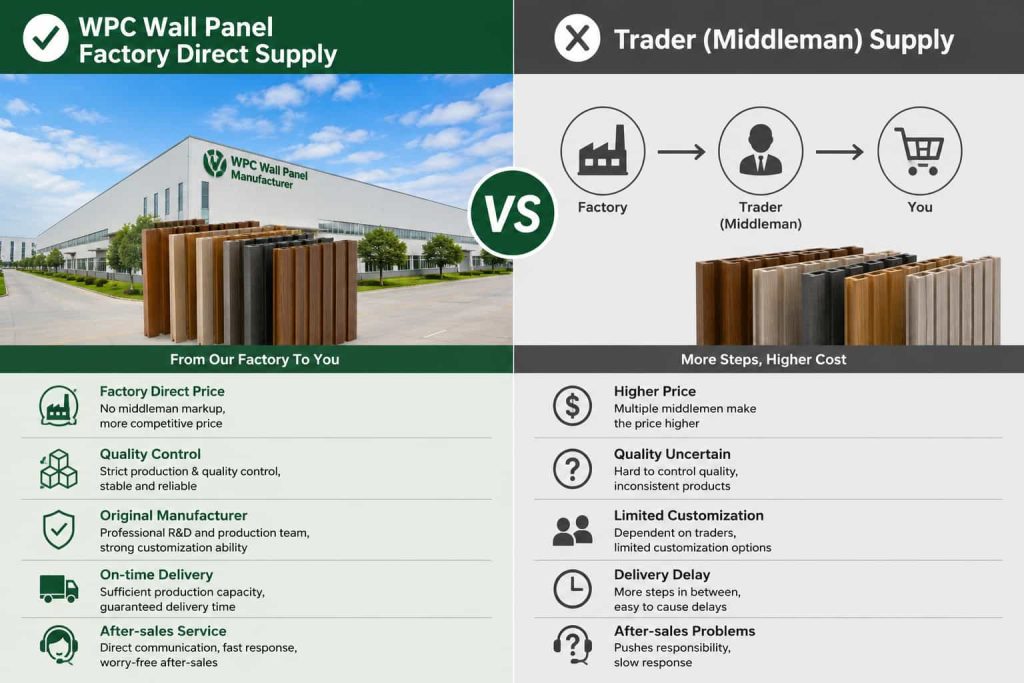
Compared with traders, factories that provide direct supply have inherent advantages in terms of quality stability and cost competitiveness:
| Comparison dimension | Manufacturer (Direct Supply from Factory) | Trader |
| Price | More competitive | With margin room |
| Quality control | Direct control | Limited transparency |
| Customization capability | Highly flexible | Limitation |
| Technical Support | Perfect | Weak or outsourced |
| Delivery schedule stability | Stability | Depend on factory cooperation |
For buyers who purchase wall panels from China, if you prioritize quality stability, customization capabilities, and long-term supply reliability, directly collaborating with the factories is almost the better option.
When initially screening potential suppliers, the following criteria can be referred to:
- Operating years: Prefer to select experienced manufacturers with more than 5 years of operation, as they have more stable production capacity and technology. New factories carry higher risks of cooperation.
- Product focus: Manufacturers specializing in WPC wall panels have stronger professionalism. Compared to those with diversified products, they have more efficient quality control and after-sales handling.
- Customer strength: Prioritize connecting with suppliers who have deeply penetrated the target market. Long-term export enterprises to Europe and the United States are more likely to meet overseas compliance and certification standards.
- Qualification transparency: Regular manufacturers have official websites, complete licenses, and real project cases. Those with incomplete information should be cautious in cooperation.
Evaluating the five core dimensions of WPC wall panel manufacturers
1. Production Capacity
A capable manufacturer should be able to demonstrate that it has the production capacity to meet your purchase volume without compromising quality. Key points to consider include:
- Factory size and equipment. Modern extrusion lines and co-extrusion technologies can produce more stable and higher-quality panels. Understand the model and service life of the core equipment.
- Product line breadth. Manufacturers that can provide multiple profiles, surface treatments, and size specifications usually have stronger R&D capabilities and production flexibility.
- Capacity and delivery commitment. Confirm the annual production capacity data and actual delivery cycle. Suppliers who cannot provide a clear delivery commitment are potential supply chain risks.
If possible, ask the other party to provide an overview of the factory, whether it is a on-site visit or a video introduction, to verify the authenticity of their statements.
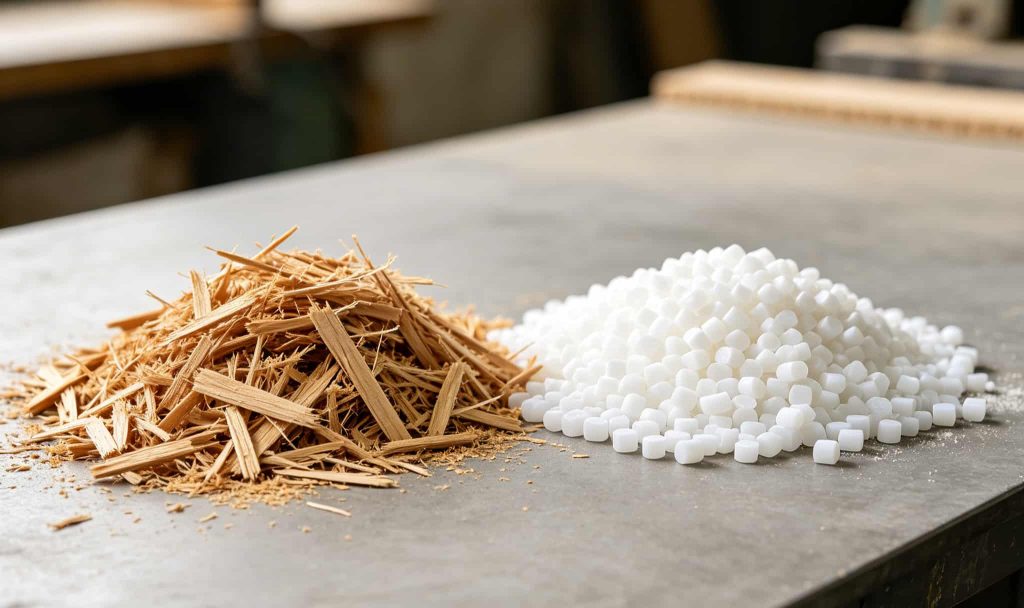
2. Quality control system
This is the most crucial aspect in the assessment. Even with advanced equipment, if the quality management process is weak, the quality of the products will still vary.
The following aspects should be focused on:
Raw material inspection. Has the manufacturer conducted inspections on the wood fibers and polymer raw materials before feeding them into the production process? Unstable raw material quality is the most common fundamental cause of board defects.
Process quality control. Reliable suppliers will set quality inspection checkpoints at multiple stages of production, rather than only conducting inspections at the final shipment. Finished product inspection reports. Request recent inspection reports. Third-party independent inspection reports are more persuasive than internal reports.
3. Certification and compliance
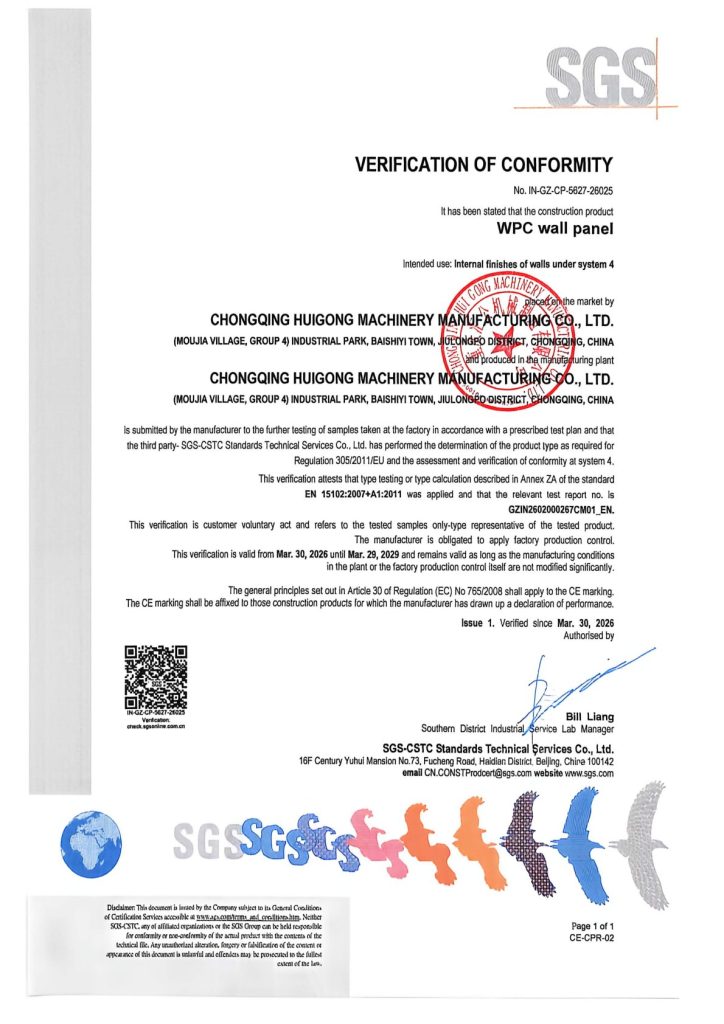
The certifications held by manufacturers directly reflect their emphasis on quality and their ability to supply to target markets in compliance.
Key certifications:
- CE Certification – Necessary for entering the European market
- ISO 9001 – Quality Management System Certification
- SGS Test Report – Objective proof of specific performance indicators
- RoHS Compliance – Applicable to products with requirements for chemical substance safety
- Fire Resistance Grade Certificates (B1/B2) – Common requirements for commercial building projects
Original certificates can be requested from the manufacturers and their validity can be verified. The certificates should be valid and it is preferable to check them through the official database of the certification body.
4. Export experience
Manufacturers with genuine international export experience can provide you with practical guarantees at the logistics and compliance levels, avoiding unnecessary troubles.
Experienced exporters usually are familiar with:
- Correctly preparing export documents (commercial invoices, packing lists, origin certificates, bills of lading, etc.)
- Common trade terms (FOB, CIF, EXW) and their respective responsibilities to the buyer
- Suitable export packaging methods for long-distance transportation, effectively preventing moisture, compression and transportation damage
Specifically inquire about which countries the manufacturer is currently exporting to, and try to obtain reference customer information or cooperation cases.
5. Customer Service and After-Sales Support
The partnership with the manufacturer will not end once the goods leave the factory. When evaluating suppliers, their full-cycle service capabilities should also be taken into consideration.
- Sample policy: Strong manufacturers can reasonably provide samples. Be cautious when dealing with suppliers who are reluctant to supply samples or charge high sample fees.
- Communication response: The efficiency of the initial communication and the communication attitude are crucial. Being evasive in the pre-sale process may lead to disputes in the post-sale stage.
- Post-sale handling: Confirm the post-sale process for quality damage in advance. Reliable merchants have clear procedures and refuse vague verbal commitments.
- Cooperation philosophy: Preferentially choose suppliers who value long-term win-win cooperation and abandon those who are only eager for a deal and ignore project development.
Factory Audit and Factory Inspection
For large orders, factory audit is the lowest-cost and highest-yield risk control method.
Visiting the factory in person is the preferred approach. On-site visits allow you to directly observe: the management order of the production workshop, the storage and requisition methods of raw materials, the skill level of employees, and the actual process of product inspection and packaging. These pieces of information cannot be fully conveyed by any documents.
Delegating a third-party factory inspection is a professional alternative when you cannot visit in person. Institutions such as SGS, Bureau Veritas, and TÜV Rheinland provide standardized factory audit services. The audit reports have objective credibility, and the cost is usually negligible compared to the order value.
Video factory inspection can be used as a supplementary method, but be aware of its limitations – the manufacturer controls the camera, and can decide what you see. If possible, you can entrust a trustworthy local agent to be present simultaneously.
Sample Testing: An Essential Step
For any bulk orders, a physical sample assessment must be completed first. Brochures and specification sheets are marketing tools, but they cannot replace the inspection of the actual product.
When requesting samples, provide clear specifications – dimensions, profile numbers, surface effects. Whether the manufacturer can accurately deliver samples according to the requirements is itself a verification of their execution capability.
Core inspection items for sample assessment:
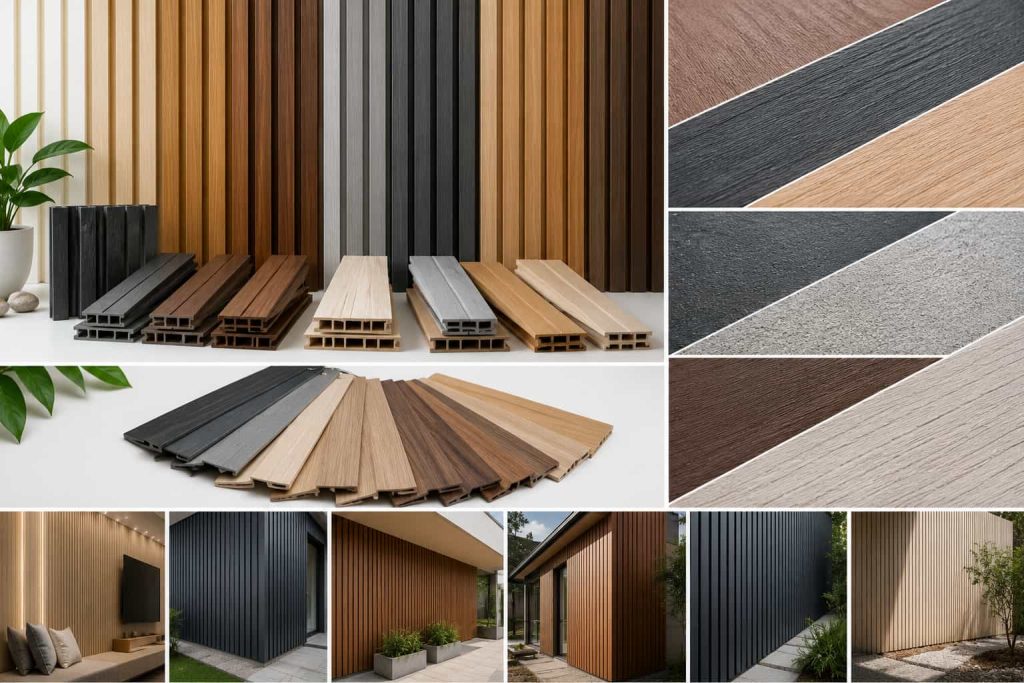
- Appearance quality: Uniformity of surface texture, color consistency, presence of bubbles, pits or streaks
- Dimension accuracy: Degree of conformity between measured values and marked tolerances
- Surface durability: Preliminary tests for scratches and abrasion resistance
- Edge quality: Degree of neat cutting, reflecting the maintenance level of molds and equipment
For large-scale purchases or projects with high performance requirements, it is recommended to entrust a third-party laboratory to conduct the following specialized tests: UV resistance aging, water absorption rate, bending strength, fire resistance. Compared to the order amount, this investment is usually completely worthwhile.
| Water absorption rate test | Prevent moisture-induced expansion and deformation |
| Bending strength test | Verify structural stability |
| Impact resistance test | Evaluate load-bearing durability |
| UV aging resistance test | Verify outdoor application performance |
Different Roles Have Different Focuses
Distributors and Dealers
- Stable bulk supply capacity and inventory response speed
- Consistency in quality control behind the low return rate
- Flexible MOQ policies and payment terms arrangements
Contractor and installer
- Quick installation of product structure design (snap-on, tongue-and-groove)
- Construction technical support and installation drawings
- Reliable delivery schedule guarantee to avoid affecting project milestones
Architects and designers
- Broad color, texture and profile customization options
- Capable of providing the performance parameters and certification documents required for project specifications
- Support for CAD/BIM format materials
Summary
For decision-makers in bulk purchasing, choosing a WPC wall panel manufacturer is a strategic decision that affects costs, quality, project duration and brand reputation. The most reliable supplier is not just the lowest-priced producer, but a long-term partner who can stand the test in terms of technical capabilities, quality system and global delivery.
Systematic evaluation – focusing on raw material standards, production technology, certification system and service support – is the only reliable way to find truly high-quality suppliers.
If you are looking for a suitable WPC wall panel manufacturer for bulk projects or long-term supply, please feel free to contact us to obtain samples, quotations and technical support.