

Which Is Easier to Install: Wall Panels or Tiles?
When you are renovating a commercial space, or simply upgrading a home, picking the right surface usually comes down to how long it holds up, versus what the labor will cost right now. For years, ceramic and porcelain tiles have been the obvious default for durable, water resistant interior wall use. However, the advent of engineered composites has introduced a significant challenger to the construction industry. Knowing the technical aspects that go into Wall panel installations as compared the traditional method of tiling vital to maximize the efficiency of your project. This thorough analysis analyzes both the wall preparation for subwalls, as well as installation speed as well as overall cost-efficiency to determine which is the most effective option for your next project.
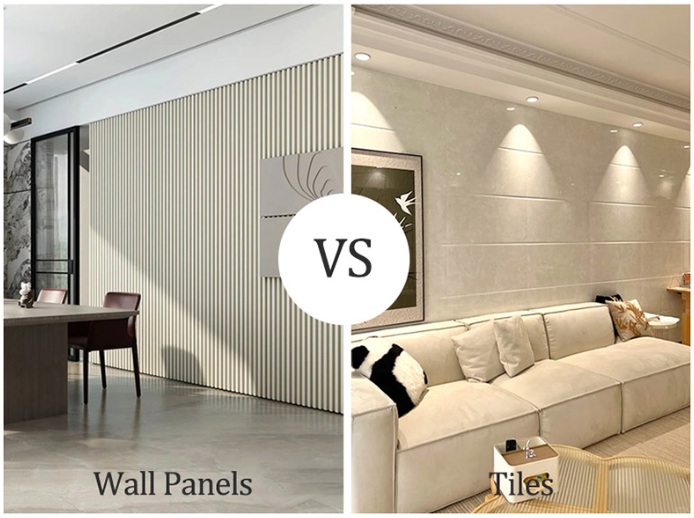
Table of Contents
Subwall Preparation and Base Surface Tolerances
When a single bit of material is able to touch an exterior wall surface, the condition of the substrate determines the direction of your time-to-install. This is when the structural distinctions between masonry that is wet-laid and dry-clad engineering are apparent.
The High-Precision Demands of Ceramic Tiling
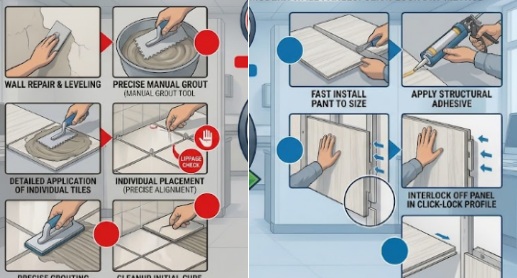
Tiling can be a bit harsh in regards to imperfections on the substrate. Since cement mortar or thin-set adhesive is cured into a hard, rigid layers, any minor curve or bump within the foundation masonry can reflect onto the final surface. To avoid the formation of misaligned grout lines and structures “lippage” (where one tile edge is higher than the other) Installers are required to invest considerable time in the process of applying self-leveling and plastering techniques and applying special primers. The substrate has to be well-cured, structurally sound and free of dust prior to work being able to begin.
The Forgiving Mechanics of Wall Panel Installation
Contrary to this engineered systems provide a great deal of ability to withstand sub-wall imperfections. These structural panels have semi-rigid or rigid cores that can bridge small depressions and masonry flaws without telegraphing them back to the front face.
Based on the requirements of the project, wall panel installation may be done without the need for plastering completely. Installers can apply high-quality structural polyurethane adhesives on brickwork that is rough or concrete walls. In the case of walls that are severely uneven the simple aluminum batten or wood framing matrix is erected prior to constructing the framing matrix. These decorative walls are connected in place to furring strips covering up any pipes, and structural issues while cutting the preparation time by 65%.
Installation Velocity and Labor Efficiency
In the modern world of commercial construction the concept of time is a major factor in determining. Installation schedules that are extended can lead to prolonged closings of business, delayed handovers of tenants, and increasing labour invoices.
The slow, multi step craft of tiling
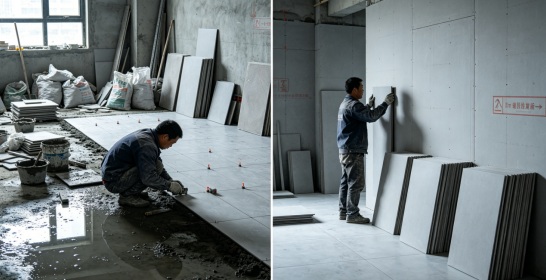
Laying ceramic tile is still sort of a hand done, multi stage wet affair that can’t really be rushed. You know, a technician has to mix the thin-set mortar just right, spread it with those particular notched trowels and then place each tile one by one, often with plastic spacers in between, while also checking the whole line using a spirit level. After the tiles are actually set, the installer should wait a full 24 hours for the adhesive to cure, because otherwise the grouting won’t go cleanly, then the grouting phase comes next and afterwards there’s more tidying up plus a sealing stage too. For a typical commercial accent wall around 50 square meters, it can take three to four days of focused, specialized effort, from start to finish.
The Rapid “Click-and-Secure” System of Wall Panels
Alternatively the engineered wall panels work as a modular, integrated dry-construction system. By utilizing advanced interlocking profiles, such as click-lock joints or tongue-and-groove joints, large-format panels can cover large walls in only a fraction of the time.
The installation of a standard wall panel is simple measuring, cutting with regular woodworking saws. Then, attach structural adhesive on back (or fix it with hidden clips of metal) and then snap the joint. There’s no waiting for the mortar to dry and no gruelling space adjustments and there are no other chemical treatments, such as sealing or grouting. Based on field-based metrics developed by the NAHB, the National Association of Home Builders(NAHB) modular wall cladding panels for interior walls cut the total time of installation by as much as 75% when compared to traditional ceramic tiles. A single skilled carpenter can complete the entire commercial hall or corridor of hotels in a single working shift which allows businesses to begin operations swiftly.
Tool Requirements and Workplace Safety
The tools needed to complete a project directly impact transportation logistics, onsite safety procedures, as well as the difficulty of cleaning after construction.
Wet-Cutting Complications with Ceramic Materials
Tiling really needs this whole lineup of specialized, heavy-duty equipment, like installers are moving around wet tile saws with continuous rim diamond blades, mechanical mortar mixers, grout floats, and large heavy buckets of adhesive compound, all day. When folks cut dense porcelain or natural stone tiles they generate quite a bit of crystalline silica dust, which is a serious health hazard that gets closely watched under the Occupational Safety and Health Administration (OSHA) rules. So on site operators have to set up dust extraction vacuums, plus a continuous water feed, just to stay compliant, and honestly it turns into a wet messy workspace where other trades are a bit blocked, nearby.
Dry, Clean Workflows for Composite Panels
The construction matrix used for architectural wall panels is made up of the most basic tools for carpentry. A basic miter saw as well as the brad nailer that is cordless along with a level, and the caulking gun are usually all that’s required. Since materials such as WPC, SPC, and co-extruded bamboo veneers are engineered composites cutting them generates standard heavy sawdust, not harmful silica particulates that can be blown into the air. The entire process of installation is a safe, dry construction process. This allows other trades in the interior, such as carpet installers and electricians to collaborate in the same space without a risk of cross-contamination simplifying the overall schedule of the project.
Architectural Applications: Making the Strategic Decision
While wall panels are able to provide easy installation and labor benefits choosing between the two options is contingent on the specific needs of your indoor space.
Technical Comparison Matrix
| Performance & Installation Metrics | Ceramic & Porcelain Tiles | Engineered Wall Panels (WPC/SPC/Bamboo) |
| Primary Installation Method | Manual spacing, Wet-set mortar and grouting with chemicals | Structure adhesives that dry-set or hidden mechanical clips |
| Average Installation Speed | 10 to 15 m² for each worker each day | 40-60 m² per employee each day |
| Substrate Leveling Required | Tolerancing strict (less than 2mm deviation in 2m) | Forgiving (bridges gaps using batten frames or rigid core) |
| Post-Installation Curing Time | 24 – 48 hours (Before the grouting process and before traffic) | Immediate occupancy (Zero curing delay) |
| Onsite Dust & Waste Hazard | The High (Crystalline silica dust, resulting from diamond sawing) | Low (Standard wood-shaving particles) |
| Material Lifespan & Stability | 20+ years (Brittle susceptible to impact cracking) | 15+ years (Flexible and high impact absorption) |
When to Retain Traditional Tiles
Ceramic tiles are highly efficient in continuous high-moisture commercial settings. For areas that are that are subject to regular chemical washdowns or standing water, such as commercial institution kitchens and locker rooms for public swimming pools rooms, or central open showers–the impermeable vitrified surface of the glazed porcelain tile in combination with epoxy grout creates an effective water barrier.
When to Transition to Wall Panels
For most other architectural interior spaces changing to contemporary decorative walls is a most effective and economical option. They can be extremely useful for:
Commercial Hubs that are High-Traffic :The corridors for offices, airport lounges, hotel lobbies and lounges in which quick turnaround times for construction are essential to ensure that they don’t lose business revenues.
High-end Interior Decorations: Premium homes and corporate boardrooms that need the look of stone or wood, but without the weight of a structural slab or the cost of stone slabs.
Eco-Conscious Developments: Sustainable building projects looking to optimize indoor air quality. Premium bamboo charcoal fiber panels offer zero-formaldehyde emissions (E0 Grade compliance) and natural sound-dampening qualities.