

Transforming Commercial Lobbies with Textured Wall Panels
In the realm of commercial interior design and real estate, the lobby is much more than a zone for transition and is the business’s “physical handshake.” Although many companies still use plain, monochromatic paint, these walls are often not able to convey the story of a brand or endure the demands of high-traffic areas. Textured wall panels are the latest solution, combining modern design and structural strength. It is important to understand how the use of textures into your walls is an intelligent investment that can maximize the impact of your visual and enhances acoustic performance and provides a higher long-term ROI than traditional finishes.
Table of Contents
The Economics of First Impressions
The visual language used by the retail or office lobby provides a direct trust-building tool for clients as well as partners and employees. In a world dominated by social media it is clear that the concept of a “generic” office space is an opportunity missed. Research into spatial psychology suggests that environments with tactile diversity–variations in texture, light, and shadow–significantly increase user engagement and professional perception. With the use of textured wall panels businesses can design “Instagrammable” brand environments that are not just attractive to visitors, but also increase the value perception of the physical space.is generally the better choice. If you want to create a stylish interior with added texture, warmth, and functionality, wall paneling is usually the preferred solution.
The Strategic Benefits: Beyond Mere Decoration
1. Long-Term Cost Efficiency and Durability
Traditional paint and wallpaper are, frankly, pretty flimsy. In busy commercial lobbies, they end up scuffing, ripping, or peeling, which means expensive spot fixes, or full replacements every two to three years. Textured wall panels however, especially ones built with tougher blends like WPC (Wood Plastic Composite) or reinforced MDF , are made to last longer. They work like a protective skin over the drywall beneath, so they shrug off impacts from luggage, carts , and that constant high human flow. If you look at it over a five-year lifecycle, the “investment” in wall panels often turns out to be more economical than the repeating upkeep costs that come with weaker finishes.
2. Acoustic Comfort in Open Spaces
Modern commercial design prefers an open, minimalist, and spacious architecture that often creates an “echo chamber” effect. Acoustic waves bounce off of hard smooth surfaces, creating unpleasant noise levels that hinder efficiency and professionalism. Textured wall panels provide an effective solution. Their 3D design and uneven surface profile serve as natural diffusers of sound. By scattering sound waves, rather then reflecting, the panels to reduce background noise, creating an energised, calm space for gatherings and greetings.
3. The Power of Light and Shadow
The most notable visual benefit of surfaces with texture is their dynamism in interplay with light. Walls that are flat remain static all daytime. The highs or valleys in a textured wall are able to interact with both artificial and natural lighting to create the illusion of a “living” wall. When the sun’s position changes or office lighting shifts the shadows of the wall change, creating an element of aesthetics that paint can’t duplicate.
Strategic Comparison: Textured Panels vs. Traditional Finishes
To aid stakeholders in understanding the value offer, the following table contrasts wall panels with textured surfaces against conventional commercial wall treatments:
| Feature | Textured Wall Panels | Traditional Paint/Wallpaper |
| Durability | High (Impact & Abrasion Resistant) | Very low (Scuffs & Tears easily) |
| Maintenance | Very low (Wipe-clean surfaces) | High (Requires regular repainting) |
| Acoustic Function | Effective (Sound diffusion) | None |
| Brand Impact | Very High (Sophisticated depth) | Low (Flat/Generic) |
| Lifespan | 10+ Years | 2-3 Years |
| Investment ROI | Very (Long-term costs (Long-term) | Low (High Recurring expense) |
Choosing the Right Texture for Your Brand Identity
Picking the right design for your commercial space is more than just an aesthetic preference. It is a deliberate design strategy to communicate your company’s fundamental values before even a word is said. The geometric shape of your walls must reflect what you consider to be the “personality” of your business to help create a consistent professional story.
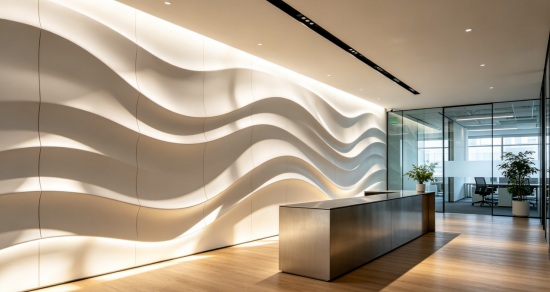
For tech companies as well as creative studios and designers, Wave or Fluid Patterns are the perfect option. They are organically undulating designs convey a sense movement and fluidity. They function as an image of creativity, agility and forward-thinking, to complement a culture of brand that thrives on innovation and ingenuity.
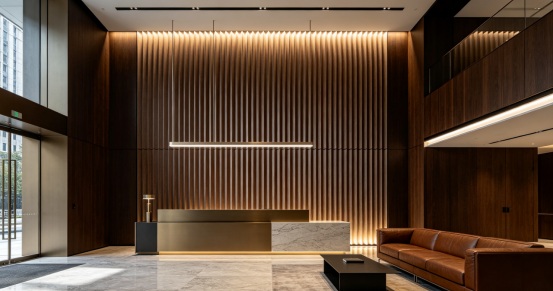
In contrast, industries built on reliability–such as law firms, financial institutions, and corporate headquarters-benefit from Linear or Fluted Profiles. The symmetrical, repetitive structure of these designs suggests reliability as well as precision and order. The disciplined design creates the impression of trust and permanence, as well as reassuring customers that your company is operating with professional standards.
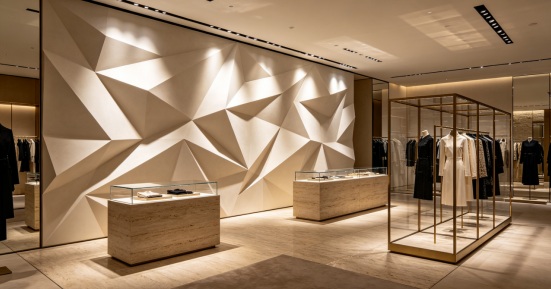
For retail flagships high-end showrooms, fashion boutiques, and boutiques that are luxurious, Geometric or Abstract Cuts provide the edge you need. These striking, custom designs serve as sculptures and create an unique “destination” experience that differentiates your brand from a competitive market. These patterns don’t only decorate but they also entice, turning the routine shopping experience into a dazzling, luxurious brand experience.
Installation and Sustainability: The ESG Connection
In modern companies, sustainability is no longer a luxury, but an important metric for achievement. A lot of wall panels with textured surfaces are made using environmentally friendly processes that incorporate recycled wood fibers and Low-VOC (Volatile Organic Compound) materials. Additionally, the modular design of these panels permits quicker installation over the traditional way of installing trades that are wet (like the plastering process or bespoke carpentry). This shorter construction period translates into less interruptions to any commercial building, which will ensure that your business is operational during the remodeling process.
The decision to improve your lobby isn’t only about aesthetics; it’s about maximizing your infrastructure. By avoiding the long-term maintenance of traditional paint, and instead embracing their durability, sound benefits and the glamor of wall panels with textured surfaces, you’re making an investment in the durability of your brand. These panels don’t just sit on the wall, they are there to protect your assets as well as welcoming guests and enhancing your brand’s image each and every day.
References
- RMJM Architecture. (2026). The Psychology of Commercial Space Design and Influencing Behaviour. https://rmjm.com/psychology-of-commercial-space/
- Plastory WPC. (2025). WPC Cladding: An Ecological Building Material for a Sustainable Future. https://plastory-wpc.com/wpc-cladding-an-ecological-building-material-for-a-sustainable-future/
- Arcat. (2026). Section 09 51 00 Acoustical Ceilings & ASTM C423 Sound Testing Standard. https://www.arcat.com/specification/30115/09_80_00asi
- Association of the Wall and Ceiling Industry. (2023). Prefabrication: Accept It. AWCI Industry Report. https://www.awci.org/media/insync/prefabrication-accept-it/