

Where to Use Fluted Wall Panels in Your Living Room?
The contemporary living space serves as the center of a home’s design story However, many are unable to find a way to combine architectural sophistication with warm and inviting. Although flat paint can be dull and marble appears sterile, Fluted Wall Panels (commonly used in precision manufacturing as Great Wall Boards) have been recognized as the best option for introducing vibrant illumination and texture. But, using too much of this linear material could overwhelm a space but under-using it reduces its impact. This extensive layout guide explains the five most effective locations for fluted panels in living spaces explaining how size as well as illumination and the engineering aspects affect the success of interior design.
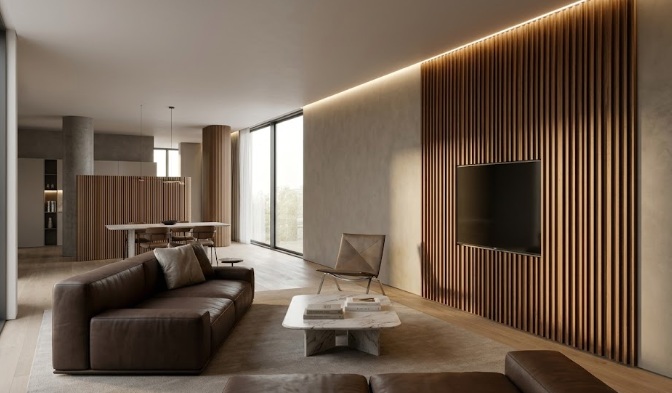
Table of Contents
The Television Feature Wall: The Anchor of Modern Living Rooms
The TV wall is the absolute visual anchor of the living room, making it the most popular—yet frequently mismanaged—area for dimensional paneling.
Full-Width in comparison to. The Focal Accent
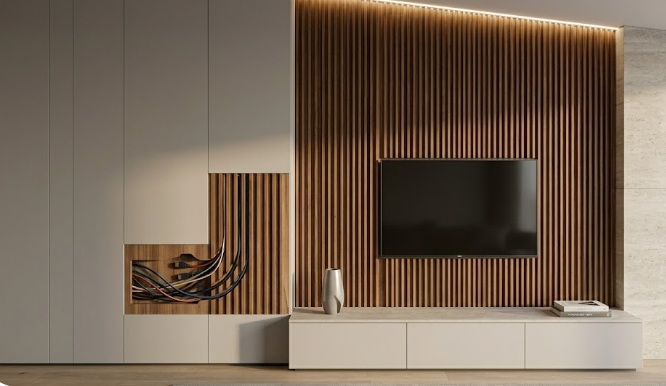
The entire wall covered in continuous fluting may result in an unsettling vertical matrix. Top interior designers opt for a composite layering method. Combining a focal point of fluted panels and contrasting smooth textures — large-format milled stone, sintered stones or matte lacquer, creates a harmonious combination of surfaces that attracts attention without straining the eyes.
Hiding Tangles of Wires
Beyond the aesthetics, these wall panels provide a tremendous utilitarian benefits by hiding messy electronic cables. The hollowed backing on high-end tongue-and-groove boards creates a space to effortlessly reroute HDMI cables as well as power cords and speaker wires right below the surface, getting rid of the visual clutter caused by exposed wires.
The Magic of Grazing Light
The sensory appeal of a fluted surface depends entirely on the shadow cast by its ridges. For maximum visual impact, install an embedded linear LED strip at the top or side of the panels with a tight 15° to 30° grazing angle. This deliberate positioning bounces light across the crests and valleys of the grooves, generating up to 300% more perceived dimensional depth than flat, overhead ambient lighting.
The Sofa Background Wall: Structural Texture Without Clutter
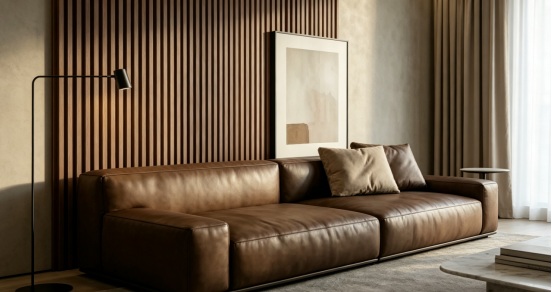
The wall behind the primary seating is often left flat or under-decorated with mismatched hanging frames. Fluted boards turn this zone into a tactile, sophisticated backdrop.
Vertical vs. Horizontal Fluting
The way your wall paneling runs really changes how big, and kinda how “full” the living room feels
Vertical alignment: this direction pulls your gaze up toward the ceiling line, like an optical illusion but with a bit of drama. It can stretch the walls visually , so those lower ceiling apartments start to feel grander and more open even if they arent
Horizontal alignment: not used as often, but it is very architectural. These lines tend to widen the room. If you put horizontal boards behind the sofa, it can help “extend” that visual plane across the space, so even a narrow, compact living room looks way broader than it actually is
Tactile Comfort & Ergonomics
Since the sofa zone is a frequent-touch area, where people lean back, shuffle positions, and move things around all day. Choosing cladding that is both durable and impact-resistant becomes essential. That is the part where cheap or flimsy materials just break down , and then you end up with a surface that cant handle the daily wear-and-tear of a busy household. Engineered materials are the practical fix here, they hold up better over time and stay solid under real life use.
Seamless Hidden Doors and Secret Partition Walls
The most sought-after modern design features of plan layouts is the inclusion of concealed doors. And fluted paneling is specifically designed for this purpose.
Disguising Structural Commotions
If corridors, powder rooms or utility closets extend straight into the living room and break the visual continuity of the room. By running fluted panels in a continuous fashion across the wall and over a flush-mounted frame for the door The edges of the vertical doors are aligned exactly with the shadow lines that naturally form the grooves. The entrance is unnoticeable for the uninitiated eye once shut and maintains a continuous spatial flow.
Spatial Boundaries in Open Layouts
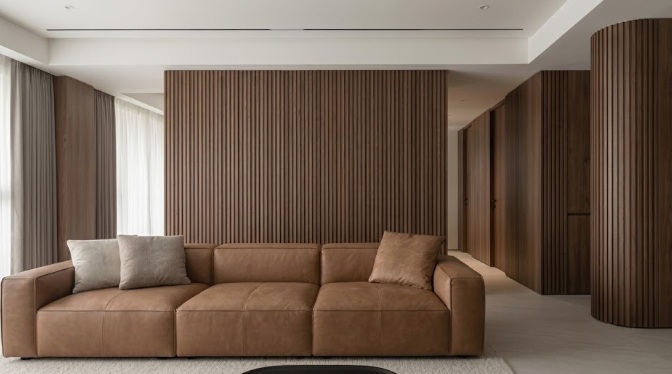
In contemporary open-concept layouts an accent wall that is built using dual-sided fluted paneling is a great way to divide the living area from the dining space. It functions as a screen for structural purposes that can be used to anchor furniture in the room but does not block natural light or air circulation.
Transforming Awkward Pillars and Narrow Entryways
Every home features structural quirks—like awkward columns or dark transition pathways—that are difficult to decorate. Fluted paneling offers a clever way to turn these structural challenges into beautiful design features.
Wrapping Structural Pillars
The awkward placement of load-bearing columns within the center of an area are infamous design pitfalls. Instead of attempting to conceal the columns, it is possible to highlight the columns. The use of flexible fluted boards with multiple angles allow you to cover square concrete pillars to create soft, round columns that instantly changing a structural requirement into a beautiful design feature.
Hallway-to-Living Transitions
The narrow hallway that connects to the main living area creates the first impression of a house. The use of fluted lines in the transition zone creates a welcoming path that leads the way to the principal seating area, creating the tone of polished, thoughtful design for the remainder in the room.
Material Matters: WPC vs. MDF for Living Room Applications
For a stunning appearance, you must selecting the appropriate material composition. Making the wrong choice can cause structural damage as well as warping and polluting indoor air with toxic emissions over time.
The Science of Structural Stability
Although Medium-Density Fibreboard (MDF) is used primarily as interior trim and interior trim, it absorbs moisture from the environment quickly, resulting in thickness increasing rates of between 10% and 15% when subjected to conditions of high humidity. For long-lasting durability, Wood Plastic Composite (WPC) has been the most used by engineers.
Utilizing natural wood fibers that are refined with High-Density polyethylene (HDPE), WPC yields an absorption ratio of less than 1percent. This innovative composition is resistant to the expansion of warps, resists termites and offers exceptional flame resistance that is compliant with international building safety standards and the rigid EN 13501-1 fire classification.
Maintenance & Dust-Trap Myths
A lot of homeowners get stuck thinking that the deep crevices of textured panels will turn into stubborn dust traps. But the truth is, high-end WPC panels are built with an outer anti-static co-extrusion layer, and it actively helps push airborne dust back. Also, if you pick profiles that use a mild geometric draft angle instead of the blunt 90° corner idea, keeping the wall looking spotless is usually just an occasional go over with a vacuum brush or a duster.
Elevate Your Space with High-Performance Paneling
Fluted wall panels aren’t only a quick decorative moment. They can be used like an architectural instrument, changing how a room feels in terms of scale, masking practical fixtures, and playing with ambient light in a really elegant way. If you take time to figure out the right placement, and choose durable engineered substrates, even a plain living area can become a structurally rich, modern sanctuary.
For homeowners ready to switch up their next renovation with top-tier, globally certified wall systems, checking out the specialized Great Wall Board provides is a straightforward route to factory-direct quality. When you invest in more advanced materials you also get the benefit that your space stays beautiful, safe, and structurally stable for years and years.